
Sudan-Saudi maritime pact revival rocked by legitimacy concerns
With no elected legislature in place in Sudan to scrutinise and ratify international treaties, questions remain about the authority to conclude a final, binding maritime boundary agreement while the country is still at war.
Sudan's de facto leader and army chief Abdel Fattah al-Burhan attends an event marking the 72nd anniversary of the Sudanese Army Day at the Khartoum State Legislative Council in Khartoum on August 15, 2026. (AFP)
__________________________
DIPLOMACY
Sudan and Saudi Arabia are seeking to revive talks on demarcating their maritime border, despite the ongoing war devastating Sudan.
Sudan has been engulfed in war since April 2023, when fighting erupted between the Sudanese Armed Forces (SAF), led by General Abdel Fattah al-Burhan, and the Rapid Support Forces (RSF), commanded by General Mohamed Hamdan Dagalo.
The conflict has devastated infrastructure and triggered a severe humanitarian crisis that the United Nations has described as the world’s worst.
Despite the ongoing war, Sudan and Saudi Arabia are pressing ahead with efforts to resolve a maritime boundary dispute that has remained unsettled for more than half a century.
Critics argue that, with Sudan deeply divided and lacking a fully functioning constitutional government, a binding treaty with long-term implications for the country’s sovereign rights is being pursued without parliamentary scrutiny or ratification.
Sudanese political analyst Ammar Siddiq told local media that, in the absence of elected legislative institutions, Gen. Abdel Fattah al-Burhan (pictured below) lacks the constitutional mandate to finalise an agreement of such significance unilaterally.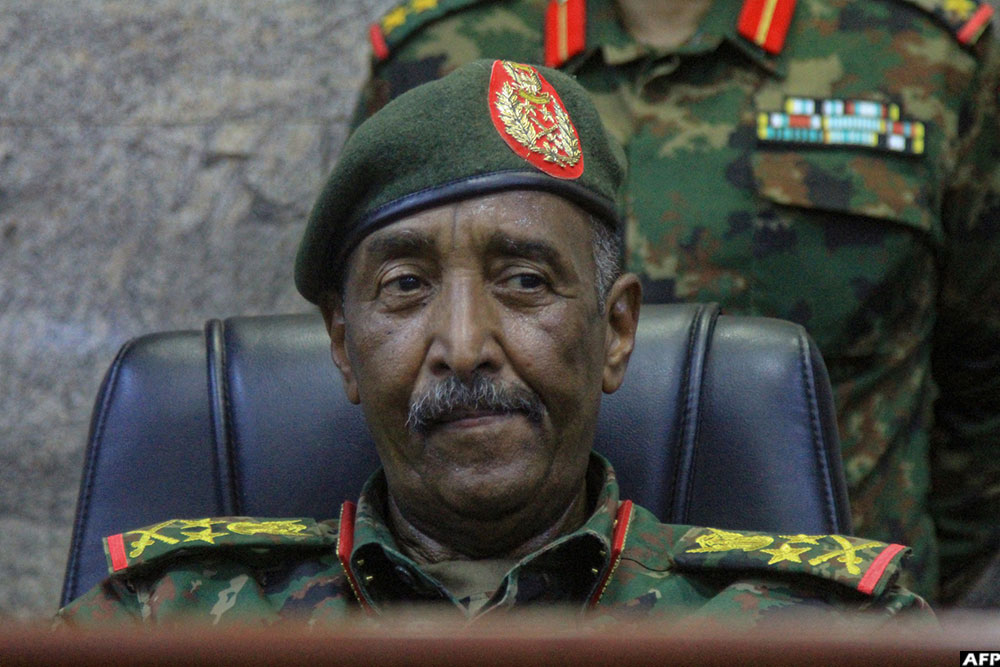
Sudden maritime push
The dispute dates back to the 1960s, when valuable mineral deposits were discovered beneath the seabed between the coasts of Saudi Arabia and Sudan.
The area between the two boundaries constitutes a shared zone in which both countries have equal rights.
But the 1974 agreement established a framework for managing economic exploitation rather than definitively settling the maritime boundary. It created the Saudi-Sudanese Red Sea Joint Commission to oversee exploration and development, with the commission’s activities funded primarily by the Saudi government.
The two governments announced plans in 2019 to revive the agreement. A joint committee met on September 20, 2025, to discuss amendments to a final draft, The Standard reported. In October 2025, al-Burhan postponed the final agreement until Sudan settled its own maritime and land border with Egypt, according to the same report.
Critics question why the arrangement was never turned into a formal boundary. They also ask whether Saudi Arabia, the wealthier and more technically capable partner, stands to gain disproportionately if the terms are settled under current conditions.
Economists at the Kiel Institute for the World Economy estimate the mineral reserves in the common zone to be worth billions of dollars.
Demarcating maritime border
Sudan’s de facto ruler, Al-Burhan, appears increasingly willing to move toward finalising the maritime boundary agreement with Saudi Arabia, despite ongoing questions over his government’s constitutional legitimacy and the continuing war in Sudan.
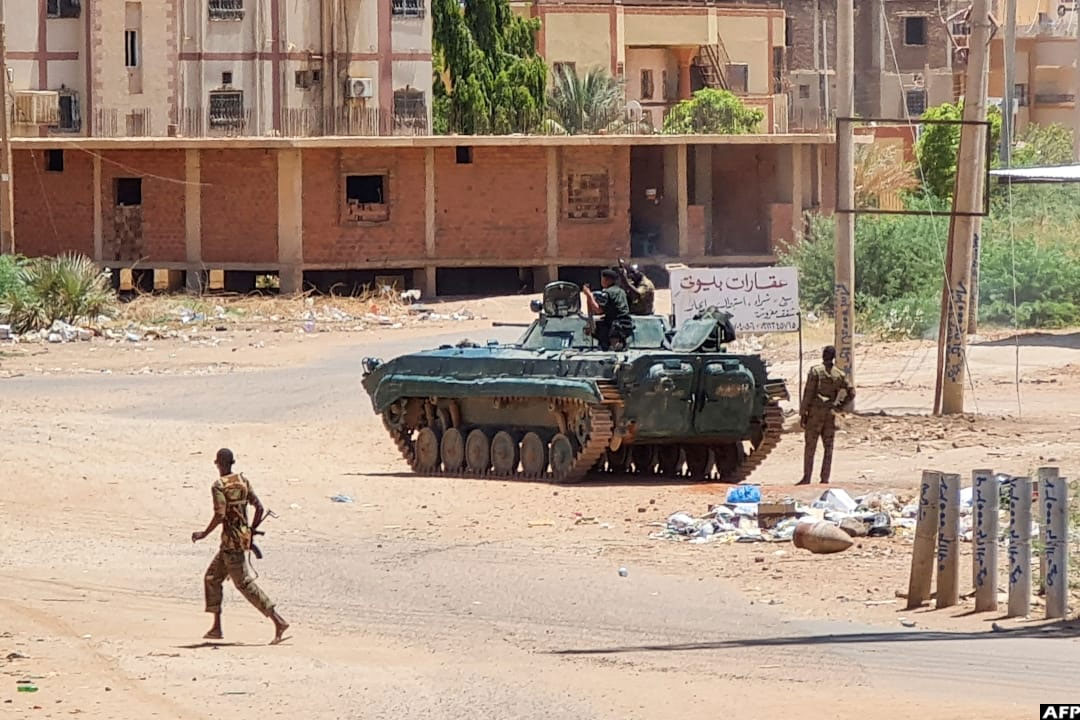
Sudanese Army soldiers walk near armoured vehicles stationed on a street in southern Khartoum, on May 6, 2023, amid fighting against the paramilitary Rapid Support Forces
Saudi Arabia is among the army's main foreign backers, The Irish Times reported. Analysts say Al-Burhan in return wants financial and military support from Saudi to sustain his war effort.
Foreign affairs journalist Graham Matthews argued in Modern Diplomacy in August that Saudi Arabia is emerging as the main regional underwriter of Al-Burhan's effort to turn battlefield gains into a political settlement on his own terms.
The meeting designated the Sea Ports Corporation as the lead federal agency responsible for coordinating civilian and military bodies. It also granted the corporation’s executive secretariat access to historical maps and archival records relating to the Red Sea and Sudan’s maritime boundaries.
The meeting further approved the formation of a technical committee comprising the National Boundary Commission and the Sudanese Navy to review the relevant legal frameworks and prepare a technical maritime delimitation plan. It also endorsed the development of national maritime monitoring centres in coordination with Saudi Arabia’s ports of Jeddah and Yanbu.
On September 22, United States State Department spokesperson Tommy Pigott said in a statement that neither the SAF nor the RSF, nor their leaders, represent legitimate, constitutional governance for Sudan. But Middle East Monitor reported that Sudan's foreign ministry dismissed Washington's statement.
Sudan resumed legal preparations to establish its maritime baselines in February 2025, building on submissions it made to the United Nations in 2017. That year, Khartoum also formally objected to the 2016 maritime boundary agreement between Egypt and Saudi Arabia over its link to the disputed Halayeb Triangle, and Egypt rejected Sudan's claim in a declaration to the UN in December 2017.
Red Sea and sovereignty concerns
The renewed push to settle the maritime boundary comes amid growing regional competition over security, energy corridors and strategic port access across the Red Sea and the Bab al-Mandab Strait.
Saudi Arabia has been expanding its regional role along both sides of the Red Sea, while Sudan’s authorities in Port Sudan continue to depend heavily on external political and financial support.
Bilateral discussions have increasingly centred on maritime governance and economic rights, with the Saudi-Sudanese Supreme Council for Strategic Cooperation and Coordination becoming an important channel for relations between Riyadh and Al-Burhan’s administration.
The renewed technical process has prompted concerns within Sudan over the legal and constitutional implications of any agreement.
With no elected legislature in place to scrutinise and ratify international treaties, questions remain about the authority to conclude a final, binding maritime boundary agreement while the country is still at war.