
Giraffe translocation breathes new life into Ajai Wildlife Reserve
At 11:15 am, a truck carrying the giraffes, accompanied by several support vehicles, embarked on the journey to transport the towering giants to the 166-square-kilometre Ajai Wildlife Reserve.
The three giraffes loaded in a crate enroute Ajai wildlife reserve. (Photos by Julius Luwemba)
________________
On a chilly Tuesday morning, as the clouds were still washing the dust off Pakwach town, a team of wildlife rangers, veterinary doctors and media personnel were already braving the early morning drizzles at Tangi Gate for a briefing before entering Murchison Falls National Park. The excitement was unmistakable, yet so was the sense of responsibility.
Before the day was over, three Nubian giraffes would begin a carefully orchestrated journey to Ajai Wildlife Reserve in Madi-Okollo district, West Nile, marking the first phase of an ambitious programme by the Uganda Wildlife Authority (UWA) to restore one of Uganda's once-forgotten conservation landscapes.
The operation, led by Dr Patrick Atimnedi, UWA's assistant commissioner in charge of veterinary services, is expected to see a total of 12 Nubian giraffes translocated to Ajai Wildlife Reserve.
"We want to expand the range of these critically endangered Nubian giraffes as well as diversify the species in Ajai wildlife reserve," noted Dr Atimnedi during the translocation exercise on July 21, 2026.
As dawn broke over the sprawling savannah of Murchison Falls National Park, the team moved with military precision. Wildlife veterinarians prepared immobilisation equipment while rangers coordinated logistics, ensuring the safety of both the animals and personnel. Every stage of the exercise demanded patience, expertise and teamwork.
Translocating giraffes is no ordinary undertaking. Their exceptional height and unique physiology make them among the most challenging large mammals to move. Once safely sedated, each giraffe was gently lowered to the ground, with its eyes and ears carefully covered, and was constantly monitored by veterinarians before being loaded onto specially designed transport trucks.
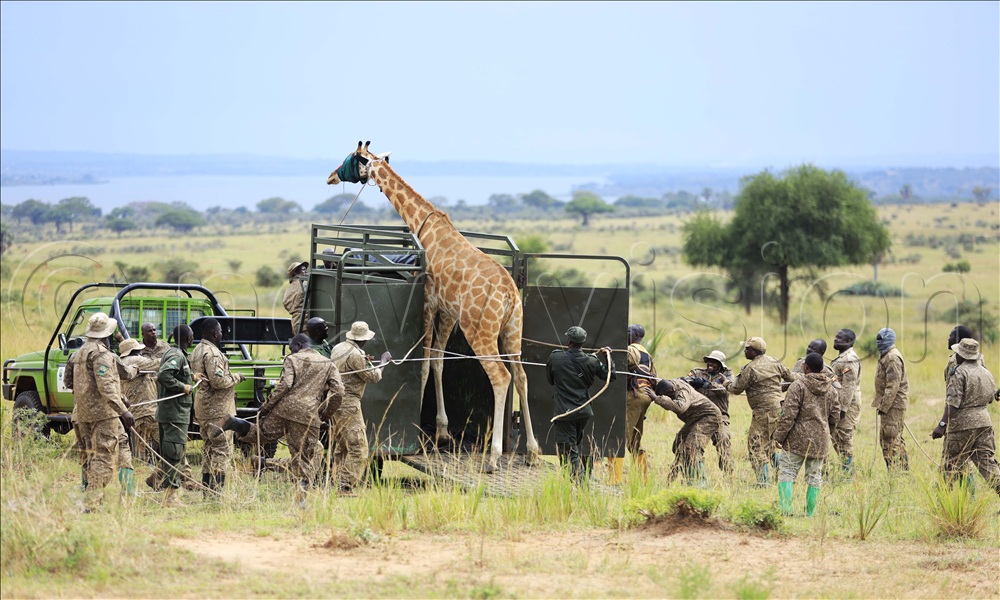
UWA rangers and veterinary doctors loading a third giraffe onto a chariot.
Throughout the journey, every movement was calculated to minimise stress and maximise the animals' chances of adapting successfully to their new home.
While the sight of towering giraffes making their way across north-western Uganda captivated onlookers, the exercise reflected a long-term commitment to rebuilding ecosystems that were once severely degraded by decades of conflict and human pressure.
Once known for its rich diversity of wildlife, Ajai suffered devastating losses during the civil unrest that engulfed Uganda in the early 1970s. Poaching escalated, conservation infrastructure collapsed and many iconic species disappeared altogether. Today, that narrative is steadily changing.
Earlier this year, UWA strengthened the reserve's wildlife populations through the translocation of Uganda kobs, buffaloes and zebras. More notably, the southern white rhinos that historically roamed the area before disappearing decades ago were reintroduced. The arrival of Nubian giraffes on Tuesday therefore represents another carefully planned chapter in rebuilding a complete and balanced ecosystem.
The restoration of Ajai follows a deliberate ecological approach, where different species play different roles in maintaining healthy habitats. Giraffes browse on tree canopies, helping shape vegetation structure and encouraging biodiversity. Zebras are large-area grazers, while antelopes occupy another feeding niche.
Together, these animals contribute to a thriving ecosystem capable of supporting predators, birds, insects and countless other forms of life.
Located in the heart of the West Nile region, Ajai Wildlife Reserve has the potential to become an important tourism destination, complementing nearby attractions and encouraging visitors to spend more time in the area.
Dr. Atimnedi also revealed that the translocation of the remaining 16 rhinos will resume after the planned 12 giraffes have been successfully translocated.
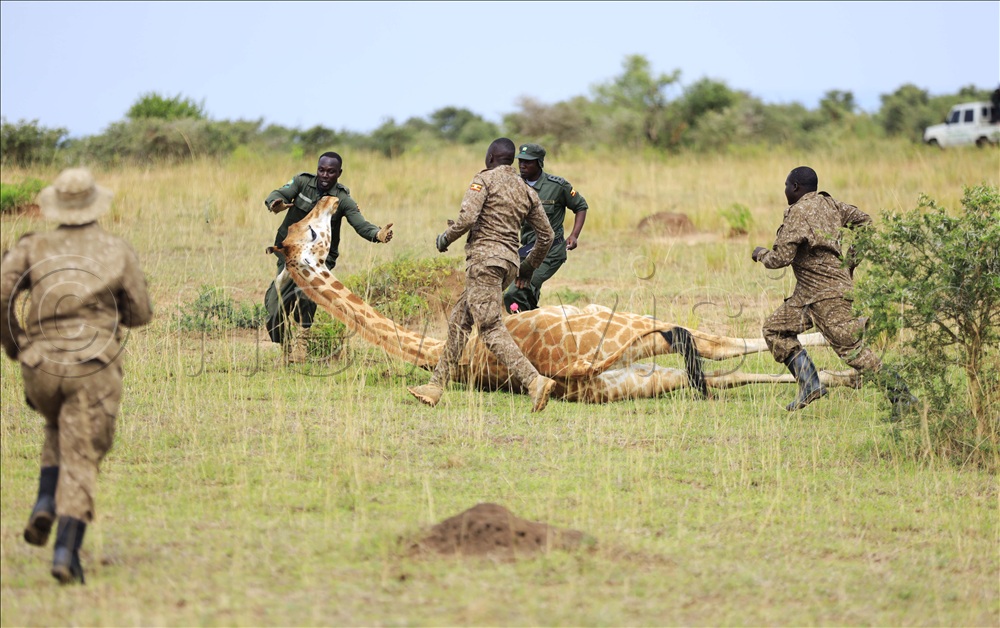
Vets and UWA rangers dashing to get hold of the giraffe before crashing its head on the ground after being darted.
"We therefore hope that the translocation of rhinos will resume in the second week of August," he intimated.
Ajai's restoration represents a partnership between science, government and communities, united by the understanding that wildlife is a national asset capable of generating benefits far beyond park boundaries.
For Dr. Atimnedi and his veterinary team, together with the rangers, Tuesday's operation was another demonstration of Uganda's growing technical capacity in wildlife management.
"Behind every successful translocation lies years of scientific planning, ecological assessments, animal health monitoring and logistical preparation," Dr Mercy Chagara, another veterinary doctor among the translocation crew, remarked.
As the three giraffes finally stepped onto the plains of Ajai Wildlife Reserve, cautiously stretching their long necks to survey unfamiliar surroundings, they carried with them more than their imposing silhouettes, representing renewal and hope.
As West Nile writes this new conservation chapter, the graceful giants now settling into Ajai may well become enduring ambassadors of a future where protecting wildlife is not merely about preserving biodiversity, but also about creating prosperity, strengthening tourism and inspiring generations to believe that even landscapes scarred by history can flourish again.