
Syrian consul vows to widen Ugandan fruit market
Moustafa outlined a broad trade vision beginning with agricultural imports from Uganda. Syria, though agriculturally productive, does not grow certain tropical crops
Syrian Consul Dr. Tamouth Moustafa (C) presents a dummy watch to Ali Waiswa, the Deputy Mufti, during the Syrian National Day celebrations at Hotel Africana on December 8, 2025. (Credit: Wilfred Sanya)
KAMPALA - Syrian Consul to Uganda Dr Tamouth Moustafa has announced plans to widen Syria’s market for Ugandan fruits and other agricultural products, signalling a new era of bilateral co-operation following decades of limited engagement between the two nations.
Speaking during the Syrian celebrations marking the first anniversary since the fall of the Assad regime at Hotel Africana in Kampala city on December 8, 2025, Moustafa said the shift is part of a deliberate decision by the Syrian government to rebuild and strengthen ties with African countries after what he described as a long period of neglect under the previous regimes.
He said the past leadership ignored Africa in general and Uganda in particular, a mistake the current government intends to correct through trade, diplomacy and technical co-operation.
He revealed that high-level discussions are ongoing and that next year, there will be major improvement in relations between the two countries, especially in trade and technology exchange.
Moustafa outlined a broad trade vision beginning with agricultural imports from Uganda. Syria, though agriculturally productive, does not grow certain tropical crops.
He said Uganda is well-positioned to supply products such as pineapple, avocado, sim sim, coffee, and tea items Syria cannot produce on its own.
He added that Uganda also has opportunities to export dry milk, ghee and other agricultural products.
More collaboration
Moustafa said the new co-operation will not stop at trade. In the health sector, for example, three Syrian dental professors will arrive in Uganda on January 20 to train local dentists in advanced procedures.
He said Syria is also exploring agricultural collaboration and further scientific partnerships, noting that Uganda’s drive toward a science-based economy aligns well with Syrian expertise.
Beginning of a long overdue relationship
Minister of State for Foreign Affairs Henry Okello Oryem welcomed the Syrian move, saying it marks the beginning of a long-overdue diplomatic and economic relationship between the two countries.
Oryem acknowledged that for decades, the Assad governments both under Hafez al-Assad and later Bashar al-Assad were widely seen as “oppressive and closed,” limiting the country’s connections with much of the world, including Africa.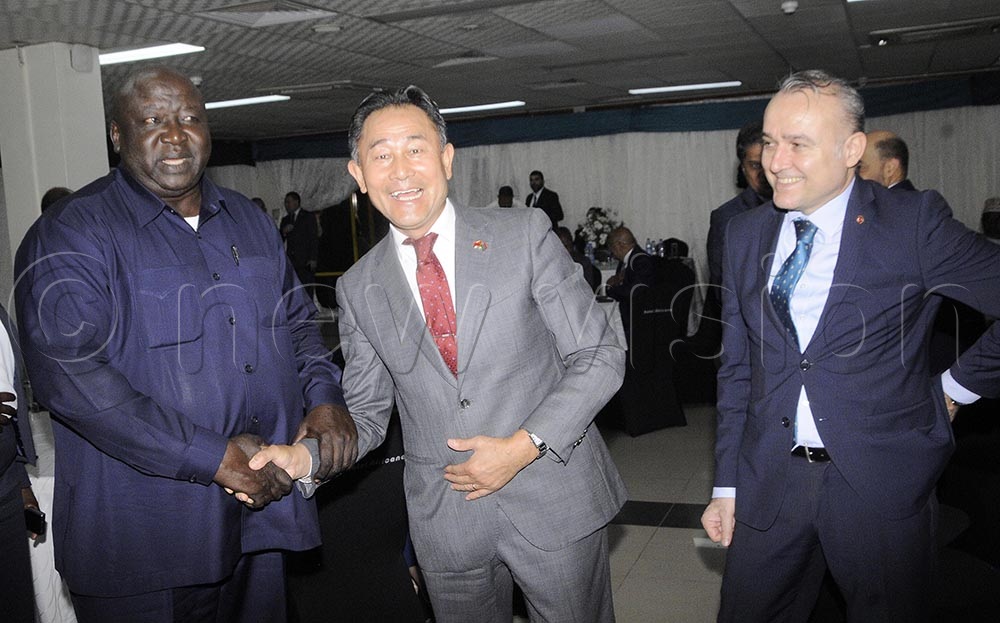
But he said the recent internal transformations in Syria have created expectations of greater openness, including preparations for national elections and increased space for public expression.
Oryem said these developments offer Uganda an opportunity to tap into a vast Middle Eastern market hungry for agricultural imports.
He added that Syria is a market Uganda can never fully satisfy especially for bananas, fruits, vegetables, cereals, and other produce.
Oryem said if Uganda positions itself strategically, it could become one of the major exporters of food products to Syria one of the most promising growing markets in the region.
He also pointed to opportunities in education and skills exchange, given that Syrians are highly educated and trained.
Syria’s Peace
Syria’s renewed outreach to countries like Uganda comes against the backdrop of its long struggle toward stability.
After the 2011 uprising, the country plunged into one of the most destructive conflicts in modern history, marked by insurgencies, foreign interventions, mass displacement, and severe economic collapse.
Bashar al-Assad was ousted as Syria's president and fled to Russia in December 2024, bringing a sudden end to his 24-year rule.
Government control has been largely restored across the country, and reconstruction efforts though slow have begun. Regional diplomacy has also shifted, with Syria being readmitted into the Arab League and re-establishing relations with several countries.
This relative calm has opened the door for economic cooperation and international engagement, paving the way for the trade and diplomatic initiatives now being proposed with Uganda.