
Italy commits sh8.8b to boost food production in Lango, West Nile
“The ECO-FOOD Uganda Project represents a transformative step toward inclusive development. By ensuring that persons with disabilities and other marginalised groups are actively engaged in agricultural value chains, we are building more equitable and resilient communities,” Jackie Kwesiga, country director CBM Uganda, said.
Ugandan and Italian delegations after launch of the Eco-Foods Project in Kampala. (Credit: Nelson Kiva)
KAMPALA - The Italian Ministry of Foreign Affairs and International Cooperation, through the Italian Agency for Development Cooperation (AICS), has committed funding of € 2,000,000 (sh8.8b) to support 6000 small holder farmers in three districts in Lango and West Nile.
The money is being channelled through ECO-Food Project, launched at Four Points by Sheraton in Kampala on Friday (April 17, 2026).
The project implemented by Christian Blind Mission International in Uganda (CBM) and CBM Italy, together with their Ugandan implementing partners, is intended to transform agricultural systems into more inclusive, resilient, and sustainable food value chains.
The project in the districts of Adjumani, Kole, and Lira aims to improve agricultural productivity, strengthen market systems, and enhance the inclusion of smallholder farmers, women, youth, and persons with disabilities.
“The ECO-FOOD Uganda Project represents a transformative step toward inclusive development. By ensuring that persons with disabilities and other marginalised groups are actively engaged in agricultural value chains, we are building more equitable and resilient communities,” Jackie Kwesiga, country director CBM Uganda, said.
She said that the project launch marked a significant step toward advancing Uganda’s national priorities on food security, inclusive economic growth, and climate-resilient agriculture.
The project will support farmers for 36-months from January 1, 2026, up to December 1, 2028.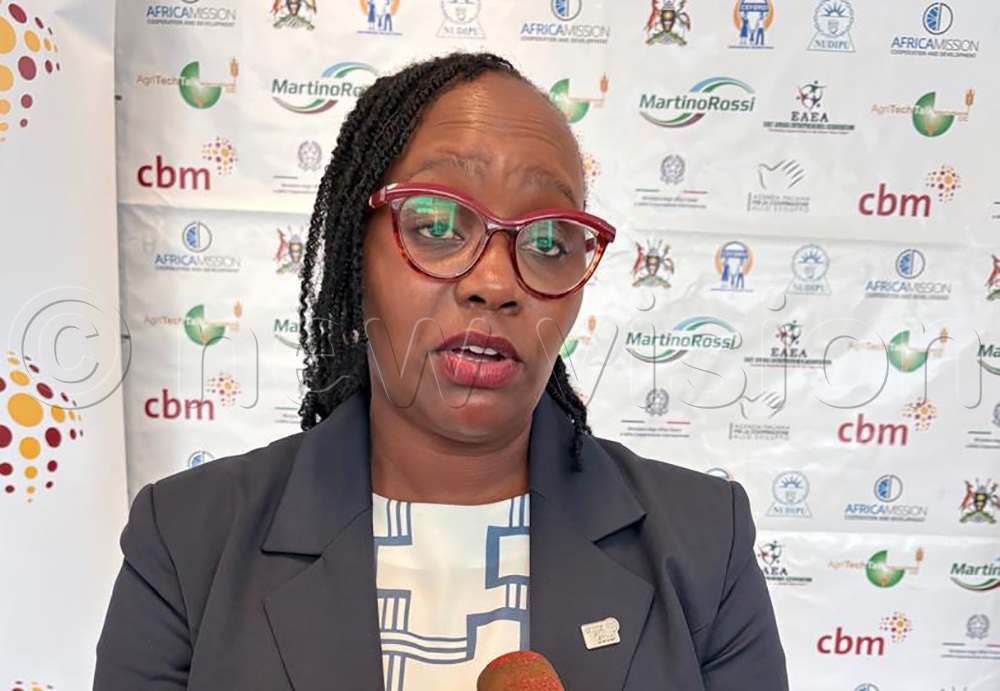
Jackie Marlene Kwesiga, Country Director, Blind Christian Mission. (Credit: Nelson Kiva)
The chief executive officer of CBM Italy, Massimo Maggio, speaking virtually, said, “ECO-FOOD Uganda project demonstrates that inclusive agriculture is possible when all actors work together.”
“We are proud to support systems that ensure persons with disabilities actively participate and benefit from agricultural value chains,” Maggio said.
On behalf of Italian Agency for Development Cooperation (AICS) Kampala, Teresa Savanella said, “Through ECO-FOOD, we reaffirm our commitment to supporting Uganda’s agricultural transformation agenda. This project is about strengthening systems that deliver food security while ensuring no one is left behind.”
Uganda’s agriculture ministry indicated that the project aligns strongly with Uganda’s vision for a productive, competitive, and inclusive agricultural sector.
“We call upon all stakeholders to work together to scale inclusive value chains that improve livelihoods,” Peter Dhamuzungu, principal agriculture officer, cash crops at the Agriculture Ministry, said.
Mawa Alatawa, head of programmes at Community Empowerment for Rural Development (CEFORD), the partners behind the design of the programme, said the initiative will promote sustainable and ecologically relevant food systems.
“The project targets to reach 6215 smallholder farmers, of whom 60% will be women, and then 25%-person disability and 20% the young people. The project was designed based on assessments that were conducted in the community that revealed dire gaps in the areas of food access and also food utilisation and consumption,” Alatawa said.
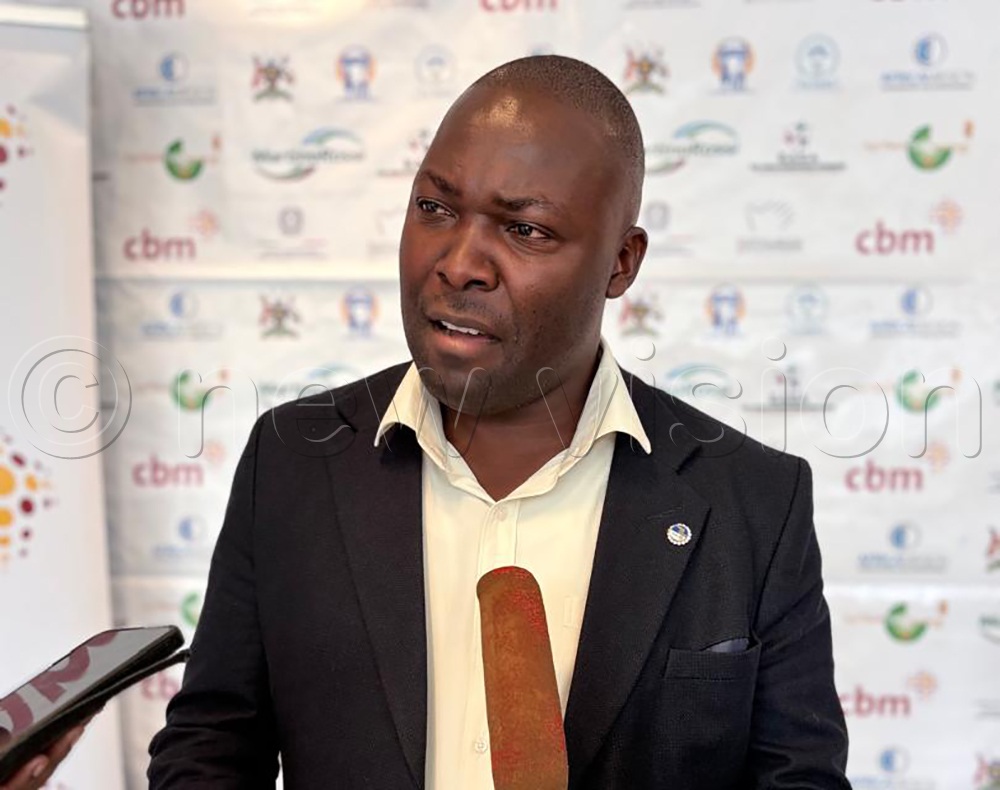
Peter Dhamuzungu, principal agriculture officer, cash crops at the agriculture ministry. (Credit: Nelson Kiva)
He added that the project was informed by the increasing food insecurity in those areas, including the high level of subsistence production.
“We also looked at the high levels of unemployment among the young people, including persons with disabilities, and also the high cases of exclusion of persons with disability in access to natural resources, including land for agricultural production and also the gender inequalities that were exhibited in the districts,” Alatawa said.
He added, “Therefore, the focus of the project is to improve the food access and also utilisation by taking two strands of household food production and also commercial food production systems through intensification of agricultural production through two value chain approaches. The first value chain is looking at promoting the traditional crops, which are indigenous to the areas for food security, but also for the local market.”
He added that the crops that will be prioritised include cassava, maize, soya bean and sunflower.
Alatawa said the second element, looking at scaling up commercial production, is beholding at the introduction of three new value chains, with a ready market in Italy, with support from the private sector actors in Italy, under the Martina Rossi Company.
“Under the new value chains, we are looking at promotion of amaranths (dodo), focusing on the production of the seeds for the international market,” he said.