
Govt tables motion seeking support to deploy UPDF to Gaza
The motion seeks Parliament's backing for President Yoweri Museveni's decision to send Ugandan troops to Gaza following a formal request from the US government.
Minister of Defence and Veteran Affairs Kiryowa Kiwanuka seeking Parliament's approval for Uganda to enter into agreement to provide peace keeping services in Gaza. (Photo by Maria Wamala)
________________
The Government has asked Parliament to approve the deployment of a contingent of the Uganda People's Defence Forces (UPDF) to the Gaza Strip as part of an International Stabilisation Force following a request from the U.S.
If approved, the deployment would become one of the country's most significant military peacekeeping missions outside Africa.
The motion was tabled by Defence and Veteran Affairs Minister Kiryowa Kiwanuka during a plenary sitting chaired by Deputy Speaker Thomas Tayebwa. The motion seeks Parliament's backing for President Yoweri Museveni's decision to send Ugandan troops to Gaza following a formal request from the US government.
If approved, the deployment would be undertaken under Section 38 of the Uganda People's Defence Forces Act, which requires parliamentary approval before Ugandan troops can be deployed outside the country's borders for peacekeeping or peace enforcement operations.
According to Kiwanuka, the proposed mission follows an invitation extended by US President, Donald Trump, who through several emissaries in July 2026, requested Uganda to contribute troops to the International Stabilisation Force established to help stabilize Gaza after nearly three years of a devastating conflict.
Kiwanuka said President Museveni has accepted the request and is prepared to deploy the contingent once Parliament grants the necessary approval.
He said Uganda has already conducted planning meetings involving senior UPDF commanders, officials from the U.S Embassy in Kampala, and leaders of the International Stabilisation Force to prepare for the mission.
Deputy Speaker Thomas Tayebwa during a plenary sitting yesterday (August 05). (Photo by Miriam Namutebi)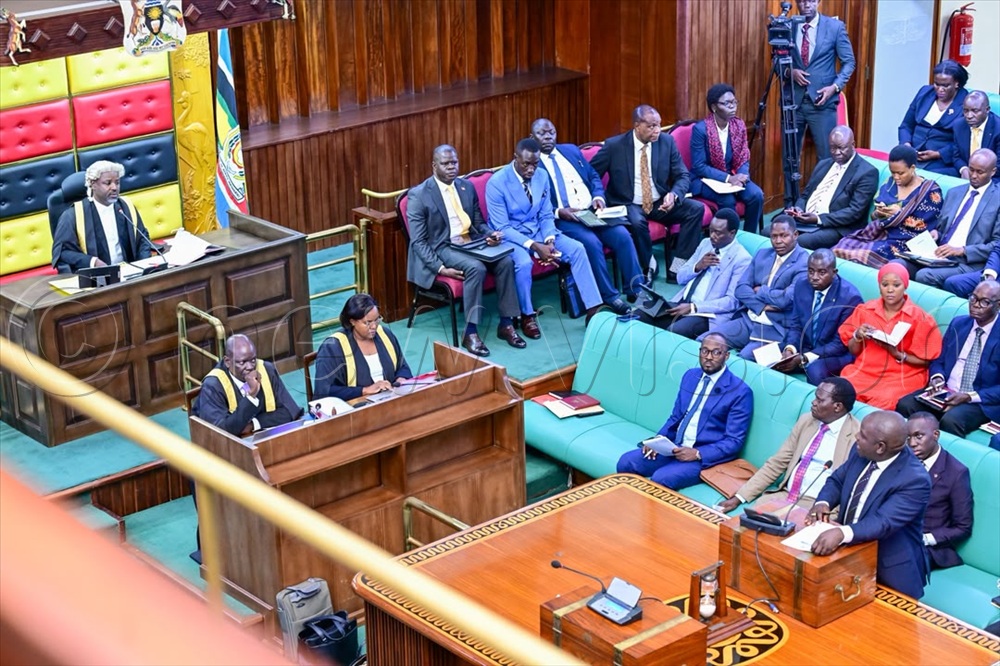
Israel responded with a sustained military offensive aimed at dismantling Hamas and securing the release of the hostages. The campaign has resulted in widespread destruction across Gaza, mass displacement of civilians and a humanitarian crisis that has drawn international concern.
Kiwanuka said the conflict is rooted in decades of competing national claims, disputed territory and failed peace efforts, making international intervention necessary to protect civilians and support reconstruction.
According to the motion, the UN resolution also encouraged member states and international organisations to contribute personnel, equipment and financial resources to the International Stabilisation Force.
The Government argues that Uganda's participation is consistent with its constitutional commitment to promoting international peace and security.
Justifying the motion, Kiwanuka presented to the House Uganda's long record of participating in peace support operations across the continent in Somalia, where Uganda has been among the largest troop contributors to African Union peace missions, as well as operations in South Sudan, the Central African Republic and several United Nations peacekeeping missions.
He said these operations have demonstrated the professionalism and capability of the UPDF in complex international environments.
Beyond humanitarian considerations, Kiwanuka said Uganda's involvement would help prevent renewed fighting between Israel and Palestine by supporting ceasefire monitoring and implementation of agreed security arrangements.
The minister added that the mission would assist in supervising security arrangements, supporting demobilisation efforts and restoring stability to Gaza while providing an opportunity for both sides to pursue lasting peace.
The Government also argues that stabilising Gaza would help prevent extremist groups from exploiting the conflict and would contribute to broader international security by denying terrorist organisations safe operating spaces.
He assured the house that throughout the deployment, UPDF personnel will remain neutral, operate within international humanitarian law, protect civilians without taking sides in political disputes, and strictly adhere to clearly defined rules of engagement.