
Districts without service commissions irk Gen. Katumba
Districts that fail to constitute service commissions by August 30, 2026, will have their recruitment handled by neighbouring districts to ensure staffing gaps do not persist.
Public Service Minister Gen. Edward Katumba Wamala addresses participants during the Ministry of Local Government's meeting with local government leaders on the implementation of the President's directive to eliminate corruption in Uganda at Hotel Africana, Kampala, on August 5, 2026. (Photo by Nancy Nanyonga)
___________________
The Public Service Minister, Gen. Edward Katumba Wamala, has expressed displeasure at districts and cities that have failed to form service commissions across the country, which results in failure to recruit staff.
“What is so difficult in forming these district service commissions? Without the district service commissions now, people are returning money. I have seen districts returning up to sh3b because they have failed to recruit,” he said.
He made the remarks on Wednesday (August 5) during a one-day high-level national meeting on the implementation of President Yoweri Museveni’s directive to expose and eliminate corruption in Uganda.
The meeting, which was held at Imperial Royale Hotel in Kampala, brought together political and technical leaders from all districts, cities and municipalities in the country.
“Now, that is money, which the Government has sent to the district for wages, but you return it to the central government, and then you complain. Surely, who is to blame? You want to tell me that in all these districts, there are no credible senior citizens, people of integrity, who can serve on these commissions?” Katumba asked.
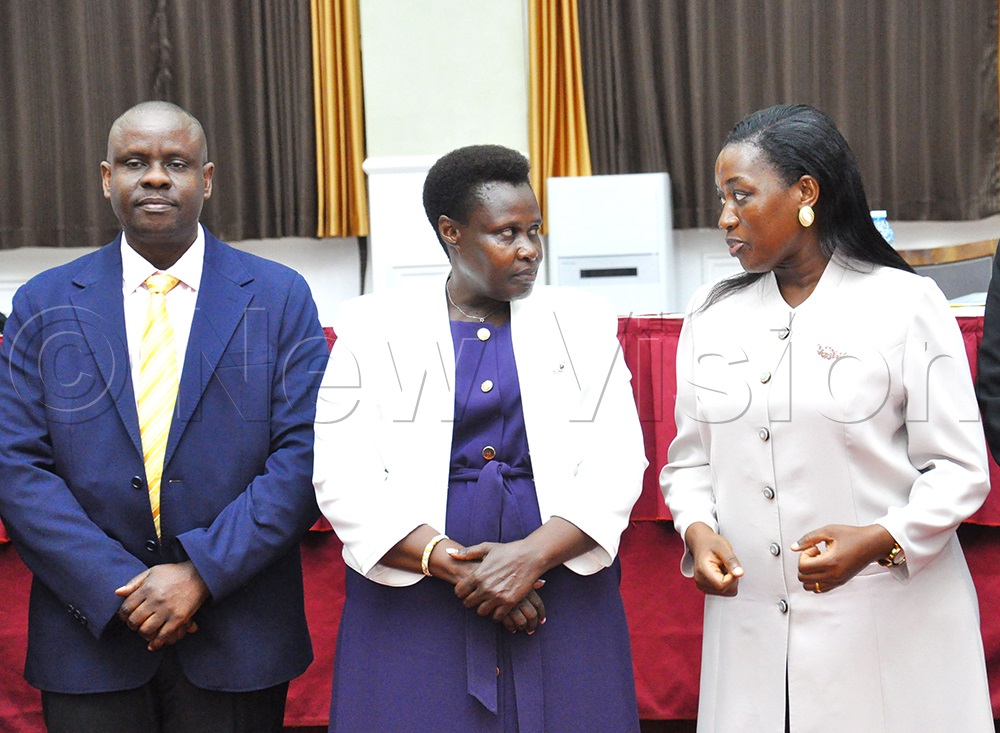
(L-R) Local Government Minister Balaam Barugahara looks on as Vice President Jessica Alupo interacts with State Minister for Local Government Justine Nameere during the Ministry of Local Government meeting with local government leaders on the implementation of the President’s directive to eliminate corruption in Uganda at Hotel Africana, Kampala, on August 5, 2026. (Photo by Nancy Nanyonga)
However, Barugahara, who was also present, shot up immediately, saying they have written to all the districts and informed them that they must constitute public service commissions by August 30, 2026.
“In case they fail, we shall use the neighbouring districts to recruit for them their staff so that we don't have a gap in any of the districts,” Barugahara said.
Katumba thanked him for the information but hastened to add, “I would still appeal that every district should have a service commission. Let’s put our personal interests, political interests aside, and be able to afford these organs, which are very critical in service delivery.”
The president of the Uganda Local Governments Association, Andrew Moses Awany, who also serves as the chairperson of Kole district, said service commissions have played a key role in advertising vacancies, shortlisting applicants, conducting interviews and recommending qualified personnel for appointment in critical areas such as health and education.
Despite their contribution, Awany noted that district and city service commissions face serious challenges, including inadequate funding and poor remuneration, with the chairpersons receiving sh2m per month while members receive sh400,000 per quarter.
He also cited delayed constitution of service commissions, limited technical support, slow recruitment clearances, high staffing gaps, risks of corruption and weak digital recruitment systems as other challenges.
“These challenges delay appointments, thereby affecting recruitment and weakening service delivery in critical sectors such as health, education, engineering and administration. The Government should adequately fund and facilitate service commissions, improve remuneration, fast-track recruitment clearances, strengthen digital recruitment systems, and provide technical support,” he said.
Article 200 of the Constitution establishes district service commissions as independent bodies responsible for appointing, confirming, disciplining and removing local government staff.
Their operational mandate is further elaborated under the Local Governments Act, Cap. 243, which entrusts district service commissions with ensuring that recruitment is conducted fairly, competitively and independently of political influence.