
Uganda’s bone marrow transplant centre to handle six patients at once
Once completed, Ssali adds that the transplant unit that is under establishment will offer a cure for patients battling sickle cell disease.
The deputy executive director at the Joint Clinical Research Centre (JCRC), Dr. Francis Ssali handing over a marathon kit to the sponsors. (Photos by Agnes Kyotalengerire)
________________
The bone marrow transplant center in Uganda will handle six patients admitted and undergoing transplant, the deputy executive director at the Joint Clinical Research Centre (JCRC), Dr. Francis Ssali, has said.
Once completed, Ssali adds that the transplant unit that is under establishment will offer a cure for patients battling sickle cell disease.
In 2023, President Yoweri Museveni commissioned the first bone marrow transplant centre at JCRC headquarters in Lubowa.
Sharing updates on the development of the facility on Thursday, Oct 22, he further noted that the establishment of the unit is in advanced stages, and the agency has invested in training a team of doctors, nurses, laboratory personnel, data people, and also systems that are used to evaluate patients and to support them in navigating treatment.
He was speaking during the launch of a marathon to fundraise for the establishment of a bone marrow transplant unit in Uganda.
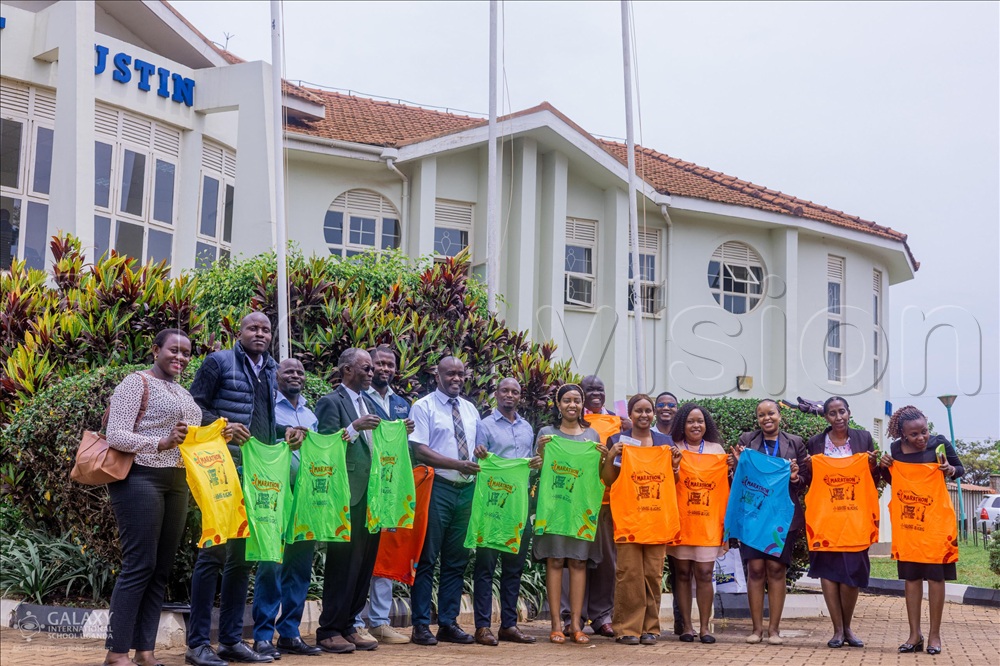
A total of US $4 million (Sh 17.2 billion) is required to set up of the bone marrow transplant unit in Uganda. The proceeds from the marathon will support the establishment of the bone marrow transplant unit Dr. Ssali said.
Ssali reported that the agency (JCRC) has received some support from the government to help to set up some installations for critical systems, but it is not sufficient.
The fundraising dubbed marathon GISU and themed “Every Step Saves a Life" has been sponsored by Evalina Children’s Clinic, Hygiene Consult Limited, CaseMed Insurance, ?Doctors Hospital, B&T Insurance, RSM Eastern Africa, Sanlam Insurance, Twin Towers Hotel, Motor Care, Zreash Biotech Uganda Limited, and Nic Insurance.
The run will be flagged off at Galaxy International School in Lubowa on Saturday, October 24, starting with aerobics as part of the warm-up activity at 8:30 am.
Participants' kits for three different three routes (short, medium, and long) are on sale for sh30,000.
The chief runner will be the Centenary Group’s Chief Executive Officer, Fabian Kasi.
Sickle cell disease awareness is critical.
“We want to start early enough so that the children are also aware so that when they grow up, it is not too late for them to learn about sickle cell disease,” he noted.
The deputy director of research at JCRC, Dr Pauline Amuge, urged the public to advocate for sickle cell disease awareness, noting that it is not infectious.
She said there is a need to bring religious leaders, school-going students, and students of higher institutions of learning on board and encourage them to test for sickle cell and know their status before they engage in marital affairs.
This, according to Dr Amuge, will help to reduce the spread of the disease.
Sickle cell disease burden
Sickle cell disease (SCD) is an inherited blood disorder that affects the haemoglobin in red blood cells. It occurs when a child inherits abnormal haemoglobin genes from both parents, causing red blood cells to become hard and sickle-shaped. This consequently blocks blood flow and causes pain and other serious health problems.
Sickle cell disease remains an important public health issue in Uganda. Recent data reveals that about 25,000 babies are born with sickle cell disease in Uganda every year. Without comprehensive care, 70–80% of affected children die before the age of five. Additionally, about 1.3%; about 0.7–0.8% of Uganda’s population lives with sickle cell disease, and about 13.3% carries the sickle cell trait.
A person who inherits one sickle cell gene from one parent and a normal haemoglobin gene from the other usually has a sickle-cell trait (AS). They do not have sickle cell disease, but they can pass the sickle cell gene to their children.