
Pharmacists commend govt in Sickle Cell screening ahead of Sickle Cell Run
“Being a carrier does not mean a person has sickle cell disease. However, when two carriers have children together, there is a risk of having a child with sickle cell disease,” Dr. Mugide said.
The pharmacists noted that 6,000 to 9,000 children born with sickle cell disease in Uganda die before reaching the age of five. particularly true where they do not receive adequate care. (Credit: Ibrahim Ruhweza)
The Pharmaceutical Society of Uganda (PSU) has commended the Government for expanding sickle cell screening and access to treatment, saying stronger investment in early diagnosis and affordable medicines could save thousands of lives.
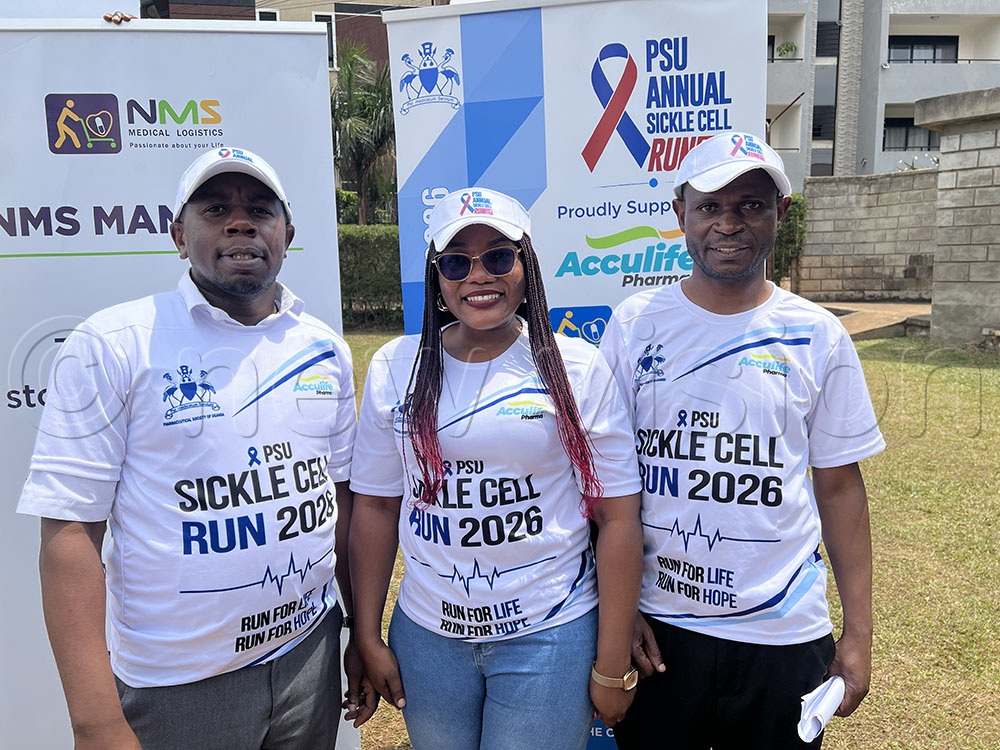
The pharmacists made the remarks on Friday, August 7, 2026, as they launched preparations for the 2026 PSU Sickle Cell Run, scheduled for September 20, 2026, under the theme of raising awareness, promoting early screening and improving access to treatment for people living with sickle cell disease.
PSU Vice President Dr. Nuru Mugide described sickle cell disease as an inherited blood disorder that is passed through genes and is not contagious.
In people with the disease, red blood cells can become sickle-shaped, rather than the normal round and flexible. The abnormal cells can block blood flow, break down easily, and reduce the body's ability to transport oxygen, resulting in severe pain, anaemia, fatigue, infections and, in severe cases, damage to body organs.
According to the figures presented by the pharmacists, every year, about 300,000 babies are born with sickle cell disease globally. Uganda accounts for approximately 20,000 births annually.
That means Uganda's estimated annual number of babies born with sickle cell disease is equivalent to about one in every 15 babies born with the condition globally.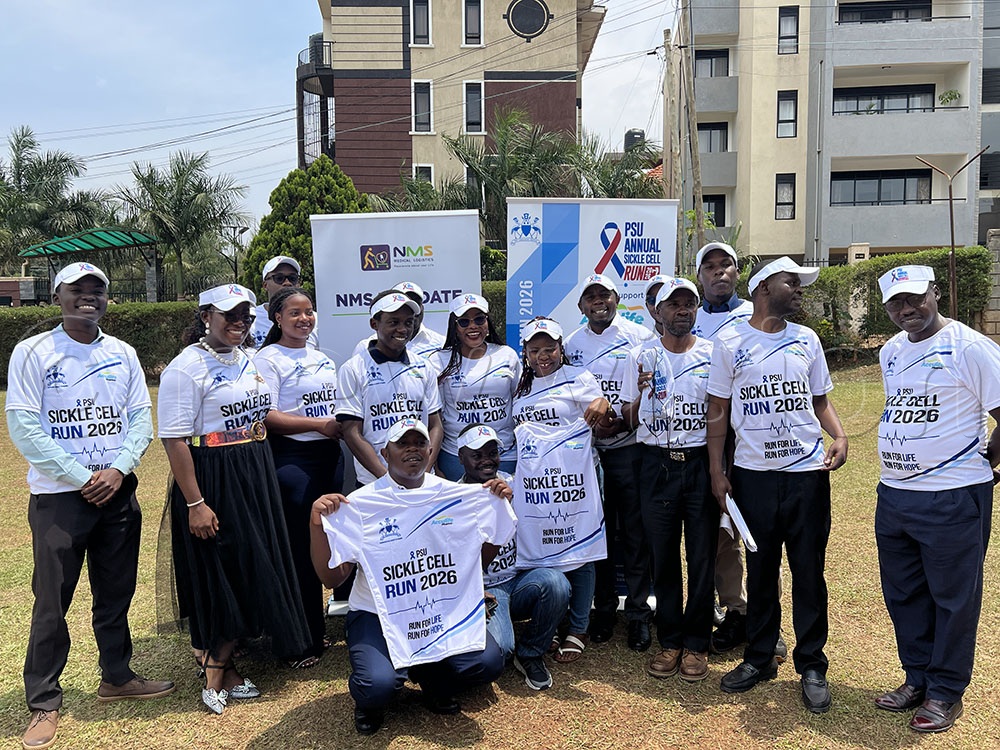
The pharmacists particularly praised the Government and the Ministry of Health for integrating sickle cell screening into maternal and child health services and encouraging newborn screening. (All Photos by Ibrahim Ruhweza)
The pharmacists noted that 6,000 to 9,000 children born with sickle cell disease in Uganda die before reaching the age of five. particularly true where they do not receive adequate care.
This translates to roughly 30% to 45% of the estimated 20,000 affected babies dying before their fifth birthday, based on the figures presented at the launch.
Uganda also has a high carrier rate, with 24% of Ugandans estimated to carry the sickle cell gene (one in every four people).
Dr. Mugide explained that this makes knowing one's genotype an important part of preventing new cases and ensuring families can make informed decisions.
The pharmacists noted that many people living with sickle cell disease face severe pain crises, repeated hospital admissions, infections and stigma at school and in the workplace.
Families also face the financial burden of hospital bills, medicines, blood transfusions and frequent travel to health facilities.
Dr. Mugide said the disease can be managed and its complications reduced when patients are diagnosed early and receive appropriate care.
“Available interventions include pain management, folic acid, infection prevention, blood transfusions where necessary, and hydroxyurea, one of the key medicines used in managing sickle cell disease.
Hydroxyurea helps increase the production of fetal haemoglobin, which can reduce sickling of red blood cells and, consequently, reduce pain crises and hospitalisation for many patients.”
However, pharmacists say the cost of hydroxyurea has previously placed it beyond the reach of some patients.
The pharmacists particularly praised the Government and the Ministry of Health for integrating sickle cell screening into maternal and child health services and encouraging newborn screening.
Dr. Doreen Basangwa, a senior pharmacist at National Medical Stores (NMS), said the government has now taken another step to improve access to medicines.
“From July 2026, NMS began rolling out free sickle cell medicine kits to all eligible health facilities, rather than limiting the programme to the previously accredited facilities.”
According to Basangwa, health facilities qualify for the kits if they have patients with sickle cell disease and report the number of affected patients to NMS.
The kits, which mainly contain hydroxyurea and other essential medicines, are provided free of charge and do not affect a facility's credit line.
Basangwa said NMS currently has sufficient stocks of the medicines to support the expanded programme.
The development could significantly reduce the financial burden on families that previously had to purchase medicines from private facilities.
Dr. Favour Odin Khaukha, President of Women in Pharmacy Uganda, said: “The campaign will focus on awareness, early screening, community empowerment, reducing stigma, strengthening partnerships and mobilising resources for essential medicines.”
This year's event will feature 5km and 10km races, alongside a health camp offering sickle cell screening, pharmacy consultations and blood pressure checks.
The organisers are targeting at least 1,000 participants to be screened during the event.
They plan to use the run to mobilise funds for hydroxyurea and other essential medicines, particularly for patients in highly burdened and hard-to-reach communities.
Dr. Khaukha said the ambition is not simply to attract thousands of runners, but to ensure that people leave the event with better knowledge about sickle cell disease than when they arrived.