
How stigma is pushing women with disabilities away from contraception
The dialogue, organised by Centre for Women’s Justice Uganda in partnership with Tunaweza Foundation, brought together women with disabilities to discuss access to contraception and sexual and reproductive health information under the theme: “Upholding Sexual Reproductive Health and Rights of Persons with Disabilities through Informed Choice and Equal Access.”
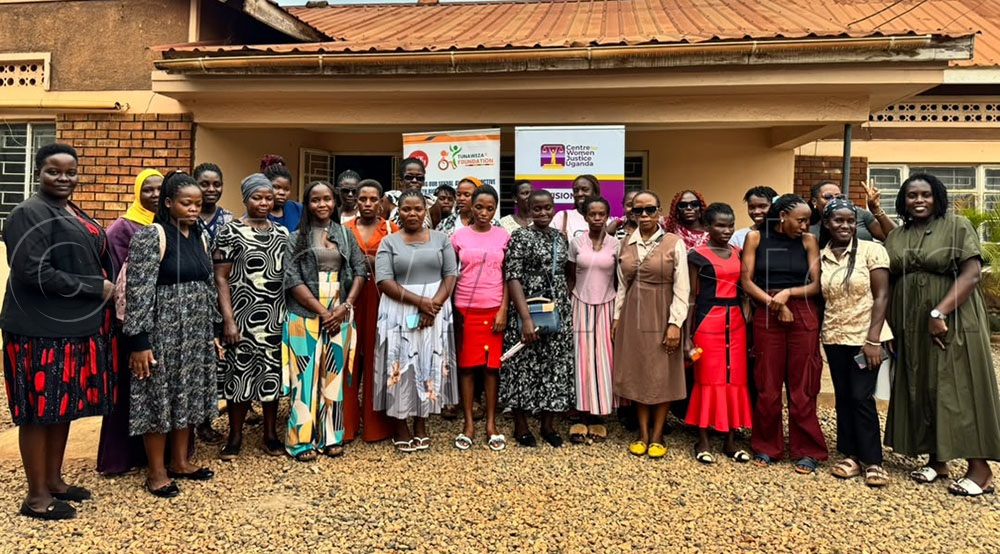
Women with disabilities during a community dialogue at Tunaweza Foundation offices in Nyanama, Wakiso District, on Friday, ahead of National Contraception Day, observed on September 26. (Credit: Richard Ategeka)
WAKISO - Jalia Nankwanga remembers the words, but more than that, she remembers how they made her feel.
She had gone to a pharmacy with her sister to buy a pregnancy test. Instead of being treated like any other young woman seeking a health product, she heard someone refer to her as “that blind girl”.
The remark made her feel as though her disability somehow meant she could not have sexual or reproductive needs.
Her experience is part of a wider issue. Uganda's 2024 census found that 13.8% of females aged two and above have a disability, highlighting the size of the population whose access to essential services must take disability into account.
For Nankwanga, who is visually impaired and a student at Makerere University, the incident changed how she accesses reproductive health services.
“I stopped going personally. I send someone to buy for me,” she narrates.
Her experience was among those shared by women with disabilities during a community dialogue at Tunaweza Foundation offices in Nyanama, Wakiso district, on September 25, 2026, ahead of National Contraception Day, observed on September 26.
The dialogue, organised by Centre for Women’s Justice Uganda in partnership with Tunaweza Foundation, brought together women with disabilities to discuss access to contraception and sexual and reproductive health information under the theme: “Upholding Sexual Reproductive Health and Rights of Persons with Disabilities through Informed Choice and Equal Access.”
“When there is a person with a disability trying to buy a pregnancy test or buying those things, they take you as someone who is immoral,” she said.
Dorcas Kekitinisa, a legal and advocacy officer at Centre for Women’s Justice Uganda, said women with disabilities have repeatedly reported difficulties accessing family planning services. (Credit: Richard Ategeka)
That judgment can have consequences beyond embarrassment. Nankwanga noted that women who feel uncomfortable seeking contraception may eventually avoid the services altogether.
“If you are a lady with a visual impairment and go to the hospital or the pharmacist to buy them, there is always judgement which leads us to having unprotected sex and risking our lives.”
Nankwanga has found other ways of accessing information. Before she owned a smartphone, she said she used the 161 service to seek information. She now also uses Meta AI on WhatsApp to find information about her wellbeing and sexual and reproductive health.
But information alone does not solve every problem.
For a visually impaired woman, even a simple pregnancy test can become a question of privacy and independence. Nankwanga said she sometimes needs another person to help determine whether the result is positive or negative.
“I need an extra person to help me out to tell me whether I am positive or negative,” she said
Her story reflects a wider concern raised at the dialogue: women with disabilities may have the right to make reproductive decisions, but stigma, inaccessible information, communication barriers and decisions made on their behalf can interfere with that right.
Dorcas Kekitinisa, a legal and advocacy officer at Centre for Women’s Justice Uganda, said women with disabilities have repeatedly reported difficulties accessing family planning services.
“One of the biggest issues they are bringing out is the stigma around their accessibility and their disability,” she said.
Kekitinisa said some families, caregivers and health workers also make reproductive decisions for women with disabilities rather than allowing them to make informed choices themselves
“Contraception itself should be an informed choice,” she said. “Their disability does not take away their right.”
Meanwhile, Doreen Nakibuule, programmes manager at Tunaweza Foundation, said misconceptions in communities also affect how women with disabilities are treated.
Some people, she said, believe persons with disabilities are asexual or cannot become pregnant, while other harmful myths are attached to particular disabilities.
“Being with a disability does not stop you from being a woman or having a reproductive system,” Nakibuule said.
She said the organisation works with persons with disabilities across Uganda and has reached more than one million people through its programmes, while smaller projects have specifically targeted women with disabilities.