
Health workers undergo governance, management skills training
The training programme is aimed at equipping health workers with skills to help eliminate gaps and solve performance problems through proper planning, managing, supervising and collaborating to improve service delivery.
Dr Roselyn Ochola (left) , a technical advisor SRH and self-care Ministry of Health, leading a health break at the training. (Photo by Doreen Musingo)
__________________
JINJA – In a bid to improve the country’s health system, the health ministry has started training health workers countrywide to enhance governance and management skills.
The training programme is aimed at equipping health workers with skills to help eliminate gaps and solve performance problems through proper planning, managing, supervising and collaborating to improve service delivery.
Prof. Everd Maniple from the Kabale University public health department, who is heading the training programme, said the ministry has been noticing performance problems that have affected service delivery.
According to him, the programme not only responds directly to identify gaps but also positions the ministry to institutionalise leadership development as a cornerstone of performance improvement through blended learning and supervised practices.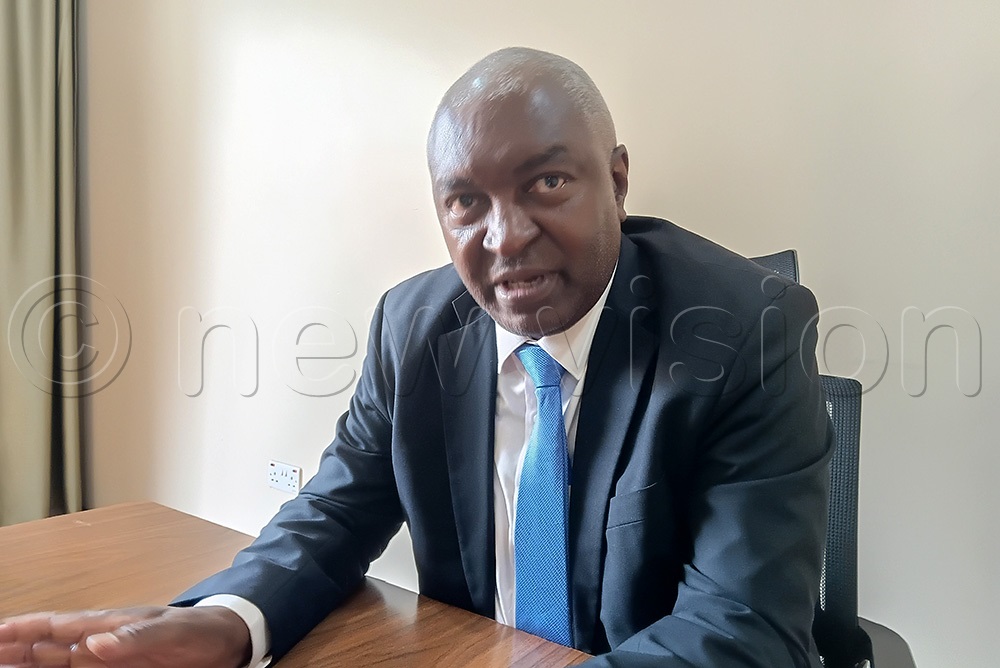
Prof. Everd Maniple from the Kabale University public health department speaking during the training. (Photo by Doreen Musingo)
“The ministry has observed Poor performance problems and health service delivery gaps at lower levels in the districts. We dream that after the training on governance with management skills, one of the most sensitive areas noticed as lacking in performance and capacity will be improved,” he said.
He cited some of the performance gaps were in areas of immunisation coverage, where the health sector was still experiencing outbreaks of some diseases such as polio, Measles and pneumonia.
“We think we have done a good job in immunisation at the national level, but we still get breakouts of these immunisable diseases, and the question is why, because we have to interrogate the problem deeper through empowering all leaders with knowledge,” he said, adding that those trained will work as focal persons.
Maniple made the remarks on December 12, 2025, while addressing district health officers, assistants and educators of the first cohort of the training at the Source of Nile Hotel in Jinja city from 34 districts in the West Nile, eastern and Busoga regions. The second cohort training will be from the remaining regions.
He said the training organised through the department of Institutional Human Resources Development (IHRD) started with the health sector transformational leadership development programme for 2025/26.
Maniple added that they started with a five-day introductory face-to-face session on the content of the programme, which was developed in a collaborative effort from GAVI through partnership with UNICEF and Kabale University, which designed the training syllabus.
The online six-month programme will focus on strengthening governance and management of district leaders, drawing on both the WHO leadership and management framework and the National Health Service leadership academy model.
He said this was part of the broader health systems strengthening strategy that seeks to address longstanding gaps in leadership, accountability and resource management in the health care system.
He added that mentors were identified at national levels who will partner with the education ministry, and that the online exercise will start after the 2026 General Election.
The self-care programme
However, Maniple also said the ministry had started a self-care programme that will be extended to health workers at all levels. He explained this was after the ministry observed that, just as the workers give health care to patients, they also suffer conditions like depression, commit suicide, alcoholism, drug abuse and violence, among others.
“We expect the core team to provide self-care skills, stress management and create safe and supportive workplaces with trauma and burnout awareness to help these health workers because some of them have their personal problems that also need to be helped out,” he said.
“When managing the workers, we want them to perform well, yet they have their own problems; we have to handle them in a supportive way so that we can also get maximum productivity.”
While opening the training, Dr Alfred Driwale, the commissioner in charge of IHRD, described governance as the backbone of any resilient health system. He emphasised that even well-resourced facilities fail without proper oversight and leadership.
Commissioner Driwale said the training was a result of unprofessional behaviour and bad attitude among the health workers, which was affecting service delivery.
Dr Roselyn Ochola, a technical advisor SRH and self-care ministry of health, who delivered a lecture on self-leadership, stress management and self-care strategies, said the ministry needs to understand the plight of its workers and also give them support.
She added that some conditions are caused by stress in working environments, poverty, which leads to multiple loans, poor housing, depression and alcohol addiction.