
50 trained in parenting for respectability
The training was jointly organised by the Child Health and Development Centre (CHDC) in partnership with the Ministry of Gender, Labour and Social Development (MGLSD).
Commissioner for Culture and Family Affairs at Ministry of Gender, Labour and Social Development Juliana Naumo and Dr. Godfrey Siu, Senior Lecturer at Makerere University and also Director CHDC (C) take a photo moment with participants and CHDC staff after a five-day training in Parenting for Respectability at Esella Country hotel. (Photo by Violet Nabatanzi)
__________________
Fifty participants drawn from local governments and organisations have completed a five-day intensive training in the Parenting for Respectability (PfR) programme, marking a significant milestone in strengthening family wellbeing across the country.
The training was jointly organised by the Child Health and Development Centre (CHDC) in partnership with the Ministry of Gender, Labour and Social Development (MGLSD), attracting participants from Gulu, Zombo, Dokolo, Busia, Sironko, Kumi, Tororo, Wakiso, Amuru and Nakasongola districts.
Speaking at the closing of the training, the Commissioner for Culture and Family Affairs at MGLSD, Juliana Naumo, urged participants to champion transformation within their communities through intentional action.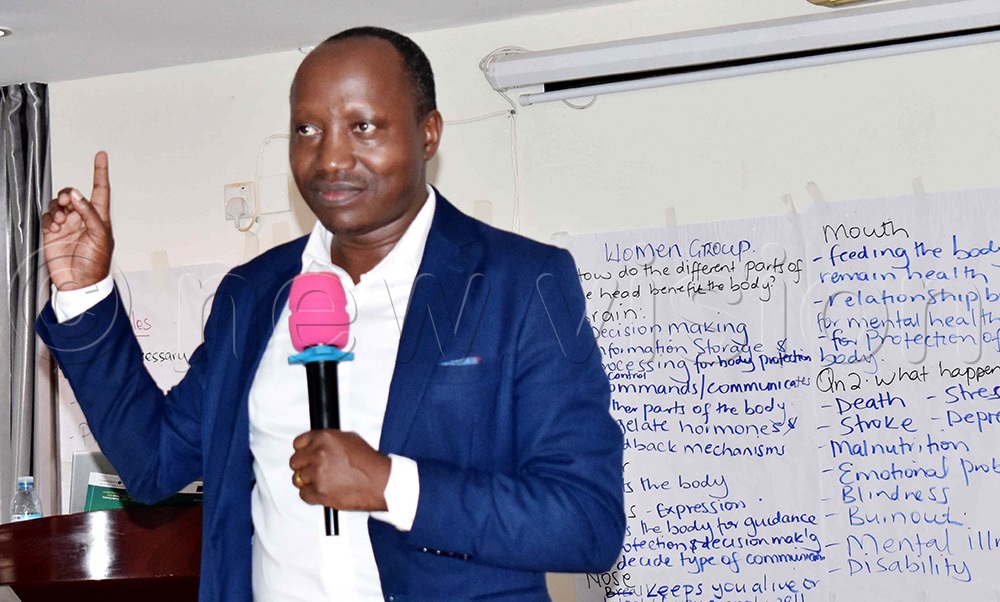
Dr. Godfrey Siu, a Senior Lecturer at Makerere University and also Director CHDC during a training session at Esella Country Hotel. (Photo by Violet Nabatanzi)
“You have the coverage. You have the target groups that you can always reach, starting with your own families. Start from there,” she said.
Dr Godfrey Siu, Senior Lecturer at Makerere University, also Director CHDC, highlighted that the training introduced participants to the history of PfR, its evidence base, and the importance of designing parenting interventions that are systematic and rigorous.
“We reflected on our personal lives, examined parenting practices in Uganda, and discussed the principles that guide the PfR programme,” he said.
Dr Siu noted that Uganda still faces an urgent need for evidence-based and culturally responsive parenting interventions and commended PfR as a home-grown solution that is easily adaptable across communities. He added that several participants had already expressed commitment to supporting CHDC in its scaling efforts.
Also speaking at the event, Hosea Katende, Scale and Capacity Development Specialist at CHDC, explained that “PfR programme is aimed at improving parenting, strengthening spousal relationships, and reducing violence against children and intimate partner violence,” he said. “As an academic and research institution, our role is to design, test, and generate evidence that informs policy and can be rolled out to communities through empowered partners.”
He noted that after successfully piloting the programme in Busia, Tororo, Nakasongola, Amuru and Wakiso, CHDC is now focused on building the capacity of government agencies and partner organisations to deliver PfR effectively.
“The objective of this training was to equip partners with the technical skills needed to implement PfR in their own contexts,” Katende added, explaining that the programme follows a structured delivery system involving training, data collection and continuous field monitoring.
Carolyn Byekwaso Namutebi, Programme Manager for Families, Parenting and Child Health at CHDC, explained that PfR is transforming families by focusing on three core areas.
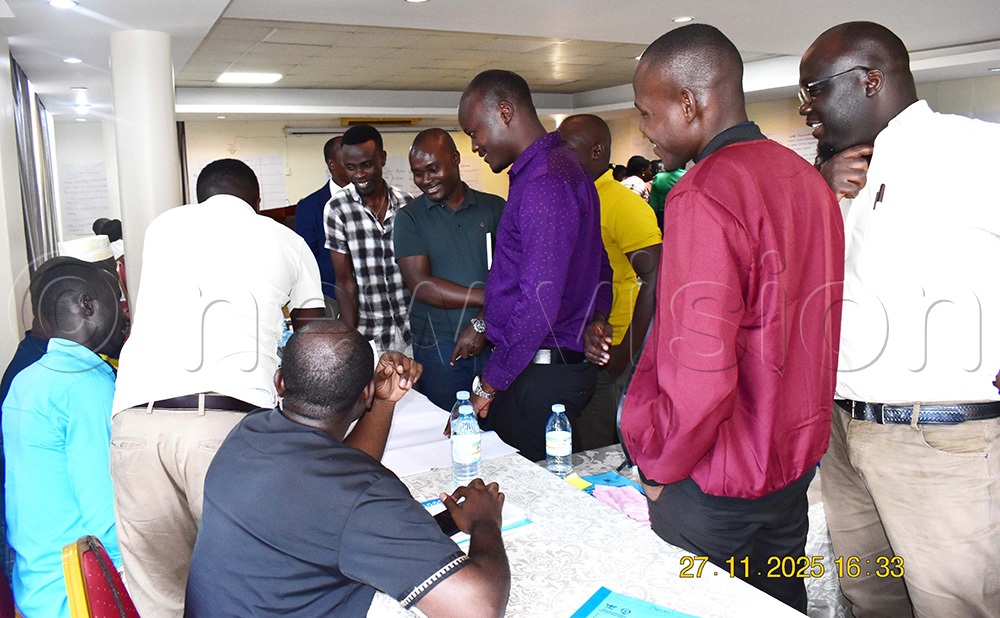
Male participants attending a group discussion as part of the training. (Photo by Violet Nabatanzi)
First, she said, the programme strengthens parental bonding and attachment across all age groups from infants to adolescents, improving family harmony and communication.
Second, it reduces harmful disciplinary practices by equipping parents with alternative skills for guiding children without resorting to corporal punishment.
“Children thrive when they know that making mistakes is part of growing, not a reason to be beaten,” she said.
Third, the programme promotes raising boys and girls equally. “We teach boys to be humble and girls to be hardworking because they will eventually live and work together as adults. They should grow up with similar values, not opposite standards,” she said.
PfR also incorporates a strong component of improving spousal relationships, helping parents reflect on how they treat each other, set family goals, and build healthier partnerships.