
Govt calls for stronger collaboration in palliative cancer care
“Cancer survivorship starts at diagnosis all through to the end of life. If someone was diagnosed with cancer yesterday, and they are alive today, it means they have survived for one day,” Dr Mugisha noted.
Guests cutting cake during the launch of the oncology palliative care and cancer survivorship. Credit: Agnes Kyotalengerire)
KAMPALA - The Ministry of Health has urged palliative care service providers to strengthen collaboration and ensure cancer patients receive the services they require.
“We should not just discharge patients without tailoring them to the services they require simply because we are overwhelmed,” said the acting head of the palliative care division at the health ministry, Dr Miriam Ajambo.
Ajambo said the Government is committed to working closely with health workers to provide palliative care for cancer patients and mentorship to enable them to make better referrals.
She was speaking on September 25, 2026, during the launch of the palliative oncology and cancer survivorship division at the Uganda Cancer Institute (UCI) in Mulago.
Globally, many cancer treatment centres do not have standalone cancer survivorship services. The division is among the few units in the world dedicated to supporting people living with and beyond cancer.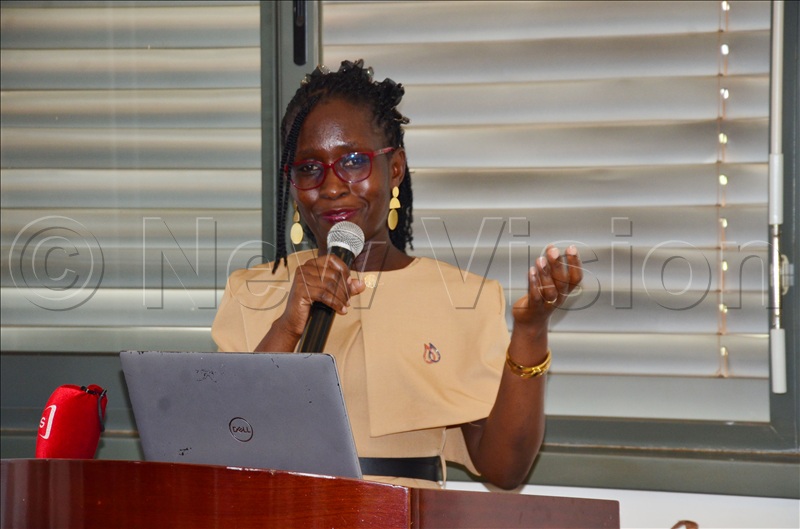
Ajambo said the Government is committed to working closely with health workers to provide palliative care for cancer patients and mentorship to enable them to make better referrals. (All Photos by Agnes Kyotalengerire)
The head of the palliative unit at UCI, Dr Jennifer Nabukenya Ssengoba, described oncology palliative care as specialised medical care that focuses on relieving pain, symptoms and stress among people living with cancer.
The head of the survivorship unit at UCI, Dr Noleb Mugisha, defined cancer survivorship as a holistic journey for anyone diagnosed with cancer.
“Cancer survivorship starts at diagnosis all through to the end of life. If someone was diagnosed with cancer yesterday, and they are alive today, it means they have survived for one day,” Dr Mugisha noted.
Mugisha further noted that some cancer survivors lose body parts, such as limbs, breasts and organs, while others lose body functions, such as fertility, during the course of treatment.
“We need to know that for them to function fully again, they need interventions and support, and this is what we want the division to provide,” Dr Mugisha noted.
The executive director of Mulago National Referral Hospital, Dr Rosemary Byanyima, said the launch of the division would increase demand for the services and urged palliative care health workers to prepare for more work.
The head of oncology palliative care and cancer survivorship, Dr Israel Luutu, said although palliative care services have been available in Uganda since 1993, they have not been tailored specifically to palliative oncology, which focuses on cancer patients.
Luutu further noted that historically, follow-up care has largely focused on monitoring cancer recurrence and providing cancer palliative care, rather than offering structured, holistic support for life after cancer treatment.
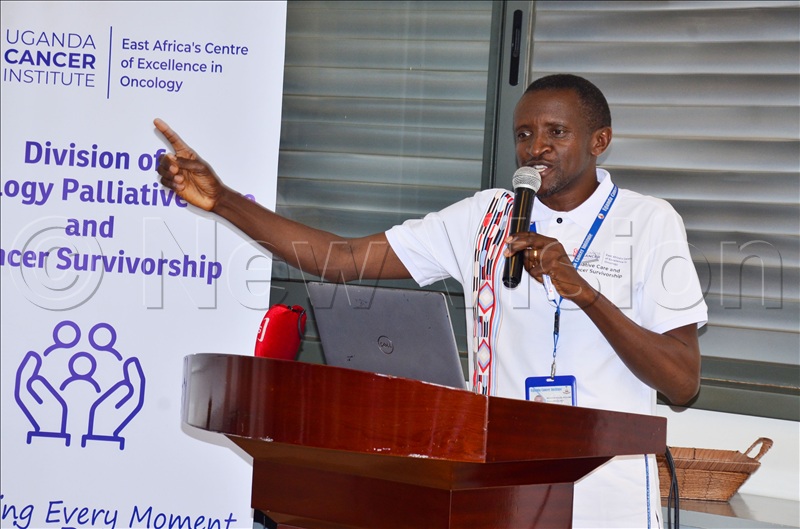
Dr Noleb Mugisha, the head of the survivorship unit addressing participants during the launch.
The head of the palliative unit at UCI, Dr Jennifer Nabukenya Ssengoba, described cancer as a multifaceted disease that affects not only physical wellbeing but also has profound psychological implications extending beyond patients to their families and caregivers.
Ssengoba further noted that a cancer diagnosis often triggers emotions of fear, anger and depression, which may affect treatment adherence, quality of life and outcomes in general.
Considering that most cancer patients seek treatment when the disease is at an advanced stage, Dr Victoria Walusansa, the deputy executive director of UCI, said palliative care services should be available and embraced.
"Cancer care should not stop at the last cycle of treatment. Every patient deserves comfort and dignity, and every survivor deserves support to live fully. This division is our commitment to both,” she said.
To realise the goal of offering oncology palliative care through the division, there is a need to recruit more health workers, Nakanjako noted.
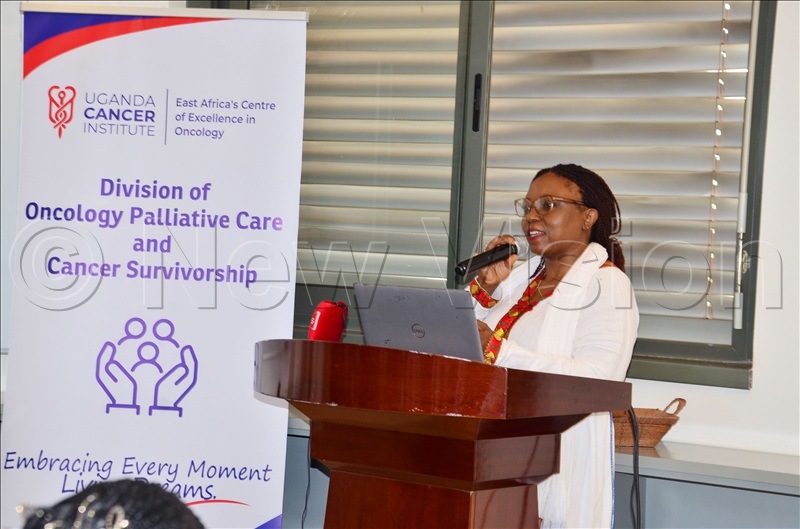
UCI board chairperson Prof Damalie Nakanjako addressing participants during the launch.
The cancer cases
In 2025, UCI recorded a 10.3% increase in the number of people newly diagnosed with cancer
Data from the institute shows that 8,764 new cancer patients were recorded during the year, up from 7,943 in 2024, translating into a 10.3% increase. Of the new patients, 45% were male and 55% female.
By age, adults accounted for 91% of the recorded new patients, while children accounted for 9%, or 780 patients.
Every one of them needs palliative and survivorship care shaped around their individual needs.