
Hindu temple opens in Gulu City
The Hindu temple was first established in 1965, and in 1970, it received a significant visit from His Holiness Brahmaswarup Yogiji Maharaj, who blessed Gulu and conducted a religious ceremony at the facility, which was considerably smaller than the current structure.
The sacred ceremony, known as Murti Pratishtha, was conducted by Pujya Dharm Charandas Swami, a senior Hindu saint who travelled from India to reinstall and consecrate the sacred images of deities at the temple. (Credit: Christopher Nyeko)
GULU - A Hindu temple was opened on Sunday, October 11, 2026, in Gulu City, marking the revival of a historic place of worship that had been abandoned for decades.
BAPS Swaminarayan Mandir, located in Green Valley Cell, Bardege-Layibi Division was opened by Pujya Dharm Charandas Swami, a senior Hindu priest from India, in a ceremony witnessed by more than 1,000 Hindu devotees from across East Africa and other parts of the world.
During the ceremony, Swami also reinstalled and consecrated the sacred images of deities at the temple.
The ceremony attracted worshippers from different countries, including members of the Asian community who were born in Gulu, but later settled in the United Kingdom and other parts of the world.
Many returned to Uganda to witness what they described as a historic moment in the revival of their religious heritage.
For the Hindu community, the consecration represents more than the opening of a place of worship, but also marks the restoration of a religious institution whose history in Gulu dates back to the 1960s, when the city was home to a vibrant Asian community.
The Hindu temple was first established in 1965, and in 1970, it received a significant visit from His Holiness Brahmaswarup Yogiji Maharaj, who blessed Gulu and conducted a religious ceremony at the facility, which was considerably smaller than the current structure.
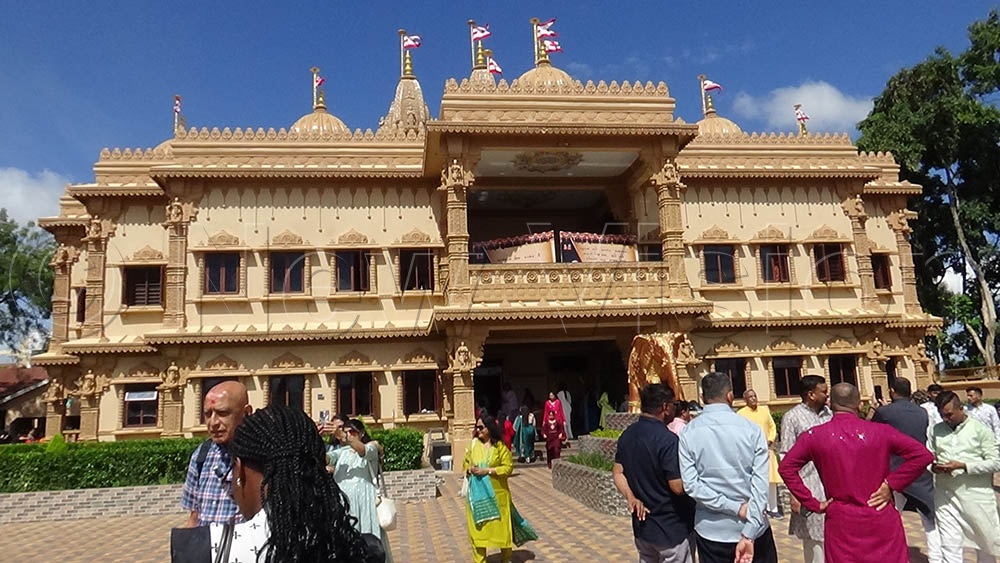
The BAPS Swaminarayan Mandir was first established in 1965, following the purchase of the land on which it stands in 1963. (Credit: Christopher Nyeko)
However, the temple was later abandoned following the expulsion of Asians from Uganda during the regime of former president Idi Amin in the 1970s
After President Yoweri Museveni came to power, Asians were invited to return to Uganda, allowing many members of the community to reclaim properties in Gulu, Jinja, Tororo, Mbale, and other parts of the country.
Efforts to restore the Gulu temple gained momentum in 2023 through contributions from devotees and well-wishers.
Ajay Kailash Singh, the event's press and publicity coordinator, said the rebuilt temple is capable of accommodating approximately 300 worshippers.
Kanesh Patel, who was born in Gulu in 1953 and studied at Gulu Public School, recalled that the temple was established when he was still a child and that he regularly attended congregational prayers with his father.
For Patel, who currently resides in London, UK, his return to Gulu was also an opportunity to reconnect with the city's residents and share memories of the place where he grew up.
He said he had taken thousands of photographs of Gulu's streets and shared them with former Asian residents who had left Uganda many years ago.
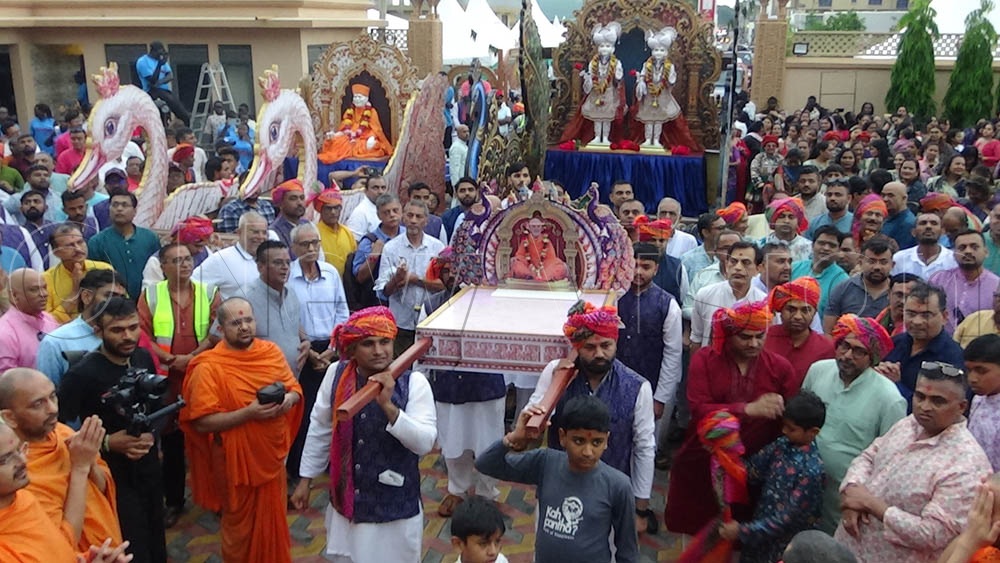
As part of the preparations for the consecration, devotees on Saturday afternoon participated in a Nagar Yatra, a religious procession through the streets of Gulu City carrying the deity’s image. (Credit: Christopher Nyeko)
Patel also called on members of the Acholi community to join the temple's congregation, saying the facility should remain a place where people could meet and share in religious and community activities.
He revealed that a special gathering had been held on Saturday, October 10, 2026, to remember about 40 Acholi people who, according to him, had embraced Hinduism and worshipped alongside members of the Asian community in the 1960s.
The Asian community also used the occasion to commend President Museveni's leadership, saying it had provided an environment in which they could live and practice their faith in Uganda.
Manoj Patel, who travelled from Nairobi, Kenya, said he was grateful to God for enabling him to undertake the journey.
He described the experience in Gulu as one that would remain in his memory for the rest of his life.
Janki Patel, a young devotee who travelled from Nairobi with her parents, expressed hope that the consecration would bring blessings to Gulu and its residents.
The BAPS Swaminarayan Mandir is expected to serve as a centre for Hindu worship, prayer, and other religious activities.
According to the temple’s leadership, morning and evening prayer assemblies will be held from Monday to Friday, while special religious ceremonies will take place on Saturdays and Sundays.