
"A man like Sam" documentary sheds light on Down Syndrome in Uganda
Kirya says making the documentary changed his own understanding of Down syndrome, teaching him the importance of listening to and valuing people who are often spoken about rather than spoken to.
Samuel Mugabi, 24 (Sam), poses for a picture next to his poster during the premiere of the "A Man Like Sam" documentary at Century Cinema, Acacia Mall, Kampala, on August 27, 2026. PHOTO BY HAJARAH NALWADDA
For his 10th directorial effort, musician Maurice Kirya takes on work that tackles challenges faced by people with Down Syndrome head-on in this award-winning documentary "A Man Like Sam," which was premiered on Thursday, September 3, 2026, at ACACIA in Kampala, Uganda.
Hosted by Lynsay Balumuka, founder and executive director of Upasuaji International, the documentary takes viewers into the world of Samuel Mugabi, 24, an office assistant at Upasuaji International who has Down syndrome, through the eyes of his parents (Loy and Charles Lule), employers, and Sam himself.
Sam refuses to be defined by a diagnosis and challenges one of the most damaging misconceptions surrounding Down syndrome: that people living with the condition cannot speak for themselves, make decisions, or contribute meaningfully to society.
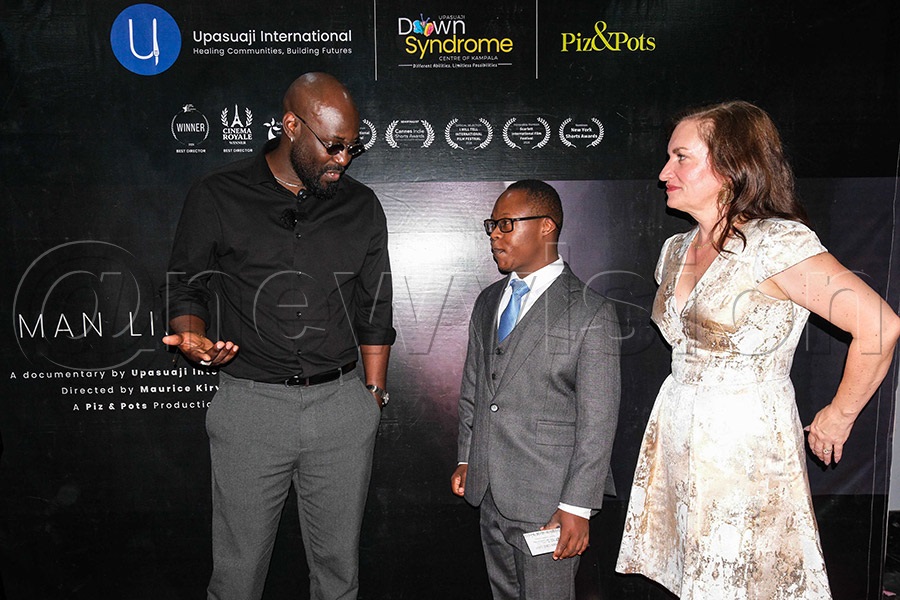
Maurice Kirya speaks with Samuel Mugabi (Sam) during the premiere of the "A Man Like Sam" documentary at Century Cinema, Acacia Mall, Kampala. PHOTO BY HAJARAH NALWADDA
For Mugabi's mother, Loy Lule, the journey began with uncertainty. "When I looked at him, he was different from the others," she recalls in the film, describing the physical features that first made her realise something was different about her newborn son.
Kirya says making the documentary changed his own understanding of Down syndrome, teaching him the importance of listening to and valuing people who are often spoken about rather than spoken to.
"As the director of this documentary, it meant a lot because even I didn't know these things happened," Kirya says.
"Everybody deserves a chance and everybody deserves to be understood." He adds, "I am so proud of being the director of this incredible documentary titled 'A Man Like Sam.'"
In the documentary, mothers describe heartfelt initial shocks after recognising differences in their newborns (small eyes, soft ears) or during ultrasounds (medical markers), often being the first to identify the condition.
Balumuka speaks candidly about her own complicated relationship with Down syndrome, shaped by personal loss and grief. She says, "I am obviously different in Uganda because I am a Muzungu and I look different. My history with Down syndrome had not been good. I had lost a lot of kids with Down syndrome and I hadn't seen the best side of Down syndrome."
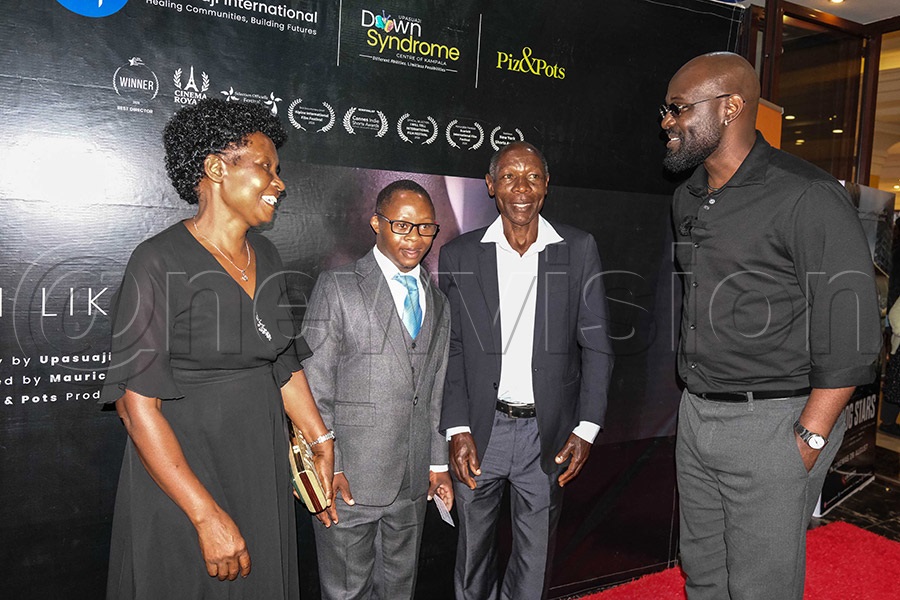
Maurice Kirya interacts with Sam's parents during the premiere of the "A Man Like Sam" documentary at Century Cinema, Acacia Mall in Kampala. PHOTO BY HAJARAH NALWADDA
Diana Mutoni Dibele, programme director at the Down Syndrome Centre, similarly describes the devastation she experienced after her daughter Kiara was diagnosed, a pain made even more profound by heart complications and Kiara's eventual death in 2024.
"A Man Like Sam" has made an impressive mark on the international festival circuit, winning at the Hollywood International Indie Film Festival and Cinema Royal Paris. It received an honourable mention at Scotland's Scarlett International Festival, won Best Short Documentary at the Alpine International Festival in Switzerland and Best International Film at the Brittany International Film Festival in France. It was also named a semi-finalist at Cannes Indie Shorts in France, among other accolades.
The take-home from the splendid premiere evening was that many parents in Uganda and perhaps Africa lack understanding about Down syndrome, often being left uninformed about their child's condition.
Individuals with Down syndrome, like Sam (Mugabi), face severe social ostracism, being called "cursed" or "stupid," and experiencing verbal abuse and even physical threats from strangers and other children.