
aBi Development appeals to farmers to embrace smart climate technologies
“It is in our interest to ensure that farmers are exposed to and benefit from these climate-smart technologies,” Tumwebaze said.
Expo-goers visiting aBi Development tent during the Harvest Money Expo. (Photos by Mpalanyi Ssentongo)
________________
Delays in the onset of rains, reduced soil fertility, and increased incidences of pests and diseases are some of the effects of climate change on agriculture. Yet, for farmers to remain in production, they must adopt climate-smart technologies showcased at the Harvest Money Expo.
The call was made by Christabel Tumwebaze, the Programme Director for the Green Agri-Food Systems Programme at aBi Development, a social impact investor in Uganda’s agribusiness sector and one of the sponsors of the Vision Group’s Harvest Money Expo 2026.
“Our interest is to ensure that agribusinesses access climate-smart technologies. We are able to showcase the different technologies that the agribusinesses we are working with are engaged in and how farmers can benefit from them,” she said.
Tumwebaze highlighted different climate-smart technologies, including processing eggs into organic manure, the use of black soldier flies to produce organic manure, solar farming systems and drip irrigation. All these are aimed at enabling farmers to become climate-smart and climate-resilient.
“It is in our interest to ensure that farmers are exposed to and benefit from these climate-smart technologies,” she said.
She added that this will ultimately help them to increase production, boost productivity and improve their livelihoods.
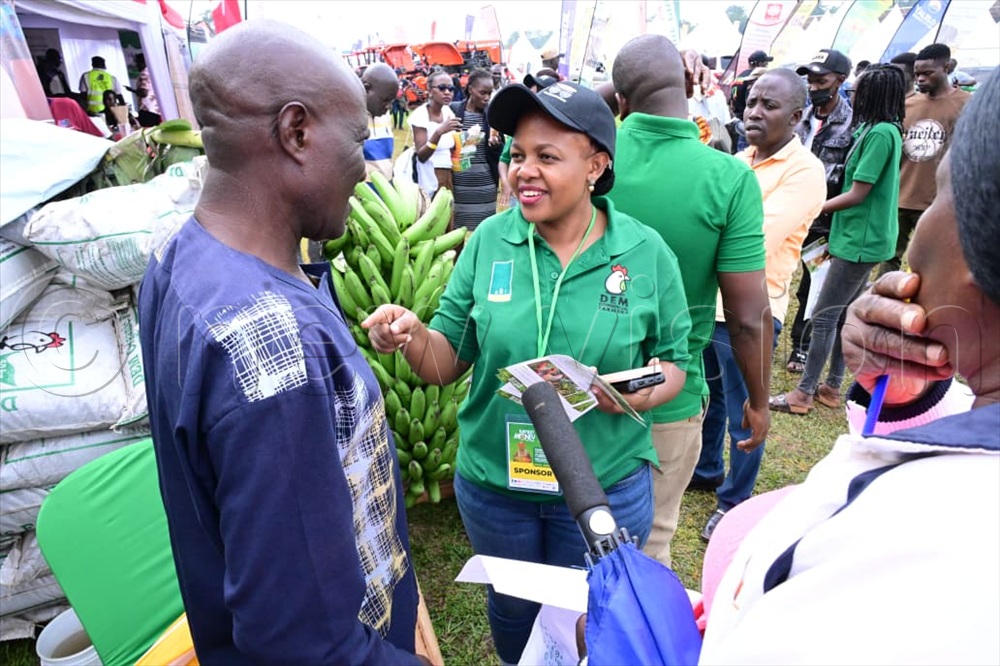
“We are honoured to have partnered with Vision Group to exhibit and showcase what our partner agribusinesses are doing to positively impact the lives of smallholder farmers,” Tumwebaze said.
She urged farmers to embrace climate-smart technologies, noting that climate change is real and that farmers must adapt and adopt appropriate technologies.
“The drought, hailstones and floods are real. To ensure that you are able to produce throughout the year, you have to adapt to better technologies that are more climate-smart and resilient to climate change,” she added.
Other climate-smart technologies that farmers can embrace include drought-tolerant seed varieties and short- or early-maturing seeds. For livestock, farmers are encouraged to practise feed conservation and storage through silage and hay-making.