
Refugees hope for peaceful elections in Uganda
“Nobody understands the value of peace and stability of a country as a refugee does. We are not in foreign countries by choice. We all want to go back home, but we cannot. Ugandans should guard the peace they have jealously as they vote today. We do not have many countries in the region to run to,” Musa Chombe, a refugee from DR Congo living in Makindye, a Kampala suburb, told New Vision.
Moses Moyo (R) with other election observers in Munyonyo, Kampala
KAMPALA - Although the refugees in Uganda do not join citizens in voting for the country’s next leaders, many of them (refugees) are praying for a peaceful election process in a nation that has become an island of stability in a highly volatile Great Lakes region.
“Nobody understands the value of peace and stability of a country as a refugee does. We are not in foreign countries by choice. We all want to go back home, but we cannot. Ugandans should guard the peace they have jealously as they vote today. We do not have many countries in the region to run to,” Musa Chombe, a refugee from DR Congo living in Makindye, a Kampala suburb, told New Vision.
Chombe’s comments reflect the sentiments of thousands of refugees who are living in Uganda as citizens decide who will run their country in the next five years.
According to the United Nations High Commissioner for Refugees, Uganda hosts 1.8 million refugees, the highest number in Africa.
The numbers continue to swell every day due to fighting in the Democratic Republic of Congo, South Sudan, Sudan, among others. Other refugees are from Somalia, Eritrea and Burundi.
Chombe’s comments also resonated with those of Zambia’s second deputy speaker, Moses Moyo, who is leading the Forum of Parliaments of the ICGLR team in observing the election Uganda.
In a briefing to the media ahead of the elections on Friday, January 9, Moyo said Uganda’s election is important to not only citizens, but also other countries in the region because it is an island of stability, hosting thousands of refugees and undertaking many peace missions.
“Over the years, Uganda has participated in regional peace initiatives, including peacekeeping missions. Accordingly, the forum commends Uganda for hosting tens of thousands of refugees from conflict-affected countries, not only from the Great Lakes region, but also beyond,” he said.
Uganda goes to the polls at a time when its troops are guaranteeing stability in Somalia, South Sudan and parts of eastern Democratic Republic of Congo.
David Rusa, a lecturer of international relations at Cavendish University, says the stability of Uganda means a lot for many communities in the Great Lakes region.
“Many countries in the Great Lakes region and the Sahel are experiencing instability and Uganda is either hosting their refugees or playing key roles in peace efforts. Talk of the peace effort in Sudan, DR Congo and Sudan, Uganda has its fingerprints on its peace efforts. When we go elections, therefore, other neighbours are watching us keenly,” he says.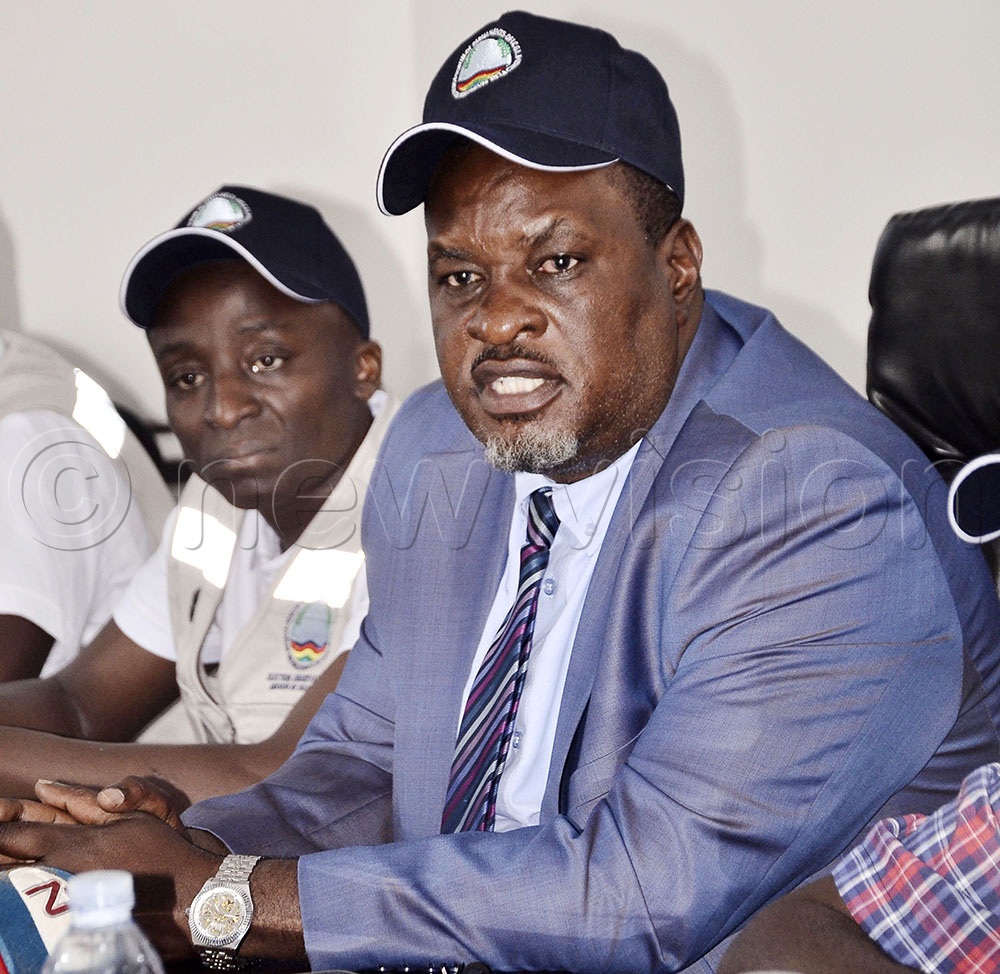
Moses Moyo
Internet shutdown
On Tuesday at 6:00pm, the Government suspended public internet access and selected mobile services across the country.
In a statement dated January 13, 2026, the Uganda Communications Commission executive director, Nyombi Thembo, said the decision followed recommendations from the inter-agency security committee.
He said the directive requires all licensed mobile network operators and internet service providers to temporarily suspend public internet access, the sale and registration of new SIM [subscriber identity module] cards, and outbound data roaming services to one-network-area countries during the election period.
Thembo said that the measure is necessary to mitigate the rapid spread of online misinformation, disinformation, electoral fraud and related risks, as well as preventing incitement of violence that could affect public confidence and national security during the election period.
According to UCC, the suspension will remain in force until a restoration notice is issued by it.
“Services will be restored only upon receipt of explicit written notice from UCC. A phased restoration plan will be submitted to all operators,” UCC executive director stated.
Thembo noted that during the election period, all non-essential public internet traffic must be blocked. Public internet traffic includes but is not limited to social media platforms, web browsing, video streaming, personal email services and messaging applications.
He noted that the suspension applies to Mobile Broadband (cellular), fibre optic, leased lines, fixed wireless access, microwave radio links, and satellite internet services.
To safeguard public safety, Thembo said a critical national function and the operational integrity of communications infrastructure, a strictly defined exclusion list has been established by UCC.
Thembo stated that access to social media and message applications is prohibited within the accessible service provider environments.
Thembo said operators shall further ensure that mobile VPN services are disabled on their networks.
Organisations such as the Uganda Law Society said the internet shutdown was illegal and demanded that it is restored.
Other analysts, however, pointed out that governments no longer take the internet lightly in an era characterised by disinformation and misinformation to bring down governments.
Several organisations such as the Africa Centre for Strategic Studies have noted the presence of foreign-backed misinformation cells, whose task is to bring down governments.
In volatile African countries such as Burkina Faso, Mali, Guinea Bissau and Niger, disinformation and misinformation have played a significant role in regime takeovers.
Benin example
According to a December report by French news agency AFP, foreign-backed influencers always release coordinated messages whenever there are coups or coup attempts in West Africa.
In Benin, even as the rebel soldiers appeared on national television in Benin's coastal city of Cotonou to announce President Patrice Talon's overthrow, social media accounts friendly to the junta-led countries in West Africa pumped out coordinated messages in support of the attempted coup.
According to AFP news agency, among them was pan-Africanist, anti-Western Beninese influencer Kemi Seba, who was quick to rejoice in Benin's "liberation day" with his 1.5 million followers.
Seba, who accused Talon of being too close to former colonial master France, has been an adviser to Niger's strongman general Abdourahamane Tiani.
"This haste speaks volumes: either the man knew, or he received instructions to amplify things well before the outcome," Fiacre Vidjingninou, a Benin expert in political and military sociology, wrote in the French-language Conflits magazine.
Benin has since issued an international arrest warrant for Seba, alleging "advocacy of crimes against state security and incitement to rebellion".
Seba, whose real name is Stellio Gilles Robert Capo Chichi, has said he plans to "see the fight through to the end".