
Elections were generally peaceful, turnout high
“I have participated in all elections since I attained voting age. It is true the exercise started late, but the elections were conducted peacefully,” Besigye, 83, said.
NUP’s Betty Nambooze, who was contesting for the Mukono Municipality MP seat, casting her vote yesterday. (Photos by David Lukiiza)
________________
Despite delays in the start of voting during yesterday’s parliamentary and presidential elections, polling was generally peaceful across the country.
According to Electoral Commission (EC) guidelines, voting for presidential and parliamentary candidates was scheduled to begin at 7:00am.
However, in many parts of the country, voting started at around 10:00am after biometric voter verification (BVV) machines failed to function.
Nevertheless, there were no major cases of violence, enabling many Ugandans to cast their ballots peacefully.
In Kampala, the national chairperson for the elderly, Penina Besigye, a resident of Bulindo in Kira municipality, Wakiso district, commended the EC and security agencies for maintaining peace despite the delays.
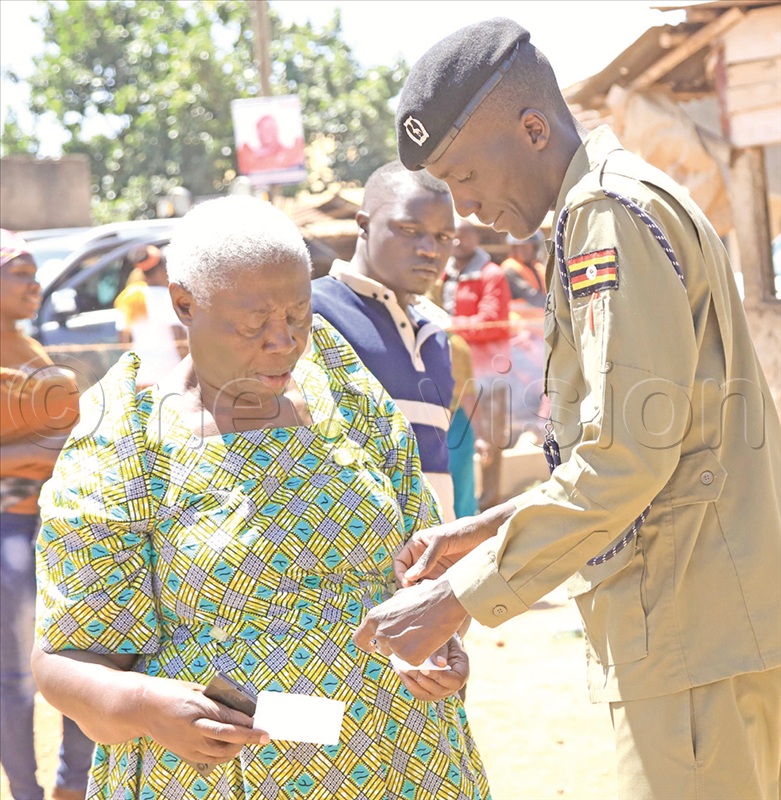
Lt. Gen. Proscovia Nalweyiso, the presidential advisor on security, arriving to cast her vote in Ntaawo cell, Mukono district.
“I have participated in all elections since I attained voting age. It is true the exercise started late, but the elections were conducted peacefully,” Besigye, 83, said.
She noted that although voter numbers for the ruling National Resistance Movement (NRM) had declined in some areas over the years, the voting process was calm. Similar sentiments were echoed in parts of Nakawa East constituency, where NRM’s Frederick Ruhindi is seeking a return to Parliament.
Hoima
In Hoima city, former deputy prime minister and presidential advisor for general duties Henry Kajura voted with the assistance of his wife, Regina, due to ill health.
Kajura remained seated in his car as polling officials brought the ballot paper to him at Public Primary School polling station.
Speaking softly after voting, Kajura urged Ugandans to uphold peace and unity.
“This country has come a long way and has enjoyed peace. We must protect it during and after these elections,” he said.
He called on the EC to ensure transparency and urged candidates to accept the outcome of the polls.
Although minor confrontations were reported between supporters of Ismail Kasule of Alliance for National Transformation (ANT) and Donald Bategeka of the National Unity Platform (NUP) in the Hoima West Division parliamentary race, voting in Hoima city was largely peaceful.
Albertine region Police spokesperson Julius Hakiiza said the clashes, which occurred at Kyesiga and St Mary’s polling stations, stemmed from allegations of voter bribery.
Security forces intervened and restored calm.
Kikuube
In Kikuube district, polling began at about 9:00am — two hours later than the scheduled 7:00am — after the BVV machines malfunctioned at several polling stations.
When New Vision visited polling stations including Sir Tito Winyi, Kigaya West, Kigaya East, Kigede, Kikooboza and Kitunguru, voting had not started by 9:00am.
Robert Mpanimanya, a voter at Buhimba polling station, said he arrived at 7:00am, but waited for hours without clear communication from polling officials.
“It was stressful to wait until 9:00am. Some voters got tired and decided to go back home because there was no explanation,” he said.
Similarly, Noman Katete, a voter at Kigede polling station in Buhimba town council, said although voting materials arrived early, polling started at about 9:30am.
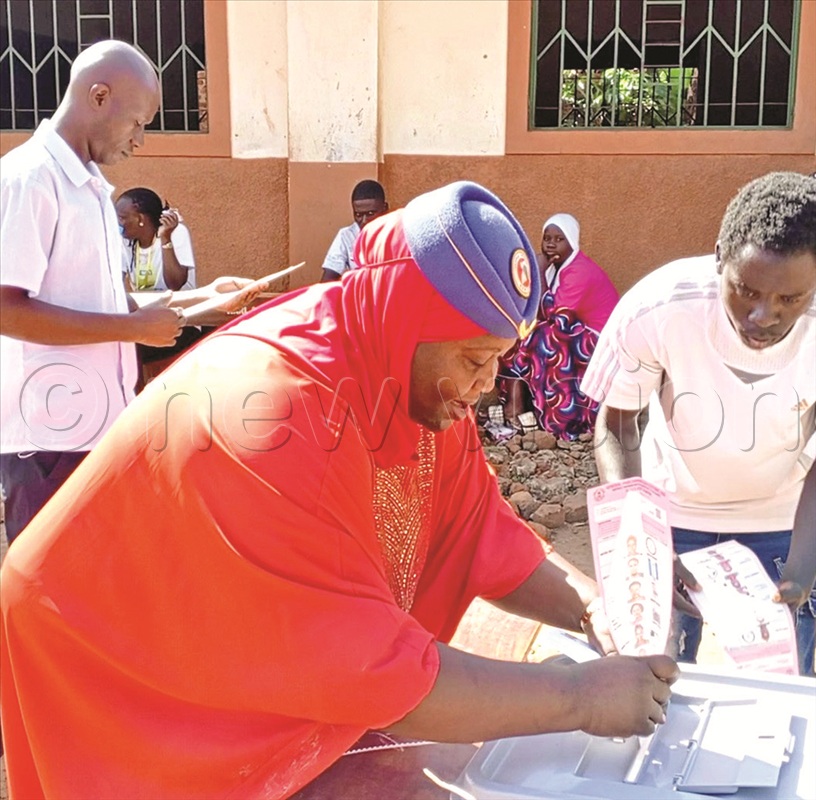
NUP woman parliamentary candidate for Mbale city Aisha Nakayenze casting her vote at Najja polling station in Nakaloke.
Kikuube district returning officer Emmanuel Twine confirmed the delays, saying the EC authorised polling officials to switch to manual voting using the voters’ register after the BVV machines failed.
In addition to the machine failures, several voters complained that their names were not on the voters’ register, denying them a chance to vote.
Dorcas Tusabomu, a resident of Buhimba town council, said she was referred from Kigaya polling station to Kigaya East, only to find her name missing on both registers.
Another voter, Mbabazi Kihangi, said she was redirected from Kihangi polling station in Kidoma village to Kiziranfumbi town council — a journey she said she could not afford to make.
Mukono
In Mukono North constituency and Mukono Municipality, election materials were delivered between 9:00am and 11:00am, while voting officially began between 10:00am and 12:00pm.
The delays were attributed to difficulties in convincing voters to abandon the failed BVV machines and accept manual voting using the voters’ register.
At Nassuuti Cell — United Christian Centre Church, which hosts nine polling stations, voters initially resisted the switch, insisting that the EC chairperson, Justice Simon Byabakama, had said voting would only be conducted using biometric verification.
Polling officials later persuaded voters to proceed, allowing voting to begin.
Lt. Gen. Proscovia Nalweyiso, the presidential adviser on security, who voted in Ntaawo cell, urged Ugandans to remain calm and follow the standard voting procedures using the voters’ register.
Mbale
Many voters reportedly did not begin voting until about 10:00am, despite arriving as early as 7:00am.
Later, several polling stations were authorised to proceed with manual voting using the voters’ register. However, the most striking feature of the day was the low voter turnout.
At Lions Club Polling Station in Mbale city, less than 100 voters cast their ballots out of the about 400 registered voters.
Karim Masaba, an independent candidate for the Mbale Industrial City MP race, attributed the low voter turnout to heavy security deployment, saying voters got intimidated.
“In the days leading to the election, we also witnessed indiscriminate arrests, especially at night, amid heavy deployment of mambas on the streets,” Masaba said.
Others blamed the low turnout on frustration caused by malfunctioning BVV machines. Although the EC later authorised manual voting, some voters had already left and did not return.
Earlier, Connie Galiwango Nakayenze, the Mbale City woman candidate (independent), who is the incumbent, complained that election materials, including ballot boxes, were initially meant to be stored at the Mbale Industrial City offices but were instead moved to Amber Stores in the Indian Quarters without notifying candidates.
She said the location was not gazetted for the exercise. She warned that delays caused by BVV machine failures could negatively affect the turnout.
Tensions later flared when Nakayenze clashed with EC officials, leading to a scuffle at Uganda Christian University polling station after claims that voting had started without proper clearance.
She was later picked up by the Mbale district police commander, Kenneth Byakashaka and taken to the EC’s offices, where officials explained that the voting process had been authorised by Byabakama.
At Najja polling station in Nakaloke, NUP woman parliamentary candidate for Mbale city Aisha Nakayenze expressed disappointment at the dysfunctional BVV machines, saying it could be a tactic to rig elections.
Kibuku
In Kibuku district within Bukedi sub-region, voters expressed frustration at the delays caused by biometric machine failures.
Amina Namuzugu, a voter at Kawami B polling station, said she was excited to vote for the first time.
Low turnout
Some areas registered low voter turnout, with technical failures of the BVV machines cited as a key factor.
In parts of Arua district, Gabriel Aridru Ajedra, an independent candidate for Vurra County, said delays caused by malfunctioning machines disrupted voting, forcing some voters to abandon the exercise.
Ajedra, a former state minister for finance in charge of general duties, who cast his vote at Andivu Tivu A–B polling station, expressed satisfaction at the turnout of voters, saying he was optimistic about winning the race.
However, Sabina Ocoru, a resident of Andivu Tivu village in Vurra sub-county, said she turned up to vote because she wanted change.
She accused past leaders of poor performance and appealed to authorities to facilitate the elderly and vulnerable voters to access polling stations.