
Uganda KhoKho Federation graduates 36 coaches to kick off 2026 season
The milestone followed a three-day training program for the Kampala region, held at Kyambogo College School and concluded on Sunday.
Some of the participants in the three-day KhoKho coaches training course pose with the chief guest and UKF officials at Kyambogo College School on February 1, 2026. (Photo: Silvano Kibuuka)
The Uganda KhoKho Federation (UKF) has trained and graduated 36 coaches with Level 1 coaching certificates, marking the opening event of its 2026 calendar.
The milestone followed a three-day training program for the Kampala region, held at Kyambogo College School and concluded on Sunday.
The training also signaled the start of Uganda’s roadmap towards participation in the upcoming KhoKho Commonwealth Games in India this March, as the host nation prepares to include the sport in the program ahead of its full integration at the 2030 Commonwealth Games.
Most participants were drawn from schools and had the opportunity to watch exhibition matches played by national team players, who have already begun preparations for the Commonwealth Games.
UKF General Secretary Mustapha Nsubuga commended the participants and emphasized the federation’s commitment to expanding the sport nationwide in line with the new Sports Act.
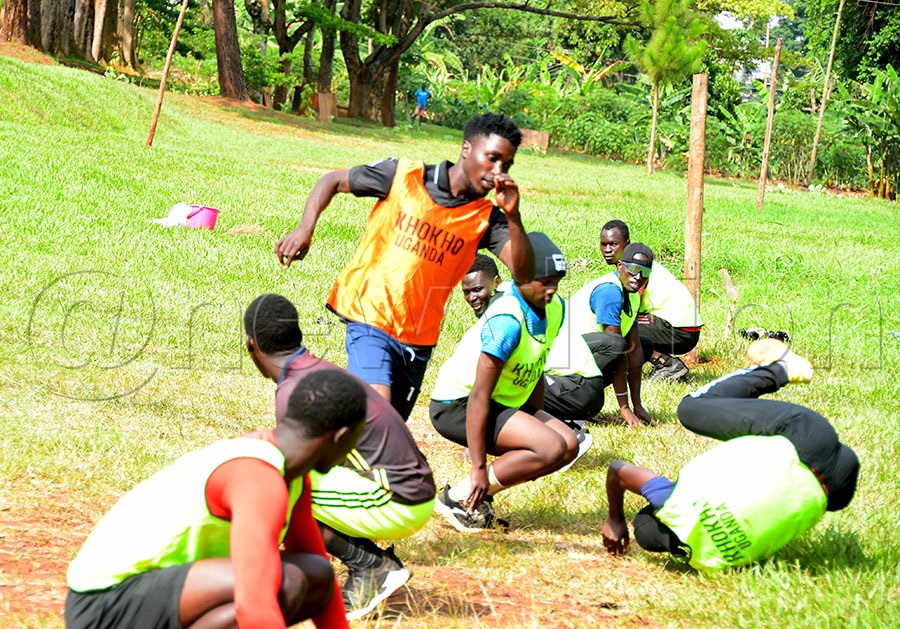
An attacking player rolls after missing a tap on the opponent during the Coaches Training at Kyambogo, February 1, 2026. (Photo: Silvano Kibuuka)
“We want to build momentum and spread KhoKho across Uganda by training coaches and referees. Our target is to have 500 coaches and 100 referees by December this year,” Nsubuga said, urging the newly certified coaches to make a meaningful impact in their communities.
He also outlined the federation’s major events for the year, including the East African Championships in May and the National Independence Open scheduled for October 9–10.
The chief guest, Piali Chowdhury from the UDAAN Africa Foundation, praised Uganda for embracing the traditional Indian game, which is now seeking inclusion at both the Commonwealth Games and the Olympic Games.
“We wish you the best because Uganda was quick to adopt the sport, to the extent that the national women’s team won a bronze medal at the World Championship in New Delhi in January last year,” Chowdhury noted.
KhoKho, one of India’s indigenous sports, was introduced in Uganda in 2018. The game is played by teams of 12 players. The attacking (chasing) team aims to tap opponents, resulting in their elimination from the field of play.
Three defenders enter at a time, and each successful tap earns two points for the chasing team. Once all four groups of defenders are eliminated, the teams switch roles, with defenders becoming chasers and vice versa.