
Leaders urge men’s action against gender-based violence in sports
Uganda Premier League CEO Bernard Bainamani emphasized that men in leadership must move beyond symbolic gestures and actively participate in awareness campaigns
Participants share a light moment. PHOTOS: Hope Ampurire
Gender-based violence (GBV) in sports cannot be solved by women alone men must take responsibility, take action, and lead the change.
This was the dominant message during the most engaging session of the 2025 African Women In Initiative (AWISI) Summit, where leaders across sport, mentorship, and governance emphasized the urgent need for men to become active allies in preventing abuse.
The conversation echoed across the fully-packed hall at Hotel Africana with over 200 participants from 12 countries, it was the session that finally highlighted the missing link in the fight against GBV, men’s power, influence, and responsibility.
This session brought together Aziz Yusuf, a former American professional basketball player, Bernard Bainamani, Chief Executive Officer of the Uganda Premier League, Frank Asaba, Principal, Boys To Men mentorship programme and Elijah Njawuzi, an administrator at the Uganda Olympic Committee (UOC).
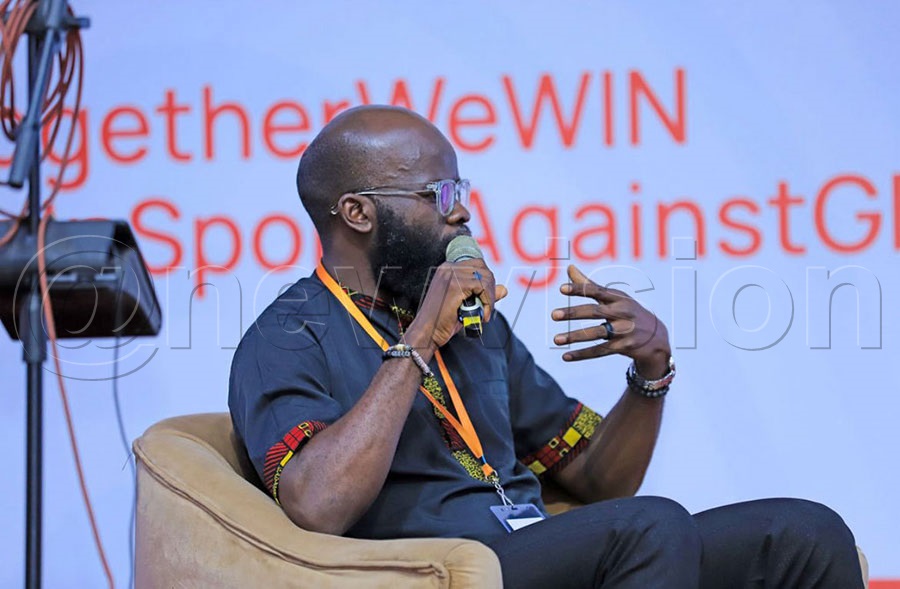
Elijaj Njawuzi, the UOC administrator
Aziz Yusuf shared a striking personal story from his time as president of a women’s basketball team in Rwanda.
When hiring coaches, he interviewed ten candidates seven men and three women. His focus was on competence, not gender. He eventually hired a male head coach and a male assistant.
However, after a major victory last year, something felt wrong: instead of joy, the female players looked weighed down.
Alarmed, Yusuf called both collective and individual meetings with the team. What he heard shocked him.
The women were silently struggling with issues their male coaches could not understand, and in some cases, could not respond to sensitively.
Realizing that the problem was systemic, he took decisive action bringing in female coaches who could understand the players’ experiences on and off the court.
“Sometimes change requires action, not just conversation,” Yusuf said.
“Mindsets must shift. Men must be intentional allies listening, learning, and acting,” Yusuf advised reflecting on the impact his decison affected his team.
His decision not only improved player wellbeing, but restored trust and safety within the team.
Uganda Premier League CEO Bernard Bainamani emphasized that men in leadership must move beyond symbolic gestures and actively participate in awareness campaigns, education programmes, and safeguarding initiatives.
Bainamani noted that football has made significant progress, citing,
•A safeguarding officer at Federation of Uganda Football Association (FUFA)
•Clear disciplinary mechanisms
•Increased reporting structures for both the female and male players.
However, he stressed that these systems only work when men in influential positions take them seriously.

The President of Azomco Global and former American Basketball professional Yusuf Aziz
“Men are powerful in this conversation because they hold leadership positions across sports. They must show up for workshops, campaigns, and safe sport programmes. It cannot be left to women alone,” Bainamani shared.
Frank Asaba, Principal, Boys To Men, delivered one of the most memorable messages of the session.
He argued that society often assumes men understand issues around GBV yet many do not.
“We assume men know how to behave or support women, but most have never been sensitized. They need to be in these rooms, learning alongside women,” Asaba said.
Asaba, who mentors boys across schools, communities and globally, said transformation must start early.
The Role of Mothers
He encouraged women, especially mothers, to nurture their sons intentionally.
“Please teach boys empath, how to speak to girls, emotional regulation and how to Build respect and responsibility,”.
However, Asaba insisted that fathers play the biggest role.
“Men must model the behaviour they want to see. Boys copy what they observe. If a boy grows up seeing a respectful home, he will recreate it.”
Fathers Must Show Up
Uganda Olympic Committee administrator Elijah Njawuzi echoed Asaba’s sentiments, emphasizing that effective fatherhood is at the centre of preventing violence.
Since becoming a father to a young boy, Njawuzi says he has changed his daily routine.
“I come to work early so I can go back home early to spend quality time with him. I want my son to grow up seeing what a father should be.”
Njawuzi stressed that men must:
• Be involved in their children’s daily lives
• Model respectful behaviour towards women
• Build emotionally intelligent sons
He added that the Uganda Olympic Committee is actively supporting women through specialized management courses designed to elevate women into leadership positions within sport.
These opportunities, he said, not only build capacity, but inspire the next generation of women leaders.
The urgency of male involvement is backed by findings shared earlier at the summit.
Perpetrators of SGBV in Sport (East Africa Study) led by Samantha Agasha from the Media and Communications at Aga Khan.
The statistics revealed;
• Fans & spectators – 32% overall; 43% in Uganda
• Coaches – 23%
• Teammates – 22%
• Others include referees, administrators, doctors, and physiotherapists
These figures confirm that most violence is committed by men making male-led change essential.
Impact on Athletes:
• 47% suffer emotional trauma
• 17% see performance decline
• 17% quit sport altogether
UN Women also reported that 49% of Ugandan women have experienced online or technology-based abuse.
This AWISI session made one thing clear, ending GBV in sports is not a women’s problem, it is a societal problem with men at the centre.
Therefore Men must, Mentor boys, Support women, Enforce safeguarding rules, Challenge harmful norms, Be emotionally present at home, Use their influence responsibly and hold other men accountable.