
Catholic priest, journalist fight over Kiteezi land
“I don’t know anything about this priest,” Kaiza says quietly. “I had never heard his name until I was told he bought land from people who had settled on my land. That land is mine. The same land from which I gave five acres to David Lukiiza. The priest has never come to me for any transaction. I don’t know him.”
In a picture combo, David Lukiiza is displaying his land title, and Part of the disputed land in Kiteezi, Wakiso district.
CRIME II SUSPENSE II INTRIGUE
WAKISO - Land fights in Uganda rarely begin with gunshots or dramatic headlines. They usually arrive quietly, like a neighbour who borrows a corner of your garden “just for one season” and then settles in permanently.
By the time voices are raised, papers are fading, witnesses are gone or too old to remember clearly, and the truth hangs on whichever document carries the latest official stamp.
This is one such story. It started on May 7, 2024, inside a tidy, green compound in Kiteezi, Wakiso district. James Kaiza, a grey-haired and soft-spoken retired headteacher, reached for a cheap notebook, tore out a page and scribbled a few lines in English.
There was no lawyer in sight. No stamp, no letterhead. Only one witness was present: Samuel Kisawuzi, his son. Kaiza believed he was making a simple, honest promise.
“I, Kaiza James, son of the late Samwiri Damulira Mukasa, I am a beneficiary of land on Block 113, Plot 22, part of my inheritance from my father. Today, 07/05/2024, I transfer part of my interest in that land (five acres) to Lukiiza David.”
He signed the note and handed it over. “I was there. The person who gave him the land is my father,” Kisawuzi later said.
“It was one piece of land. Mzee gave out a portion and transferred it. He even informed my brothers. The chairman knows about it.”
To Lukiiza, a young journalist, the gesture felt like a rare blessing. Five acres, not bought from a broker, not grabbed in a midnight deal, but freely given by a man he called uncle.
He folded the paper carefully, slipped it into his pocket and went home convinced his future had just been secured. What he did not know was that he had just picked up a live grenade. 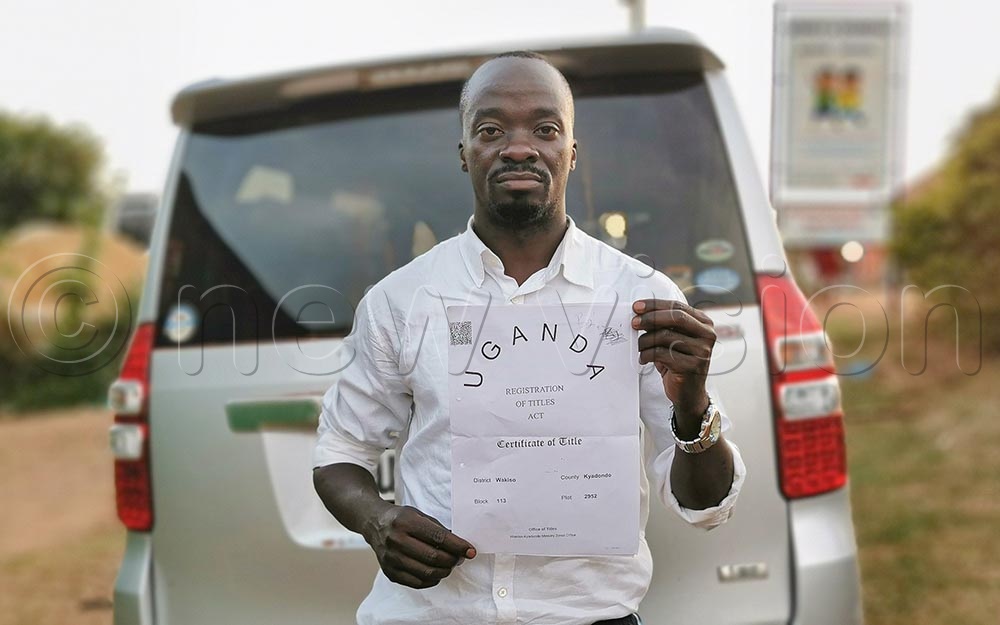
David Lukiiza
Genesis
For the Mukasa family, this was not one of Uganda’s familiar mailo land sagas where siblings fight endlessly over the same stretch of soil.
This land had already been through court and survived. In 2019, the High Court settled the question once and for all in Civil Suit No. 463.
It named nine lawful administrators and beneficiaries of the estate of the late Samwiri Damulira Mukasa: John Nayoga, 74, Sarah Mukasa, 72, Solomy Lunyigo, 71, Samuel Lugumya Mukasa, 54, Dorcus N. Katongole, 66, David Masanso, 42, Isaac Mukasa, 56, Jacob Lukanda, 24, and James Kaiza, 67.
The ruling was clear. Copies were sealed and filed away. Boundaries were understood. Life moved on. The land was calm. Or, at least, it looked that way.
A stranger steps in
Barely weeks after Kaiza signed the handwritten gift, a new name quietly appeared at the land registry. Ferdinand Mutaawe Kasozi had lodged a caveat on the land, effectively freezing any dealings on the title.
His claim was startling: That 1.5 acres — now appearing as Block 113 Plot 208 — had belonged to him since the early 2000s, land he says he bought and paid for long ago. Both Kaiza and Lukiiza were caught off-guard.
Neither had ever met Kasozi, spoken to him, or even heard his name mentioned in connection with the land. Yet with a single caveat, the title was locked tight. Further checks uncovered a detail that changed the tone of the dispute entirely.
Kasozi is not just any claimant. He is the Rev. Fr. Ferdinand Mutaawe Kasozi, a Catholic priest ordained on June 28, 1987.
Priest number 59 on the Kampala Archdiocese list. In places like Kiteezi, that matters. Taking a priest to court is not just a legal step; it is a social offence.
Almost overnight, Lukiiza found himself whispered about, accused of “fighting a man of God”.
The quiet question making its rounds was simple: How does a priest lay claim to land that a High Court had already distributed? Land Kaiza insists was never sold to anyone?
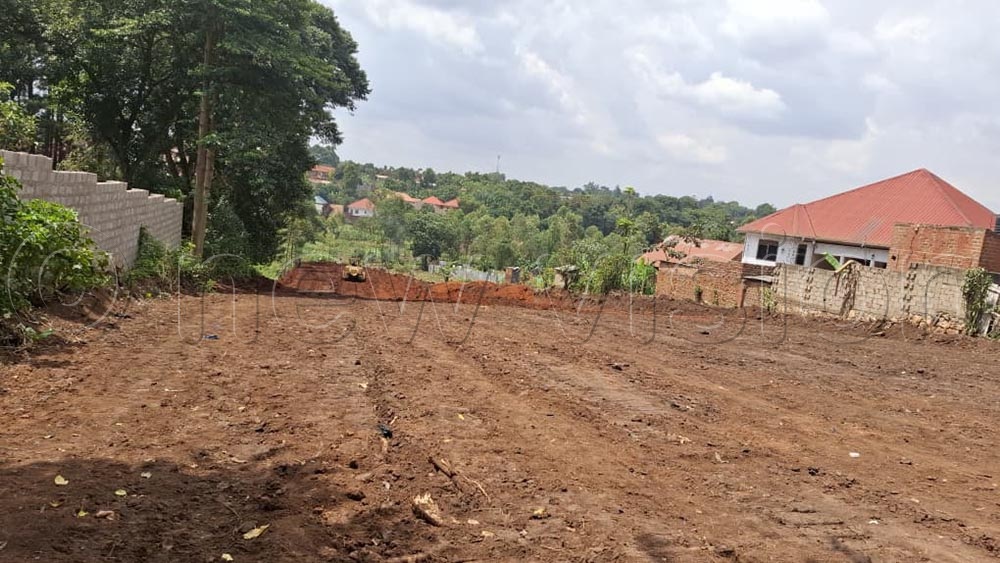
Part of the disputed land in Kiteezi, Wakiso district.
The agreements
Kasozi’s claim rests on two sale agreements, both raising eyebrows. The first, dated June 20, 2006, alleges that two women — Margaret Nalwanga Kigundu and Sarah Nakitende — sold him 1.5 acres.
The document is typed, has no witnesses, no LC1 endorsement, and, curiously, states neither the size of the land nor the purchase price. The second agreement, dated March 24, 2007, shifts the alleged sale date to March 20, 2007.
It introduces sh4.5m, described only as a “final instalment” for part of the land, and adds a single witness — a headteacher who also happens to be Kasozi’s brother.
Neither of the women named as sellers appears among the court recognised heirs of the Mukasa estate. One has since died. The surviving woman has sworn under oath that she never sold any land to the priest.
Lukiiza’s lawyer, Benon Wagabaza, says the problem is basic. “Even if someone claims to have bought a share of an inheritance, the administrators must be involved,” he says. “You cannot ignore a High Court judgment. That did not happen here.”
Kaiza’s take
“I don’t know anything about this priest,” Kaiza says quietly. “I had never heard his name until I was told he bought land from people who had settled on my land. That land is mine. The same land from which I gave five acres to David Lukiiza. The priest has never come to me for any transaction. I don’t know him.”
As Lukiiza moved to register his five acres, Plot 22 was quietly split and reborn as Plot 208 — without the knowledge or consent of the estate administrators. Those subdivisions were later cancelled after formal complaints were filed at the land registry.
Hoping to avoid a prolonged fight, Lukiiza turned to the LC1 chairperson, Godfrey Zaake, for mediation. At the meeting, the gaps in the priest’s paperwork were laid out plainly.
Kasozi admitted there were errors.
In a bid to end the matter, Lukiiza made a surprising offer: 12 decimals from his own five acres, properly surveyed and titled. The priest agreed.
An agreement was signed in January 2025, witnessed by LC officials and family members. Crops were compensated. Hands were shaken.
Five months later, Kasozi walked away from the deal, claiming he had signed under duress. Fresh caveats were lodged. Lukiiza was accused of fraud. The land, once quiet, was back at war.
The New Vision has learnt that on September 3, 2025, Lukiiza wrote to the lands ministry after the Wakiso land office declined to lift Kasozi’s caveats — despite earlier indicating they would be removed.
The caveats had been lodged on May 13 last year. In his letter, Lukiiza argued that the caveator had failed to file a court case within the time allowed by law, leaving no legal basis for keeping the restrictions in place.
When nothing changed, he escalated the matter on September 29, last year, writing to the commissioner for land registration.
Lukiiza accused the Wakiso zonal land office of violating his constitutional right to property by unlawfully retaining the caveats. “I followed up several times, but nothing happened,” he says. “I was only told that the commissioner had seen the letter and would respond.”
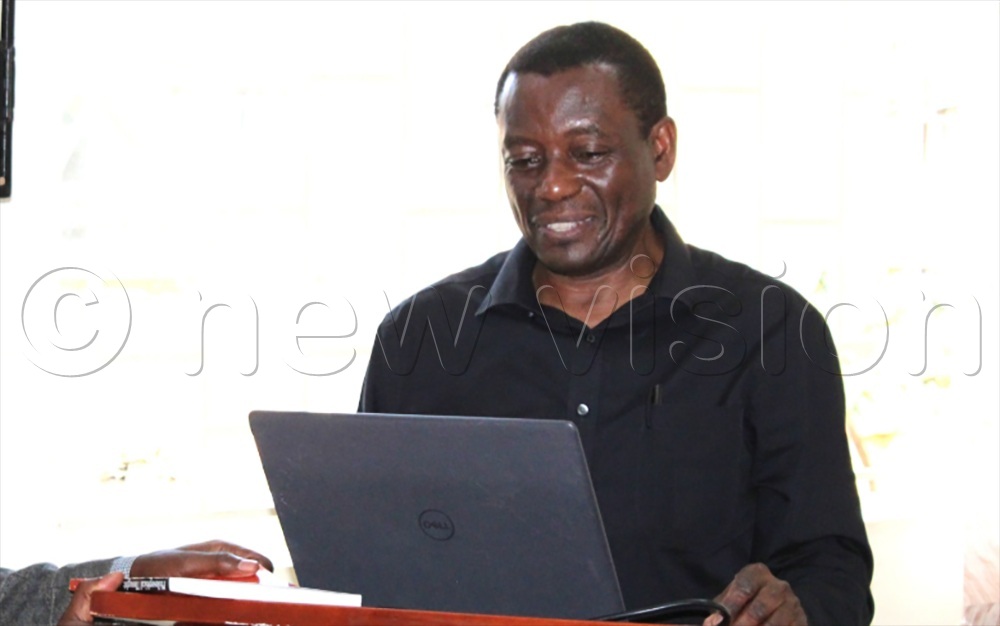
Kasozi declined to comment on the disputed Kiteezi land.
Wakiso office
Carolyn Acen, the principal assistant secretary at the Wakiso Kyadondo land office, confirmed that the registrar had issued Kasozi a 60-day notice to produce a court order stopping the caveats from being lifted.
“He did not file anything,” Acen says. “But just as we were about to lapse the caveats, we received a phone call from the State House Anti-Corruption Unit telling us not to remove them. There was no written instruction.”
She adds that since then, there has been no official communication from either the State House Anti-Corruption Unit (SHACU) or the commissioner’s office. It was around this period, Lukiiza says, that he began to suspect interference.
He later learnt that SHACU was investigating him following a complaint lodged by Kasozi. Lukiiza insists he lawfully acquired the land and has since issued titles to several occupants after meeting all legal requirements.
“Why does the priest think I obtained the title fraudulently?” he asks. “And how does SHACU come into a matter where I hold a valid land title?”
Lukiiza says when he went to the SHACU offices to record a statement voluntarily, he was turned away.
By late October, he says anonymous phone calls began warning him to drop the case. He reported the threats and later met the head of SHACU, Lt. Gen. Henry Isoke.
Lukiiza noted that Isoke initially said he was not aware of the dispute, but later allowed statements to be recorded, including one from Kaiza. Kaiza told investigators that he freely gifted part of his inheritance to Lukiiza.
“I don’t understand why the State House Anti-Corruption Unit is involved in a matter where my son even gave part of his land to Fr Kasozi, which he accepted,” Kaiza said.
Lukiiza alleges that despite this, pressure was applied for him to surrender more land to the priest, an allegation SHACU has not publicly addressed. He further claims that although Kaiza’s gift was clear, SHACU insisted the caveats would not be lifted unless an additional portion of land was given to Kasozi.
SHACU responds
Asked about allegations that SHACU instructed the land registrar not to remove the caveats, Elijah Okure, an advocate with the unit, dismissed the claims.
“Caveats do not operate on instructions, but on instruments,” Okure said. “It is not true that the State House Anti-Corruption Unit told the registrar not to lapse the caveats. Those claims are false unless there is an instrument or official notice from us to the ministry. Mr Lukiiza should also conduct a search to confirm who the caveator is,” Okure added.
The land fight remains unresolved, tangled in legal procedures, administrative delays and claims of undue influence.
What began as a quiet family gift has grown into a broader test of Uganda’s land administration system, the reach of clerical authority and how power can stretch institutions.
For now, the five acres in Kiteezi remain frozen. And, so does the question of who will eventually have the final say.
Priest’s side of the story
When contacted, the Rev. Fr. Ferdinand Mutaawe Kasozi declined to comment on the disputed Kiteezi land, saying the matter was now in the hands of State House Anti-Corruption Unit.
“I am not in a position to comment on that issue since I handed it over to the State House Anti-Corruption Unit,” he said, adding that he would share contacts of the officer handling the case.