
DP urges gov’t to integrate LC elections into national calendar
DP's call comes amidst delays in holding LC1 and LC2 elections, which were initially scheduled for 2023 but have been postponed several times. The Electoral Commission (EC) has announced that the elections will be held by the end of April 2026, but this remains to be seen.
DP's deputy National Legal Advisor, Kenneth Nsubuga Ssebagayunga. (File)
_________________
The Democratic Party (DP) has called on the government to urgently amend the electoral framework to incorporate Local Council (LC) elections into the national calendar.
This move, according to DP's deputy National Legal Advisor, Kenneth Nsubuga Ssebagayunga, will enable proper planning, participation, and preparedness by political parties and citizens alike.
Speaking during a press conference at DP party Balintuma Road offices in Rubaga division, Kampala, Ssebagayunga emphasised the need for LC elections to be clearly integrated into the national calendar, just like special interest groups (SIGs) and LC3 elections. This, he said, will promote transparency and accountability in the electoral process.
DP's call comes amidst delays in holding LC1 and LC2 elections, which were initially scheduled for 2023 but have been postponed several times. The Electoral Commission (EC) has announced that the elections will be held by the end of April 2026, but this remains to be seen.
The DP's demand for the integration of LC elections into the national calendar is seen as a push for more inclusive and participatory governance, Ssebagayunga insisted.
“By incorporating LC elections into the national calendar, the government can ensure that citizens are able to participate in the electoral process without unnecessary delays or disruptions.”
PFF demands EC clarity on village council register
Earlier on Monday at a press conference held at Plot 6, Katonga Road in Nakasero, Kampala, the Peoples Front for Freedom (PFF) party expressed deep concern over the delayed conduct of Local Council one (LCI) elections, despite assurances from the cabinet that the process will be funded with sh54b as directed by President Yoweri Kaguta Museveni.
PFF deputy president in charge of Buganda and the Buikwe South Member of Parliament, Micheal Bayigga Lulume, questioned the Electoral Commission's (EC) independence and its ability to carry out the elections without undue influence from the executive arm of government.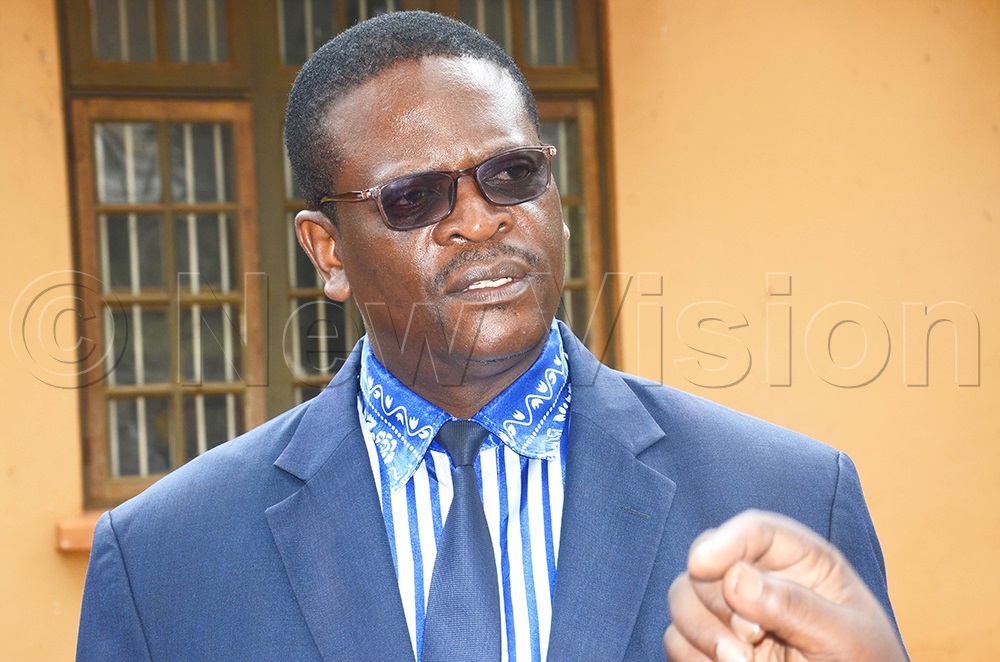
The PFF deputy president in charge of Buganda and the Buikwe South Member of Parliament, Micheal Bayigga Lulume, addressing a press conference at the PFF office in Nakasero, Kampala, on Monday. (Photo by Isaac Nuwagaba)
“The public demands clearer guidelines for the constitution of the village council voters register, particularly on eligibility criteria for first-time voters, those who have attained the voting age but without a national identity card, and potential voters who do not appear on the national voters register,” Lulume stated.
Lulume emphasised that the EC's failure to provide a detailed roadmap and guidelines for the forthcoming LCI and LCII elections is unacceptable.
The PFF party is also puzzled by the fact that the Electoral Commission, which is supposed to be independent and has its budget appropriated by parliament, had to wait for President Museveni's directive to release funds for the elections.
“Why would such money wait for the president's directive to be released?” Lulume asked, highlighting concerns about the commission's autonomy.
The party has therefore demanded that the Electoral Commission promptly releases clear guidelines on the LCI elections and a programme that aspirants for LCI and LCII elections will follow to prepare themselves for the campaign and elections.
“On behalf of the people of Uganda and the PFF party, we demand that the electoral commission promptly releases clear guidelines on the LCI elections and releases the programme,” Lulume stated.
The PFF's concerns come amidst growing worries about the state capture of key institutions, including parliament and the Electoral Commission, and the impact this may have on the country's democratic processes.
“The party's demands are seen as a call to action for the Electoral Commission to assert its independence and ensure that the LCI elections are conducted in a free, fair, and transparent manner,” Doreen Nyanjura, the outgoing Deputy Lord Mayor for Kampala, said.
As Uganda awaits the conduct of the LCI elections, the PFF's demands serve as a reminder of the need for transparency, accountability, and independence in the electoral process. The party's concerns are likely to add to the growing pressure on the government to ensure that the elections are held in a manner that reflects the will of the people.
Following the pronouncement by the Ministry of Local Government (MoLG) that the cabinet approved the conduct of elections of the long-awaited local council I (LC1), local council II (LC2) and women councils in the country, PFF started identifying flag-bearers to participate in the elections.
Uganda is expected to hold elections for LC1 and LC2 across approximately 70,512 villages and 10,690 parishes.
EC clarifies on elections
The EC Head Public Relations and Spokesperson, Julius Mucunguzi, responded that the electoral body, after making necessary consultations and preparations, shall come up to tell the public formally and officially about the process.
“We are still doing necessary consultations and preparations to conduct a free and fair exercise, but we shall officially notify the public when we are done with all the processes,” Mucunguzi clarified.
Local councils in Uganda are the lowest-level, community-elected administrative units (village level) responsible for local governance, security, and dispute resolution. Elected for 5-year terms, LCs (specifically LC1) mediate petty disputes, handle customary land matters, and issue recommendation letters.