
Youth leaders call for stronger protection for young women seeking justice
The meeting brought together more than 80 youth leaders, student representatives, government officials and civil society actors to discuss the status of young women and girls in accessing justice in Uganda.
Different delegates from the council pose for a group photo at the National Breakfast Meeting on Access to Justice Among Young Women and Girls in Kampala on Monday, March 16, 2026. (Photo by Bridget Ahurira)
_______________
Youth leaders and civil society actors have called for stronger protection mechanisms to enable young women and girls to access justice, saying many continue to face systemic barriers that prevent them from reporting abuse and pursuing legal redress.
The call was made during a national breakfast meeting organised by the National Youth Council at Fairway Hotel on Monday (March 16).
The meeting brought together more than 80 youth leaders, student representatives, government officials and civil society actors to discuss the status of young women and girls in accessing justice in Uganda.
Participants expressed concern that despite the existence of laws aimed at protecting women’s rights, many young women still struggle to obtain justice due to financial challenges, cultural barriers and limited awareness of their legal rights.
Speaking during the meeting, Osborn Turyasingura, the executive secretary of the National Secretariat for Special Interest Groups under the Ministry of Gender, Labour and Social Development, acknowledged that the government has made several interventions to promote gender equality and women’s participation in leadership.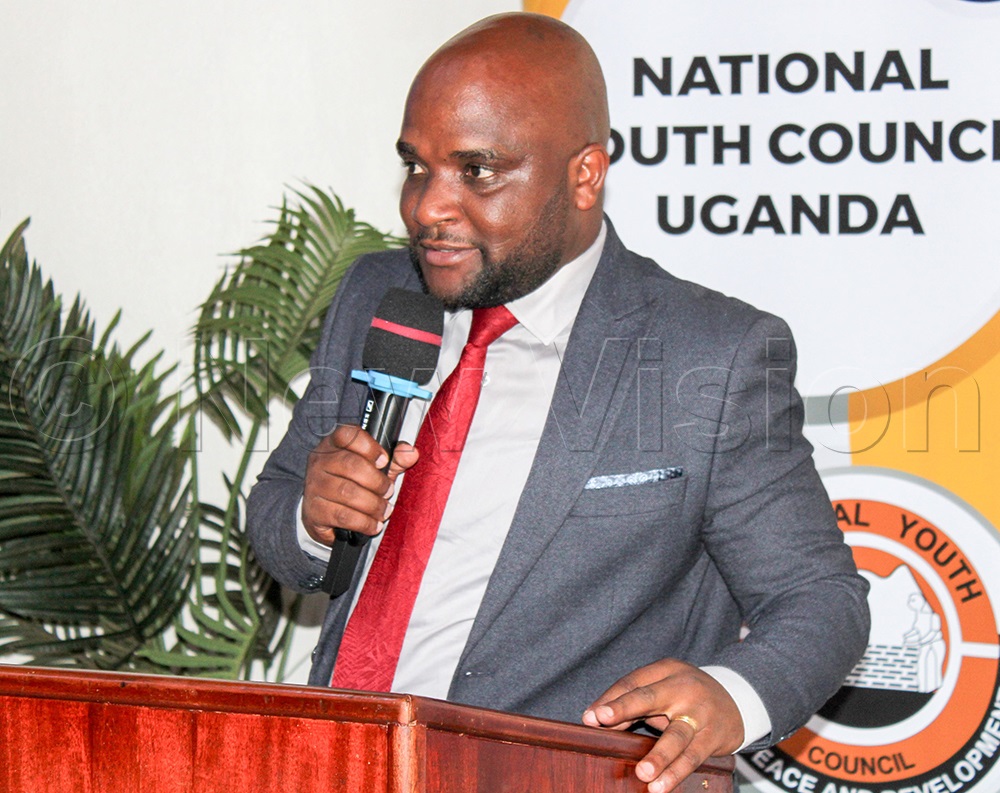
Osborn Turyasingura, Executive Secretary, National Secretariat for Special Interest Groups under the Ministry of Gender, Labour and Social Development, at the National Breakfast Meeting on access to justice among young women and girls in Kampala on Monday, March 16, 2026. (Photo by Bridget Ahurira)
He said the adoption of the 1995 Constitution was a significant milestone because it established equal rights for both men and women.
“As we speak today, many women are serving in leadership positions across the country. This is a big achievement because previously women had limited opportunities to participate in governance,” Turyasingura said.
However, he noted that despite such progress, several challenges still hinder young women from accessing justice.
According to him, financial constraints are among the major barriers preventing many women from pursuing legal cases.
“Sometimes young women fail to follow up their cases because the process of accessing justice requires financial resources that they simply do not have,” he said.
Turyasingura also raised concerns about institutional barriers within the justice system that discourage victims from reporting cases.
He explained that some victims encounter delays and informal costs when trying to pursue justice, which discourages them from continuing with their cases.
The chairperson of the National Youth Council, Daniel Ongom, emphasised the need for youth leaders to play a more active role in empowering young women and girls.
Ongom said youth structures across the country should be used as platforms to raise awareness about women’s rights and promote the proper utilisation of government programmes designed to support young women.
“As leaders, we should empower young women to ensure proper utilisation of available resources and opportunities,” Ongom said.
He also expressed concern about the increasing number of defilement cases reported in some parts of the country, particularly in island districts such as Kalangala district.
Ongom said addressing such cases requires stronger collaboration between youth leaders, government institutions and community organisations.
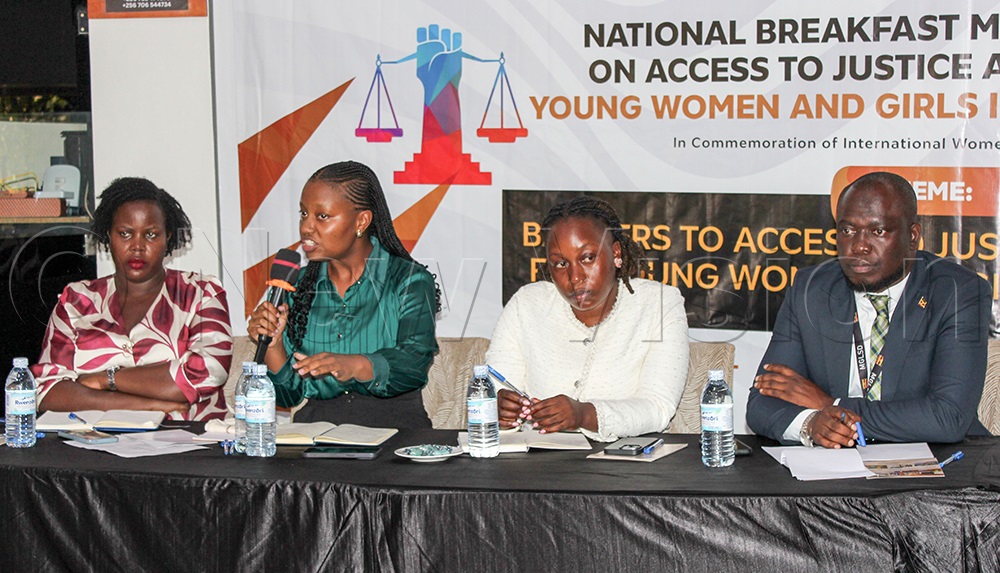
(L–R) Sylvia Pimer, Youth Officer, MGLSD; Julia Muhumuza, Politician; Ademun Sharon Leah, Vice Youth Council; and Hajji Mayanja Iddi Mubarak, Principal Women in Development Officer, MGLSD, at the National Breakfast Meeting on access to justice among young women and girls in Kampala on Monday, March 16, 2026. (Photo by Bridget Ahurira)
The meeting also featured a panel discussion focusing on barriers to access to justice for young women and girls in Uganda.
Panellists included Sharon Leah Ademun, vice chairperson of the National Youth Council, Julia Muhumuza, a youthful politician, Sylvia Pimer, a youth officer at the Ministry of Gender, Labour and Social Development, and Elizabeth Kasenene Rumanyika, chairperson of the Uganda Women Entrepreneurs Association.
The discussion highlighted issues such as limited financial independence among young women, cultural practices that discourage reporting of abuse and insufficient legal support services.
Participants also noted that limited awareness of affirmative action programmes and economic empowerment initiatives has left many young women unable to benefit from government opportunities.
Fred Ngabirano, the commissioner for youth and children affairs at the Ministry of Gender, Labour and Social Development, also attended the meeting.
The dialogue attracted youth leaders from different parts of the country, including districts in the Teso, Busoga and Bunyoro sub-regions.
Representatives from institutions such as Makerere University, Makerere University Business School, Kampala International University and the Uganda National Students Association were also present.
Participants emphasised that improving access to justice for young women requires stronger partnerships between government, civil society organisations and youth leaders.
They also called for increased investment in legal aid services, awareness campaigns and economic empowerment programmes aimed at enabling young women to assert their rights and participate fully in national development.