
Young Ugandan women gain skills from Russian economic zone
Uganda’s Ambassador to Russia, Moses Kizige, told New Vision that the Alabuga Start program is another opportunity for young and talented female Ugandans to take up and improve their lives.
Moses Kizige, the Uganda Ambassador to Russia cheering with ladies during the celebration of International Women's Day in Yelabuga, Tatarstan-Russia, on March 8 2026.
Over 260 young Ugandans are beating all odds, including the tough Russian weather, to gain skills as they earn under the country’s Alabuga Start program.
Alabuga Start program is a Russian initiative recruiting young women (18–22) from all over the world, for jobs in the Alabuga Special Economic Zone in Tatarstan, Kazan.
Twenty-two-year-old Carol Namakula Kinene, who hails from Mukono, is one of the participants in the Alabuga Start program, which provides jobs in different sectors, including hospitality, assembly of electronics, mechanics and other specialised services.
Namakula’s parents were initially hesitant to let their daughter move to such a distant place, even if she had applied and successfully joined. The parents' fear, like for many other girls in the program, was the security situation in the country because of the Russia-Ukraine war.
Namakula, like many other girls participating in the program, managed to convince her parents, and off she came to Russia.
Arrival in Russia, thousands of miles away from home, was a challenge to many girls who had joined the program. First on the list were the language barrier and the tough Russian winter and summer seasons.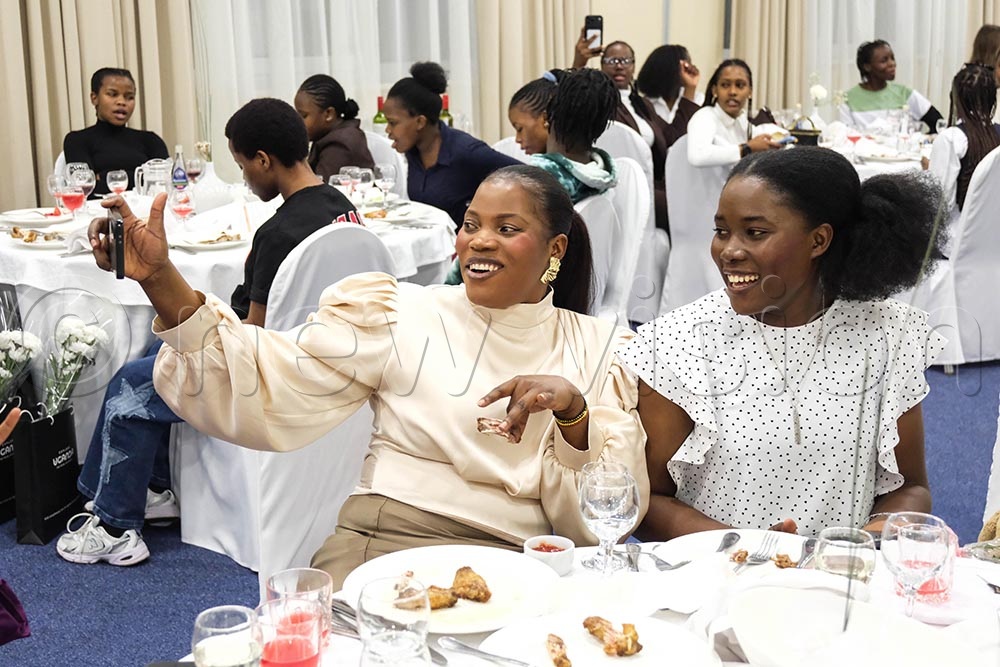
Guests attending the celebration of International Women's Day in Yelabuga, Tatarstan-Russia, on March 8 2026.
"Winter is really taking us; that is the real challenge. It is the biggest one. I have allergies, my feet swell every time I get out, but I try as much as possible to wear warm clothing so that I don't get pneumonia and other problems," Chamta Maria Mbawade, another participant, said.
Luckily for the girls, they found an embracing community that showed them how to navigate the Russian weather, cultural norms and way of life.
The participants keep learning the Russian language despite having learnt the basics while they were still in Uganda. Rising through the ranks at work is based on one's discipline and determination to work hard.
One’s discipline is important while under the Alabuga Start program; failure of which the undisciplined person can be dismissed after several warnings.
Namakula says her hard work is now paying off, as she has risen through the ranks from a helper to an operator and now a technician (supervisor).
Twenty-year-old Aisha Akello, another participant in the Alabuga program, went to Russia with nothing but has now, through her earnings, been able to construct a house back home for her mother.
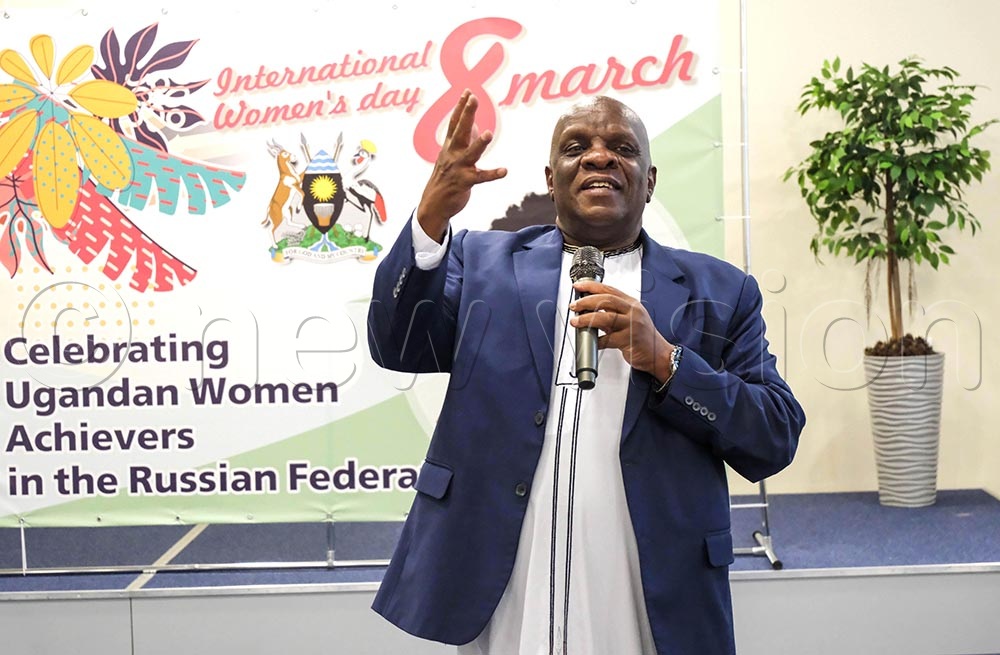
Moses Kizige, Uganda Ambassador to Russia remarks during the celebration of International Women's Day in Yelabuga, Tatarstan-Russia, on March 8 2026.
Akello, through her hard work, has risen through the ranks from a cleaner to soon becoming an administrator.
Uganda’s Ambassador to Russia, Moses Kizige, told New Vision that the Alabuga Start program is another opportunity for young and talented female Ugandans to take up and improve their lives.
“We are ready to grab any opportunity that is available to make sure that we get placements for Ugandans,” Kizige said.
He noted that, unlike the reported hard work conditions reported in the Middle East, under the Alabuga Start program, the conditions are favourable.
He said the Ugandan girls, just like those from elsewhere in the world, work alongside their Russian colleagues who are aged between 16 and 17 years.
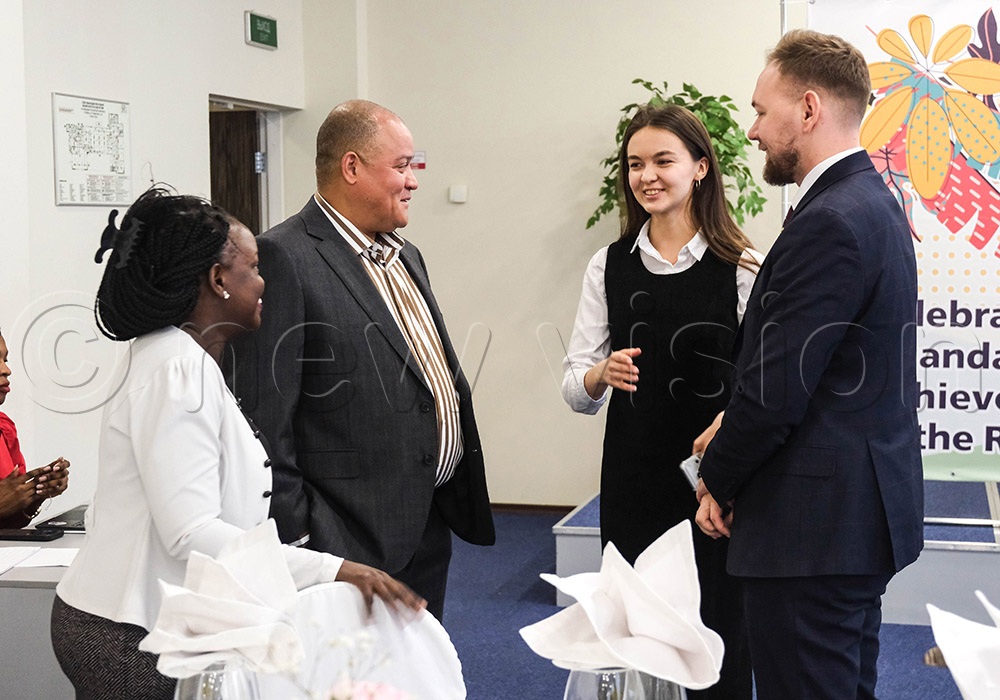
Officials from the Uganda Embassy in Moscow interacting with Alabuga representatives, during the celebration of International Women's Day in Yelabuga, Tatarstan-Russia, on March 8 2026.
The envoy said the job opportunities are there because in Tatarstan, where the Alabuga Start program operates, the unemployment level is at negative 5 percent.
He said the employees’ emoluments are good, and they work based on European work standards. He said the least paid person, who is at the entry level, earns about 400 US dollars, with a possibility of earning up to 4,000 dollars if one rises through the ranks within three years.
Unlike in the Arab world, where migrant workers leave their home country in huge numbers, under the Alabuga Start program, they use a quota system for every country. This year, Uganda’s quota for the program is 540 individuals.
“The numbers are too small, but for those who get into the program, we urge them to work seriously and save money, which they can invest when they return home,” Kizige said.
While some Western countries have accused the Alabuga program of exploiting workers, the workers themselves say they have not faced such issues.
“If that was true, I would be back home right now. I work for two days and study two days,” said Mbawade, who is studying geometry and information technology.
Ambassador Kizige described the exploitation reports as Western propaganda, noting that the migrant workers are treated the same as their Russian colleagues.