
Stranded in India for 13 years, Ugandan mother finally comes home
When Namuddu left Uganda in 2013, she travelled alone, filled with dreams of building a better life in India and returning home transformed. However, her plans did not materialise as expected. She struggled to secure stable employment, her visa eventually expired, and she had little to show for her efforts.
Fiona Namuddu (left) with friend Rebecca Nakasaga together with her children, being welcomed at Entebbe International Airport by Henry Wabyona, the deputy head of State House Diaspora Unit. (Photo by Julius Luwemba)
__________________
After more than a decade in India, at about 5:40pm on January 28, 2026, an Ethiopian Airlines plane carrying Fiona Namuddu touched down at Entebbe International Airport.
She was finally home after years of hardship and longing in a foreign country that had become a temporary home, clinging to a faint hope of one day returning to Uganda and reuniting with her family.
When Namuddu left Uganda in 2013, she travelled alone, filled with dreams of building a better life in India and returning home transformed. However, her plans did not materialise as expected. She struggled to secure stable employment, her visa eventually expired, and she had little to show for her efforts.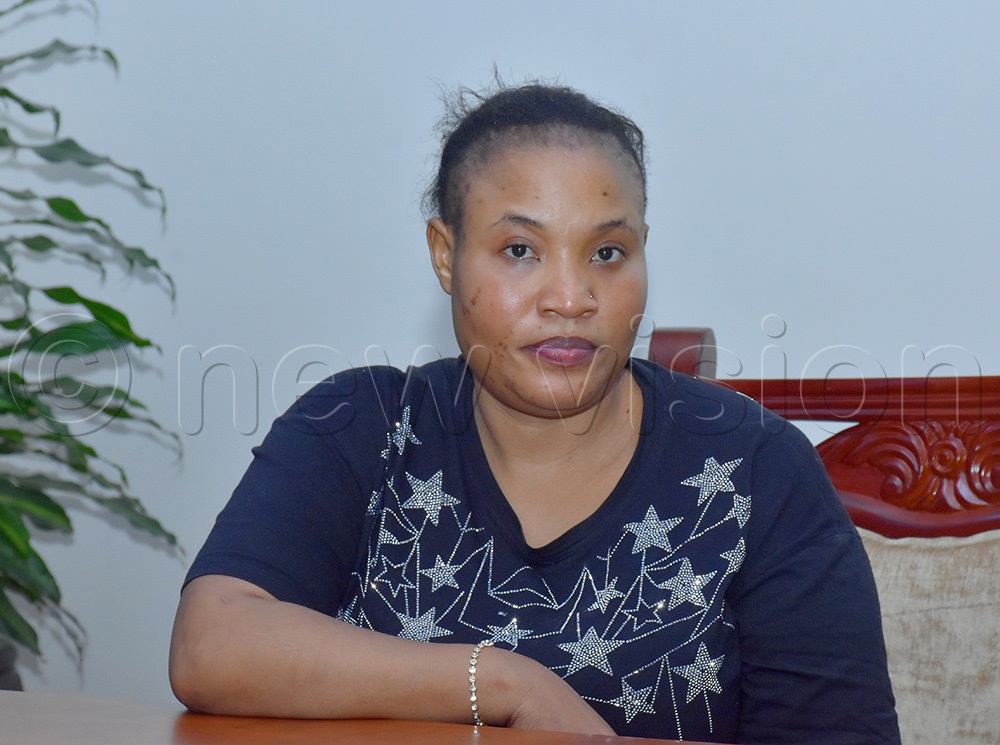
Fiona Namuddu, one of the returnees from India who was assisted by the State House Diaspora Unit. (Photo by Julius Luwemba)
Unable to return home empty-handed, she continued hustling in the hope that her fortunes would change. Each day in India came at a cost as expenses mounted, and by the time reality set in, she had already overstayed her visa, attracting heavy penalties.
Leaving India gradually became an unattainable dream. In India, foreign nationals who overstay their visas may be fined about sh440,000 for 16 to 30 days, sh880,000 for 31 to 90 days and up to sh2.2 million for overstays beyond 90 days.
During her stay, Namuddu’s life took a significant turn. She became pregnant twice and now has two children, a girl aged eight and a boy aged four. Little is known about their father.
While the children brought her joy and hope, they also increased her burden. She could no longer focus solely on survival for herself, as she now had to provide for her children as well.
A Ugandan friend, Rebecca Nakasaga, whom she met while in India, became a crucial source of support. Nakasaga offered to care for the children while Namuddu continued searching for work. Namuddu would occasionally return with supplies before disappearing again into the daily struggle to survive.
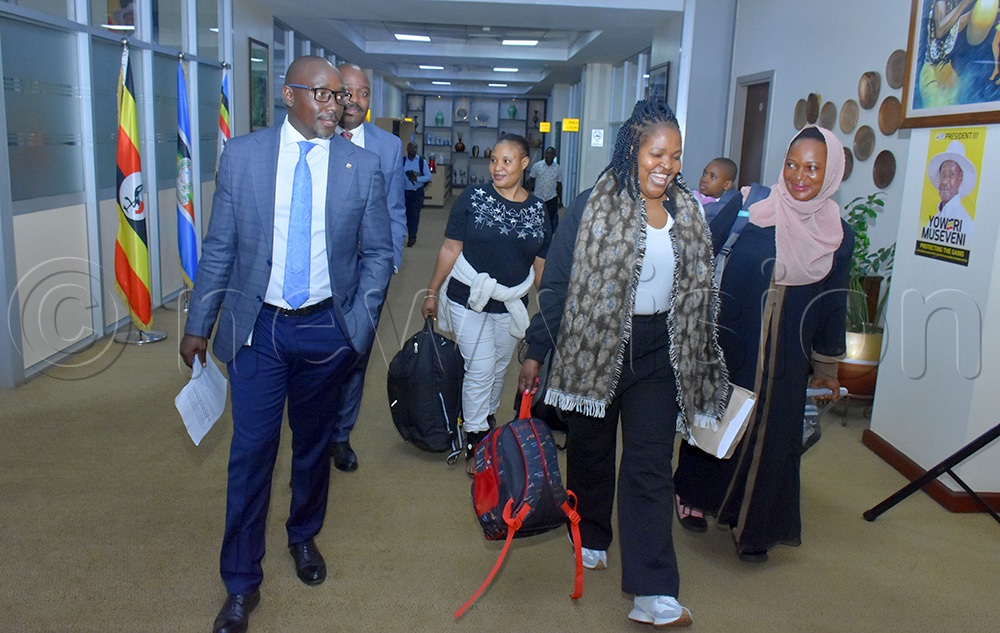
Topher Matsiko (left) the Head of Liaison and Partnerships under the State House Diaspora Unit leading the returnees Fiona Namuddu and Rebecca Nakasaga upon their return from India. (Photo by Julius Luwemba)
For most of their time in India, Nakasaga effectively assumed the role of their mother, taking care of the children in Namuddu’s absence.
A rare ray of hope
Despite her dwindling hopes of returning home, a breakthrough emerged last year during a diaspora policy benchmarking visit to India by Mohammed Bagonza, head of the State House Diaspora Unit.
Bagonza, who also serves as the senior presidential advisor on diaspora affairs, met several Ugandans who raised concerns about being stranded in India due to visa overstays. They appealed to the government for assistance to return home.
He assured them that he would engage relevant stakeholders to find a solution.
In September 2025, the Government of India announced an amnesty scheme for foreign nationals who had overstayed their visas. The programme allows affected individuals to leave India using an Expedited Exit Permit without incurring financial penalties and runs from September 1, 2025, to February 28, 2026.
Working closely with the Uganda High Commission in India, the State House Diaspora Unit secured travel documents and air tickets to facilitate the return of Namuddu, Nakasaga and the children.
Home, at last
Upon arrival at Entebbe International Airport, the two women expressed visible relief. With the help of airport staff, they were escorted to the VIP lounge, where they were received by Henry Wabyona, the deputy head of the State House Diaspora Unit, and Topher Matsiko, the unit’s liaison officer.
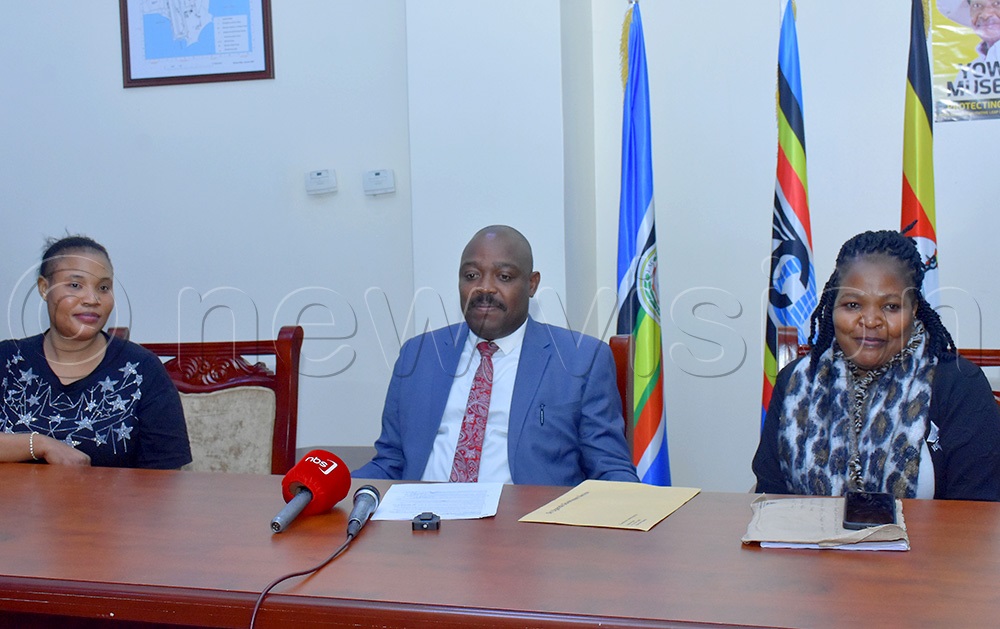
Fiona Namuddu (left) with friend Rebecca Nakasaga (right) jointly addressing the press with Henry Wabyona, the deputy head of State House Diaspora Unit. (Photo by Julius Luwemba)
With teary eyes and smiles, they thanked the officials for facilitating their return.
“We are happy that they are finally back home after more than 10 years stuck in India,” remarked Wabyona, adding that “As government, we will support them in reintegrating into the community.”
He noted that existing government programmes such as the Parish Development Model (PDM) and Emyooga would be explored to support their reintegration.
Wabyona also thanked the Ugandan High Commission in India for the support extended during the repatriation process.
He acknowledged that many Ugandans remain stranded in India and other countries, assuring that government efforts are ongoing to assist citizens in distress.
He encouraged Ugandans abroad in distress to seek help from Ugandan missions or contact the State House Diaspora Unit directly.
‘Life in India has been tough’
“I have been stuck in India for 13 years. My children and I really appreciate the Government of Uganda and that of India for working together and making it possible for us to come home,” she said.
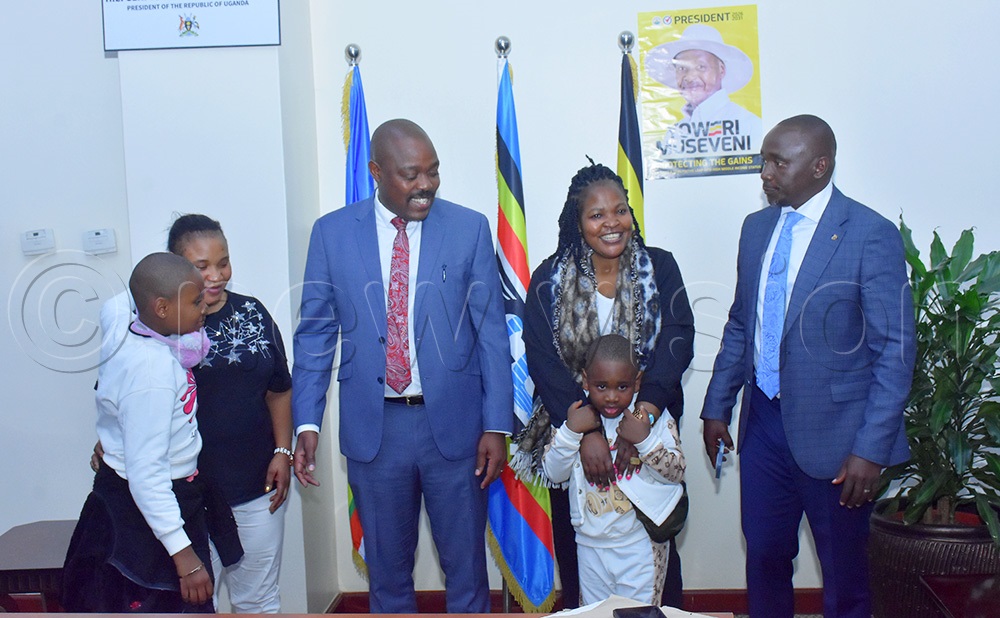
Fiona Namuddu (L) with friend Rebecca Nakasaga (2R) and the children, pose for a photo with Henry Wabyona (2L), the deputy head of State House Diaspora Unit and Topher Matsiko (R) the Head of Liaison and Partnerships. (Photo by Julius Luwemba)
She explained that life in India had been difficult and that many Ugandans remain stranded due to lack of support, adding that “some people lost their passports, which made it hard for the government to help them.”
She noted that her children had never attended school because her documents had expired, and schools required proper documentation.
Expressing gratitude, Namuddu thanked the State House Diaspora Unit for honouring its commitment to bring them home.