
Refugee exclusion from public services raises alarm as Austria urges Uganda to intervene
Austrian officials called for urgent policy reforms to address the marginalisation of urban refugees, who now number over 150,000 in the capital alone.
Dr. Katja Kerschbaumer, the Head of Austrian Embassy Development Cooperation, with the United Nations High Commissioner for Refugees (UNHCR) Country Representative, Matthew Crentsil (middle). (Photos by Ibrahim Ruhweza)
________________
Refugees living outside designated settlements in Uganda face systemic exclusion from healthcare, education and employment, a crisis that Austria has flagged as a threat to the nation’s acclaimed refugee protection model.
At the United Nations High Commissioner for Refugees (UNHCR) Addendum Signing Ceremony in Kampala on Thursday, July 31, 2025, Austrian officials called for urgent policy reforms to address the marginalisation of urban refugees, who now number over 150,000 in the capital alone.
A growing crisis in urban areas
Bernd Brünner, Managing Director of the Austrian Development Agency (ADA), highlighted their plight: “They live in insecurity, excluded from basic services despite being expected to achieve self-reliance. This undermines Uganda’s own goals of sustainable integration.”
Urban refugees interacting with UN officials. 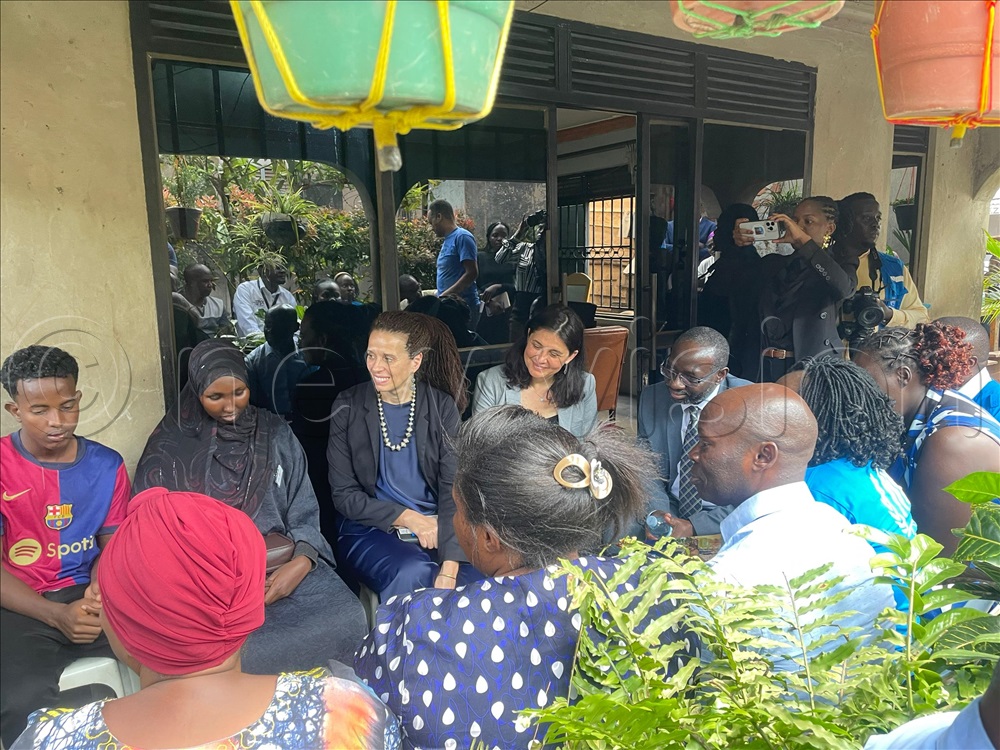
Austria, a key UNHCR partner, has committed USD 4.4 million (sh16.1 billion) to Water, Sanitation, and Hygiene (WASH) initiatives in Uganda for 2024–2025, with an additional $1.7 million pledged last week. The funds aim to boost WASH coverage from 45% to 65% for 1.44 million refugees and host-community members, including new arrivals from South Sudan, DRC, and Sudan. However, UNHCR’s Uganda Refugee Response Plan remains only 25% funded, exacerbating shortages: water access averages 16 liters per person daily—below the 20-liter humanitarian minimum 13.
Calls for Policy Action
Dr. Katja Kerschbaumer of the Austrian Embassy warned that shrinking donor support and rising refugee numbers are straining services: “This is unsustainable. Uganda must step in to close gaps in access.” While praising Uganda’s inclusive policies, Austrian officials urged concrete steps to dismantle administrative and legal barriers faced by urban refugees 57.
Justice and sustainability gaps
A vision for inclusion
Speakers stressed that refugees must be seen as contributors, not just beneficiaries.
“They can be teachers, entrepreneurs, health workers—if given the chance,” said Dr. Kerschbaumer.
As Uganda navigates its refugee-hosting role, Austria’s message is clear: solidarity requires actionable equity.