
Justice Egonda-Ntende hangs up robes after 35 years on the bench
Ahead of his exit from the Judiciary on June 15 this year, when he celebrates his 70th birthday, the Court of Appeal on May 14, 2026, bade farewell to him through a special sitting in honour of his distinguished service to the nation.
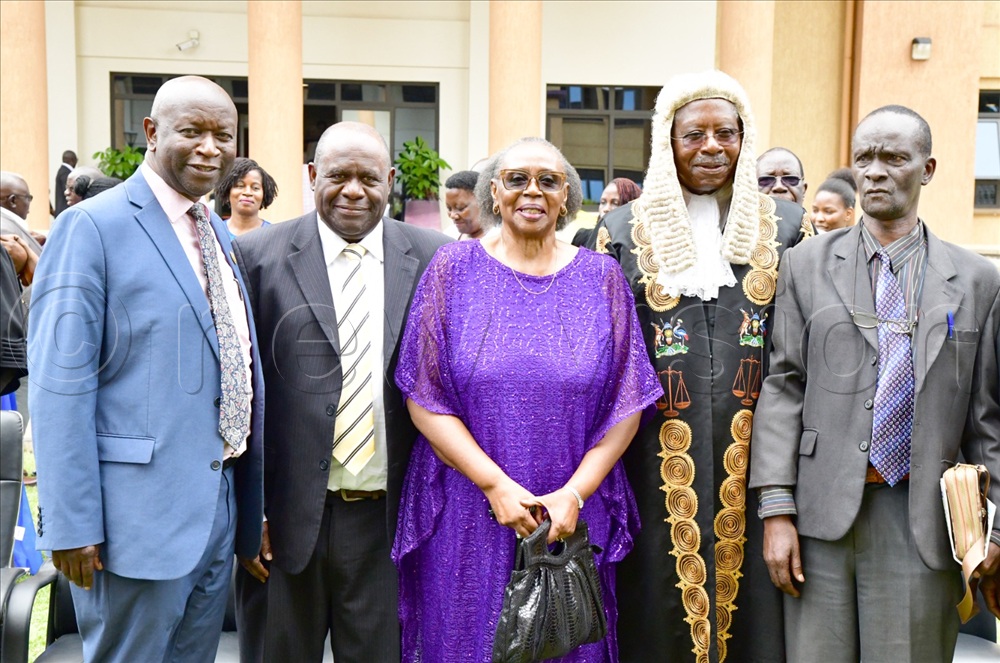
Prof. Justice Fredrick Martin Stephen Egonda-Ntende remains the longest-serving High Court judge, having served from November 1991 until 2014 when he was elevated to the Court of Appeal. (Photos by Mpalanyi Ssentongo)
________________
After 35 years on the bench, Prof. Justice Fredrick Martin Stephen Egonda-Ntende has retired from the Judiciary.
Born on June 15, 1956, Egonda-Ntende joined the Judiciary in November 1991 when he was appointed a judge of the High Court.
He remains the longest-serving High Court judge, having served from November 1991 until 2014 when he was elevated to the Court of Appeal.
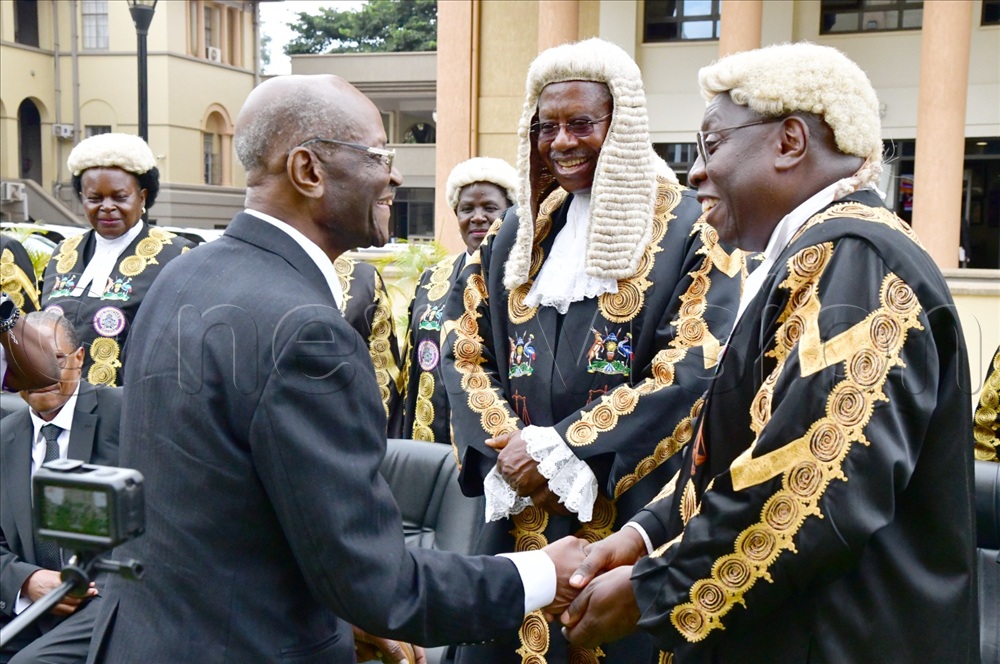
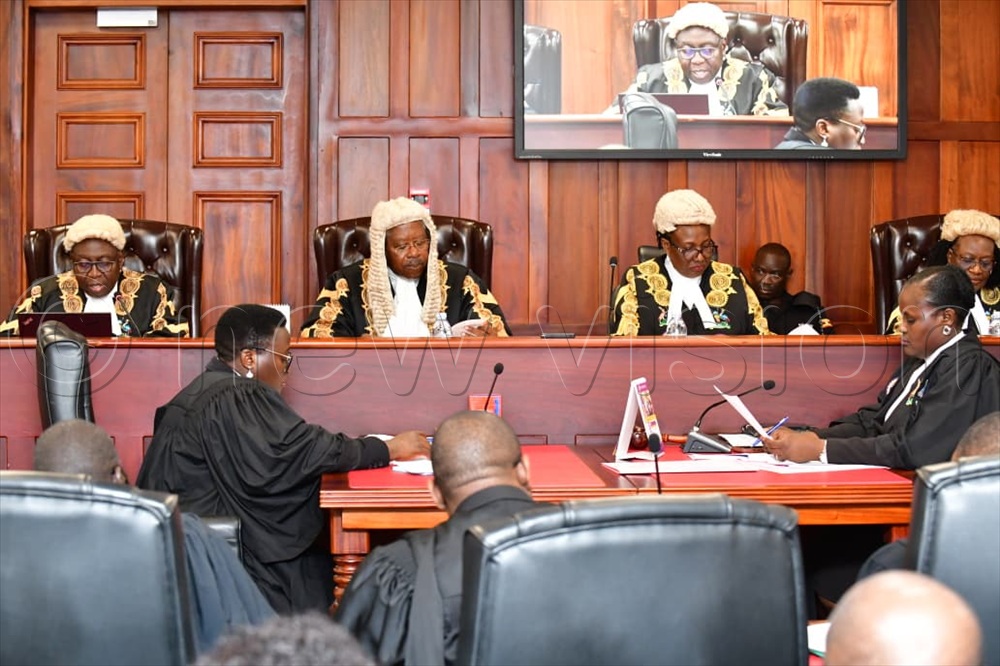
Ahead of his exit from the Judiciary on June 15 this year, when he celebrates his 70th birthday, the Court of Appeal on May 14, 2026, bade farewell to him through a special sitting in honour of his distinguished service to the nation.
The motion for the special sitting was moved by the Solicitor General, Pius Biribonwaha, and supported by senior counsel James Mukasa Ssebugenyi.
Speaking after the motion, speakers praised him as a fair and principled jurist who authored many important judgments that protected human rights and upheld the rule of law.
Biribonwaha said Egonda-Ntende has been a beacon of inspiration for both the Bar and the Bench. “As you embark on your journey out of service, we would like to assure you that the legacy you have set will resonate with us all the time,” Biribonwaha said.
Biribonwaha added that Egonda-Ntende has been a towering figure in the history of the country’s justice sector.
Drawing from Egonda-Ntende’s profile, Supreme Court Justice Christopher Izama Madrama, who was overcome by emotion as he spoke, described Egonda-Ntende’s retirement as the conclusion of a significant chapter in the country’s legal history.
Madrama noted that Egonda-Ntende has not only been a judge of high moral integrity, but also a reformer and a transformational jurist who helped redeem the Judiciary in Seychelles, where he served as Chief Justice.
Court of Appeal Justice Hellen Obura said they will miss him because he has been a role model at the Court of Appeal.
“You willingly shared your wisdom. We will surely miss you in the Court of Appeal. May the good lord richly bless you in your retirement,” Obura said.
Citing his judgment in Osotraco Ltd versus Attorney General, where Egonda-Ntende held that the government can be evicted from private property for non-payment and that Section 15(1)(b) of the Government Proceedings Act, which protected the state from such orders, was unconstitutional, Obura said he had enriched the country’s jurisprudence.
Court of Appeal Justice Cheborion Barishaki said Egonda-Ntende is a Chief Justice Uganda never had.
“You have clarified complex legal issues and your decisions shall continue to shape the legal landscape in the country,” Barishaki said.
The Director of Public Prosecutions (DPP), Lino Anguzu, said Egonda-Ntende was a fearless defender of liberty who greatly contributed to rebuilding judicial integrity. “You stand out as the greatest jurist of our time,” Anguzu said.
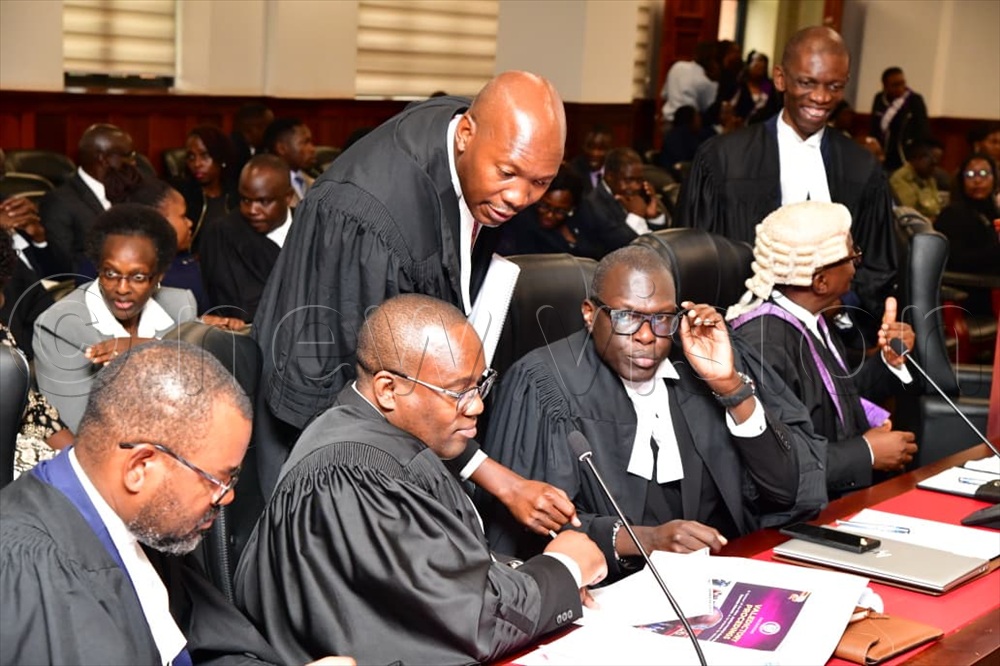
Egonda-Ntende thanked God, whom he attributed with all the success he achieved during his career.
“I thank my parents, family, and most especially my wife, who encouraged me to accept the appointment as a High Court judge in November 1991 because my inclination was to reject it because of low pay compared to what I was receiving as a private advocate,” Egonda-Ntende said.
Citing the boldness exhibited by the late Justice Patrick Kityo and retired Chief Justice Samuel Wako Wambuzi during Idi Amin’s era, Egonda-Ntende urged the current generation of judicial officers to emulate them.
“I watched on the news a father who was held on some minor, obscure and yet unproven charges. The father was held in pre-trial custody, denied bail long past the constitutionally permitted period for denial of liberty. What society treats its people like this? Team Judiciary, where are the Kityos and Wambuzis at this hour?” Egonda-Ntende said.
Following his retirement, Egonda-Ntende said he is going into agriculture.
In 2024, Egonda-Ntende was awarded a Doctor of Laws, Honoris Causa, by Makerere University in recognition of a distinguished career spanning over 40 years in legal practice, international adjudication, mediation and academia.
Upon obtaining a Postgraduate Diploma in Legal Practice from the Law Development Centre in 1979, Egonda-Ntende enrolled as an advocate of the High Court.
He later became a partner in Egonda-Ntende and Tuyiringire Advocates.
Between 1989 and 1991, he served as vice-president of the Uganda Law Society. With support from the Norwegian Bar Association and the Norwegian government, he oversaw the establishment of the legal aid scheme run by the Uganda Law Society.
He is also the founding chairman of the Jinja branch of the Uganda Law Society, which is believed to have been the starting point for active branch formation throughout the country.
Egonda-Ntende’s legacy
In 1996, he was appointed a judge of the then newly established Commercial Division of the High Court to expeditiously resolve commercial disputes.
As one of the first judges at the court, and at one point its acting head, Egonda-Ntende helped develop a plan to run the court, including bringing users of the court on board.
During the same period, Egonda-Ntende served as chairman of the Judicial Training Committee, whose mandate included developing and implementing judicial education programmes for new and serving judges and magistrates, as well as support staff.
Under his leadership, the committee developed, for the first time, a medium-term plan for judicial training in the country and started implementing it.
Egonda-Ntende is also the founding chairman of the East African Judicial Education Committee, which comprises representatives from the judiciaries of Kenya, Tanzania and Uganda.
The committee was responsible for arranging and coordinating regional judicial education programmes.
The committee was later co-opted by the Secretariat of the East African Cooperation, the forerunner of the East African Community, to advise the Council of Ministers on issues related to justice under the East African Community.
Between 1996 and 1997, he also served as chairman of the working committee on the computerisation of registries in the Judiciary.
Between January and June 1997, Egonda-Ntende acted as a judge of the newly established Intermediate Court of Appeal and Constitutional Court pending the appointment of permanent members.
He presided over both criminal and civil appeals from decisions of the High Court, as well as constitutional petitions seeking interpretation and enforcement of the Constitution.
Between 1998 and 1999, he served as resident judge of the Masaka High Court circuit. He headed the Chain Linked project, which led to a substantial reduction in case backlog and the remand-convict ratio in prisons in the region.
In 1999, he was appointed the first chairperson of the newly established Technology Committee with a mandate to develop a technology and automation plan for the Judiciary.
Between February and July 2000, Egonda-Ntende, together with a team of international UN staff, was tasked with the design, establishment and development of a judicial system for East Timor.
Between July 2000 and October 2001, he served as a judge at the Court of Appeal for East Timor, whose mandate was to hear appeals from district courts, particularly appeals from the special panel of Dili District that presided over trials involving serious offences, including crimes against humanity.
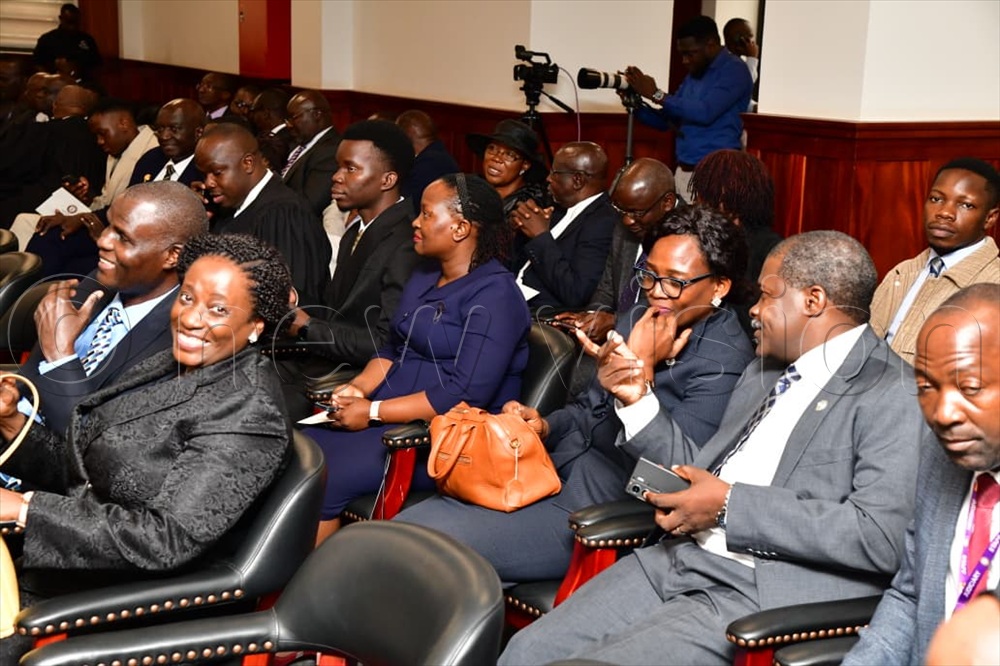
Between November 5, 2001 and November 19, 2002, he resumed duty as a judge of the High Court in Uganda.
Between November 18, 2002 and December 22, 2004, he served as an international judge at Peje/Pec under UNMIK, investigating and adjudicating serious criminal cases, including genocide, war crimes, organised crime, murder, terrorism, ethnically motivated offences, trafficking in drugs and human beings, and smuggling of weapons and ammunition.
He assisted UNMIK in its overall efforts to strengthen the Judiciary and establish the rule of law in Kosovo.
He also participated in and promoted institutional and capacity-building efforts for the Kosovo Judiciary at both regional and provincial levels.
Between December 2004 and June 27, 2008, he served as head of the Commercial Division of the High Court.
Between June 2006 and August 19, 2009, he served as a part-time lecturer at the Faculty of Law, Makerere University.
Between May 1, 2008 and January 15, 2009, he served as an acting Justice of the Supreme Court.
Between June 29, 2008 and August 19, 2009, he served as head of the Family Division of the High Court.
Between August 21, 2009 and August 20, 2014, he served as Chief Justice of Seychelles. On May 5, 2014, he was elevated to the Court of Appeal/Constitutional Court.