News
Anglican Church launches 15 million tree planting campaign to mark 150th anniversary
Archbishop Samuel Kaziimba Mugalu described the campaign as both a spiritual and theological act.
Church of Uganda Archbishop Samuel Kaziimba Mugalu with the Deputy Speaker of Parliament, Thomas Tayebwa, signing on the board at the launch of the Tree planting campaign. (Credit: Mpalanyi Ssentongo)
By: Sarah Nabakooza, Journalists @New Vision
_____________________
The Church of Uganda has officially launched an ambitious 15 million tree-growing campaign as part of activities marking its 150 years of evangelism in Uganda.
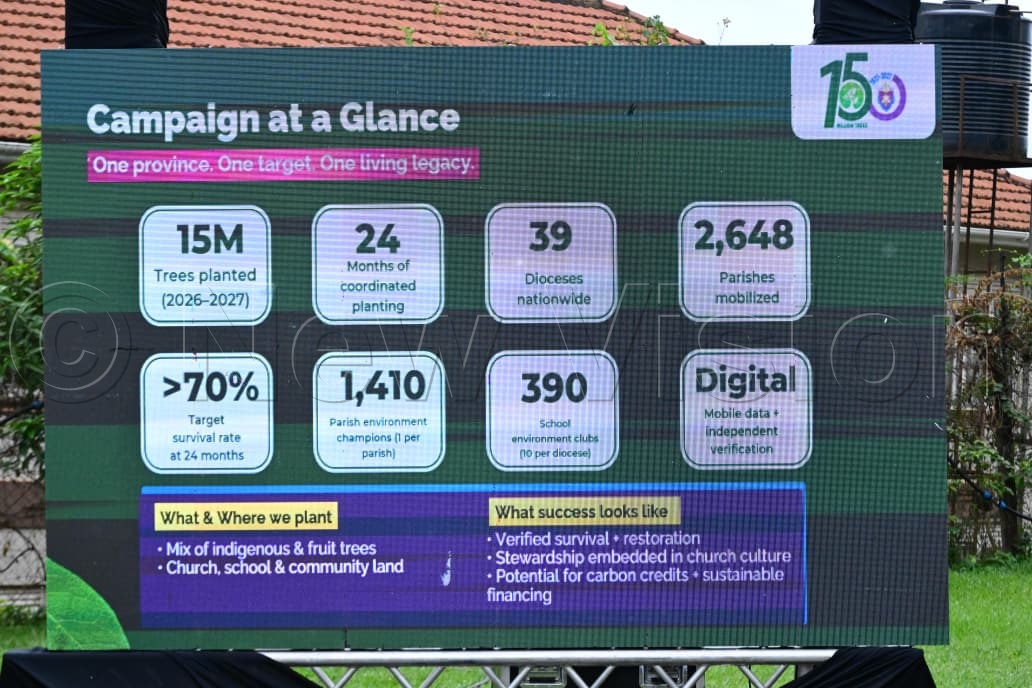
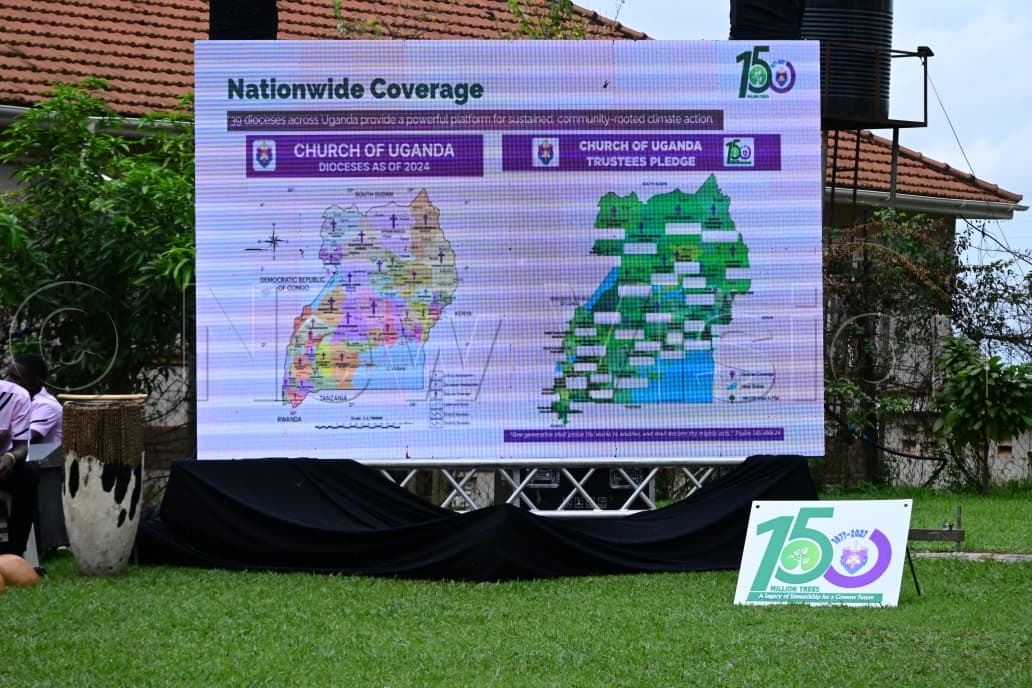
The campaign running between January 2026 and December 2027, will see the Church mobilise its 39 dioceses and 2,648 parishes to restore degraded ecosystems, strengthen biodiversity and contribute to Uganda’s national tree cover restoration goals, while integrating environmental protection and disaster management into its 2025–2030 strategic framework.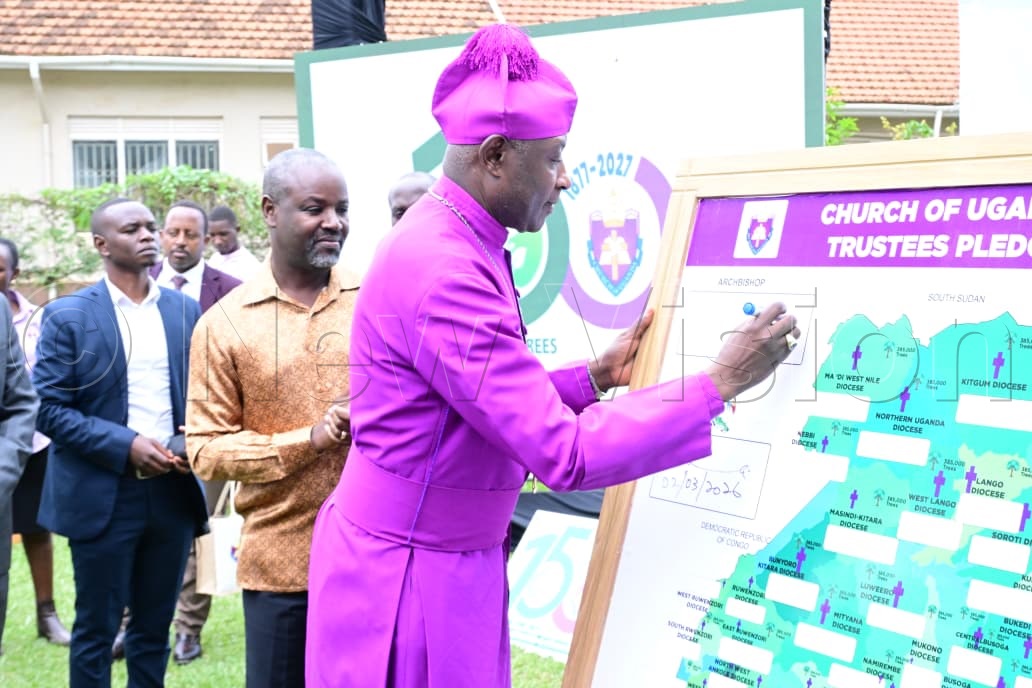
Archbishop Samuel Kaziimba Mugalu. (Credit: Mpalanyi Ssentongo)
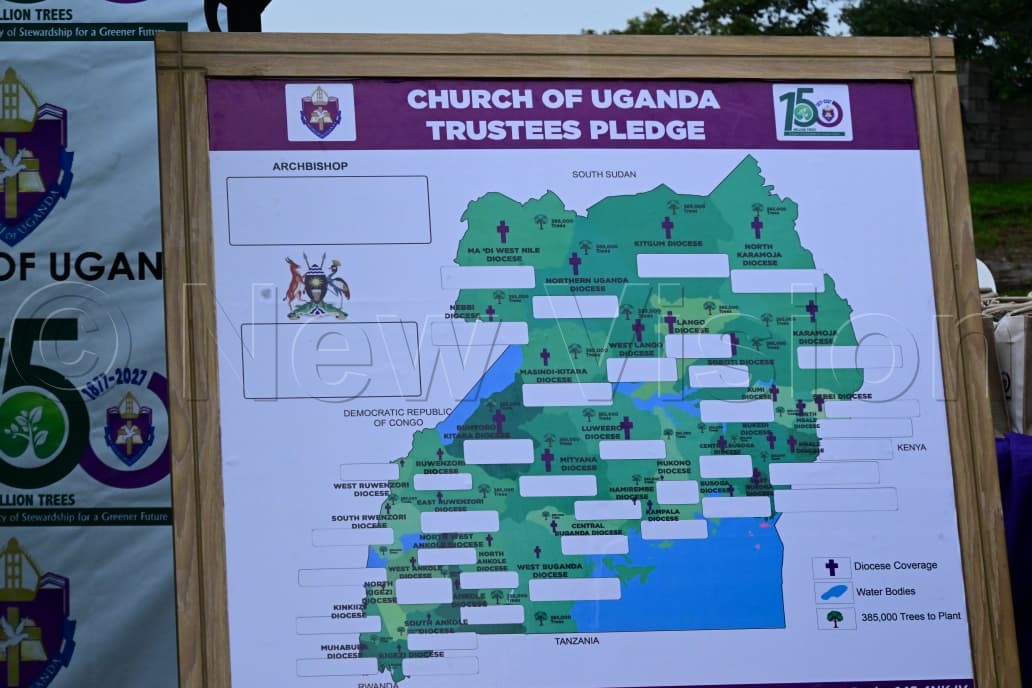
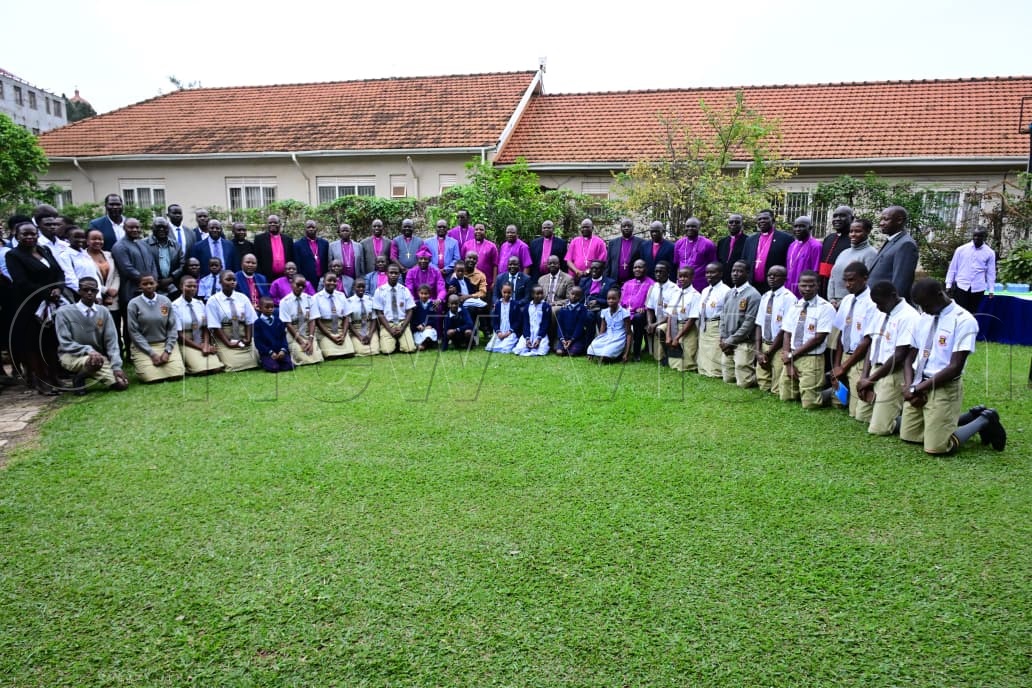
During the March 2, 2026, launch at Namirembe Cathedral in Kampala city, New Vision Online learnt that the trees are intended not only as a symbolic commemoration of the Church’s milestone since 1877, but as a practical response to escalating climate and environmental challenges.
Spiritual and theological campaign
Archbishop Samuel Kaziimba Mugalu described the campaign as both a spiritual and theological act.
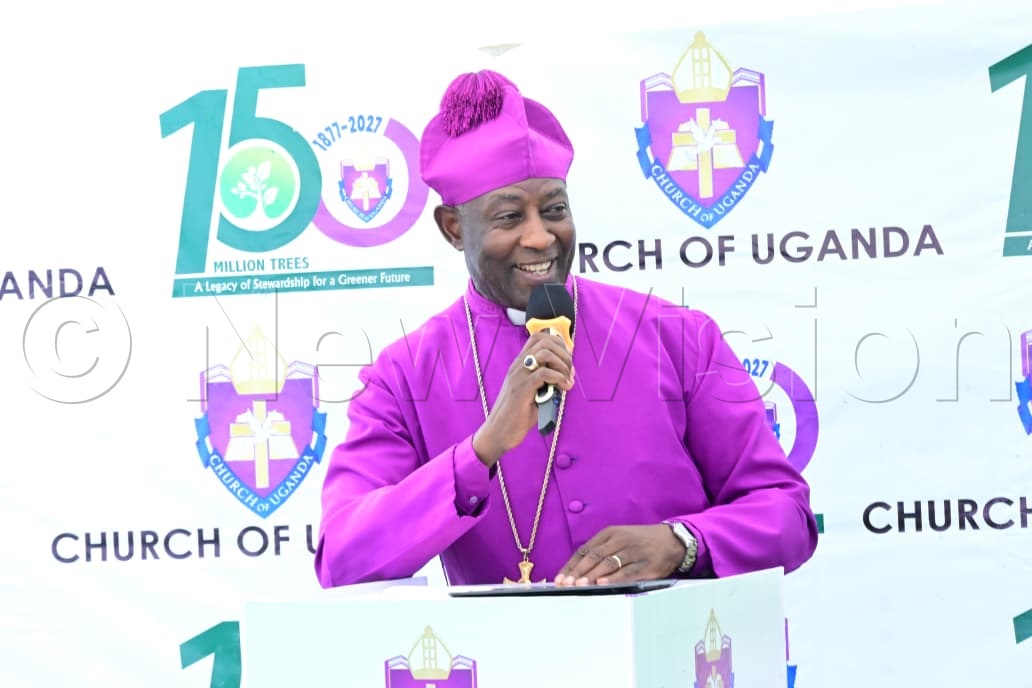
Archbishop Samuel Kaziimba Mugalu. (Credit: Mpalanyi Ssentongo)
“The planting of 15 million trees is both a spiritual and a practical act, but also indeed, it is a theological act,” he said.
“Each tree planted is a symbol of life, restoration and continuity.”
Under the implementation framework, each diocese is expected to plant 385,000 trees over two years, which is approximately 192,000 trees annually, with a targeted survival rate of 70%. Dioceses are also required to appoint environmental focal persons responsible for data collection and reporting, while parishes will integrate tree planting into pastoral activities such as baptisms, weddings, confirmations and memorial services.
The campaign further includes the revival of environmental clubs in Church-founded schools and the training of parish-based environment champions to ensure sustained community engagement. Digital mobilisation, structured monitoring and partnerships with government agencies are also part of the strategy to guarantee accountability and measurable impact.
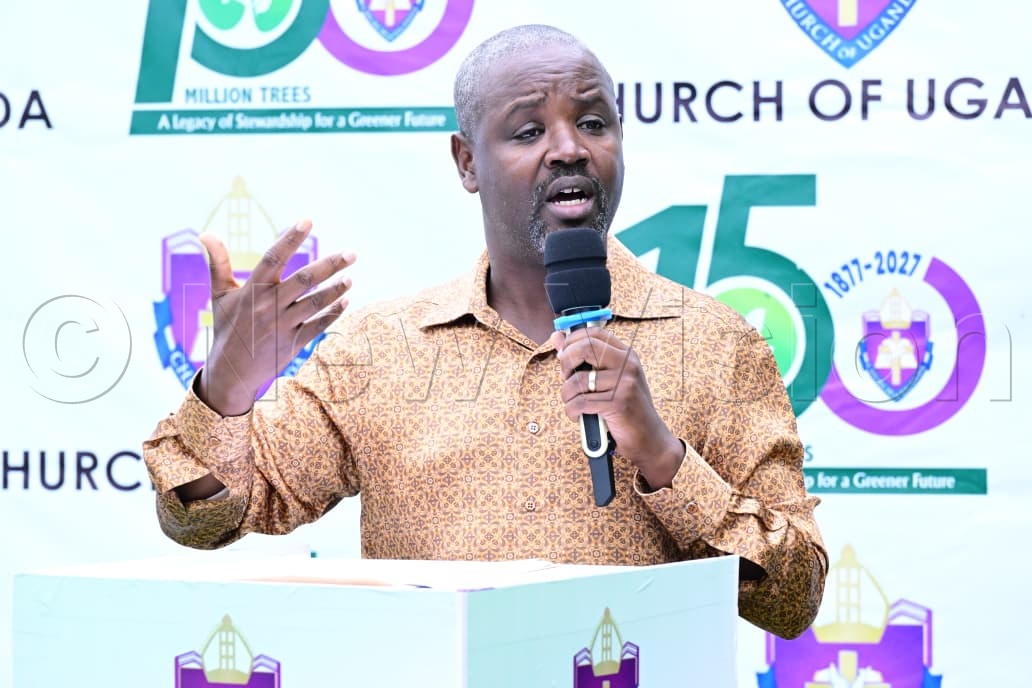
Deputy Speaker of Parliament Thomas Tayebwa. (Credit: Mpalanyi Ssentongo)
Deputy Speaker of Parliament Thomas Tayebwa, speaking at the launch as the chief guest, said that although the work of Parliament and that of the pulpit may appear distinct, they intersect when it comes to environmental stewardship.
He warned that deforestation, wetland encroachment, pollution and the effects of climate change pose a direct threat to livelihoods, food security, public health and national development.
“It affects everyone, old and young, and much worse, the future of generations yet to be born,” he said, noting that Uganda’s forests, lakes, rivers and fertile soils are not infinite gifts but resources that require responsible management and collective protection.