
Health
Uganda gets more digital X-ray machine for TB faster screening
"This innovation will enable faster, more accurate screening for tuberculosis (TB) and other diseases, bringing life-saving services closer to communities," Dr Diana Atwine, the Permanent Secretary of the Ministry of Health, stated.
US Ambassador to Ugabnda William Popp and PS Diana Atwine watching the demonstration of the X-Ray units on Monday. (US Embassy Photo)
By: Admin ., Journalists @New Vision
__________________
Uganda has received ultra-portable, AI-powered digital X-ray machines to support diagnosis in various hospitals in rural areas.
The project supervised by the Ministry of Health is supported by the United States government.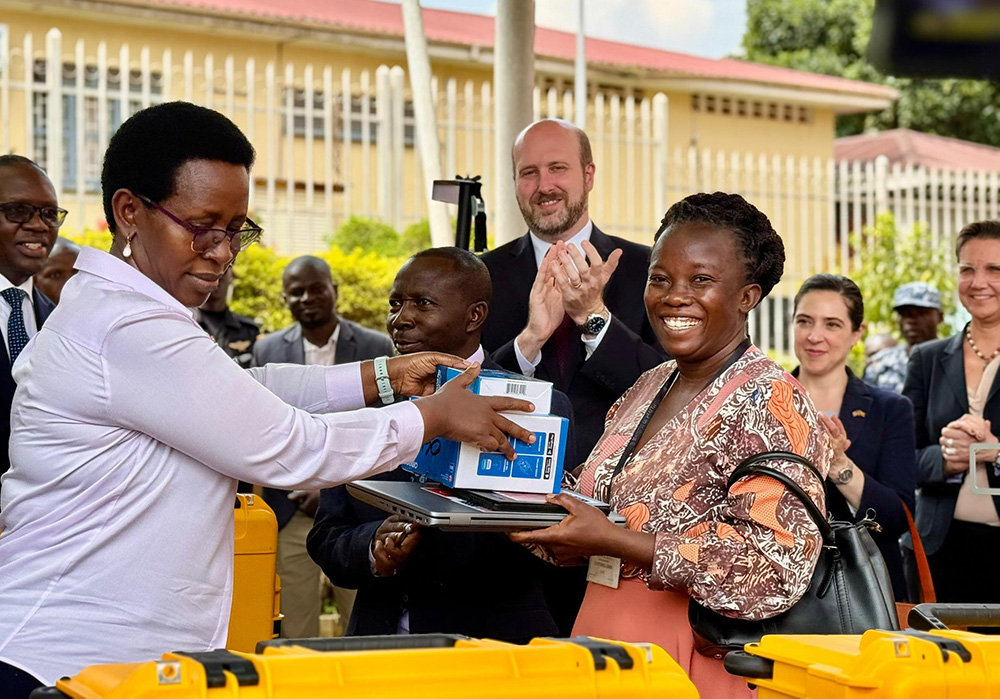
Ministry of Health Permanent Secretary Dr Diana Atwine handing over items for the mobile TB clinic trucks. Looking on is the US Ambassador in Uganda William Popp. (Courtesy photo)
"This innovation will enable faster, more accurate screening for tuberculosis (TB) and other diseases, bringing life-saving services closer to communities," Dr Diana Atwine, the Permanent Secretary of the Ministry of Health, stated on Monday, December 15, as she flagged off a fleet of mobile TB clinic trucks.
"The trucks, which are equipped with state-of-the-art medical tools, will help improve early detection, diagnosis, and treatment of tuberculosis in hard-to-reach communities.
The launch ceremony also marked the delivery of ultra-portable, AI-powered digital X-ray machines, which were provided by the US embassy in Kampala." Dr. Atwine.
According to Atwine, the "cutting-edge devices will enhance the country’s diagnostic capabilities, enabling quicker and more accurate TB screenings in both rural and urban settings.
The 14 digital X-ray units are equipped with advanced American AI diagnostic technology. These portable X-ray systems will enhance tuberculosis (TB) screening with the capability to detect up to 20 lung conditions. This collaboration leverages American leadership in technology to save lives, strengthen health systems, and move towards a free TB Uganda," she explained.
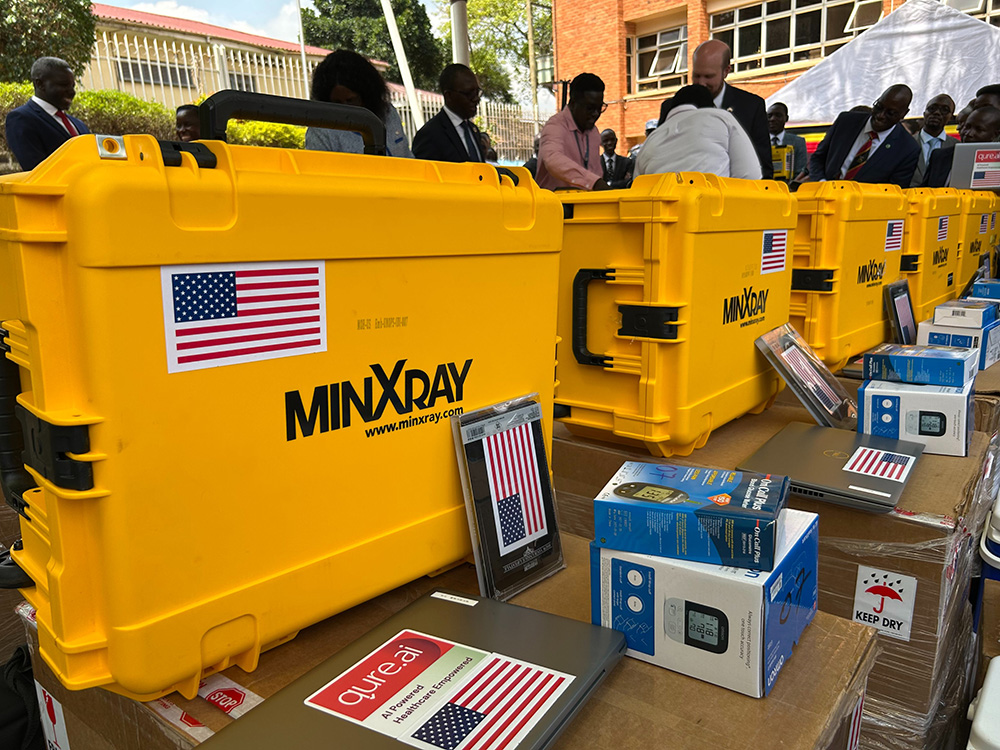
US ambassador to Uganda William Popp handing over the the X-Ray units to PS Diana Atwine. (US embassy photo)
During the flag-off, Dr Atwine emphasised the importance of leveraging technology to combat TB and ensure better healthcare outcomes for Ugandans. “This dual intervention represents a significant milestone in our ongoing efforts to eliminate tuberculosis from Uganda,” she stated.
“These mobile clinics and AI-powered x-ray machines will revolutionise TB detection and treatment, ensuring no one is left behind, regardless of their location.”
According to a statement from the Ministry of Health, the mobile TB clinics are designed to reach some of the most remote corners of the country where healthcare facilities are scarce.
Equipped with medical staff, diagnostic tools, and essential TB medications, the trucks are set to provide on-site testing, treatment, and counselling services for patients. This initiative is expected to increase the accessibility of TB care, a critical step in controlling the spread of the disease, especially in high-burden areas.
The newly delivered AI-powered X-ray machines will be deployed alongside the mobile clinics, enabling rapid and accurate TB diagnosis using advanced algorithms.
These machines can analyse X-ray images in real-time, reducing diagnostic time significantly and helping medical personnel detect TB cases even in their earliest stages. With this technology, Uganda is positioning itself at the forefront of innovative healthcare solutions for TB.
At the flag off, US Ambassador William Popp expressed his government’s continued commitment to supporting Uganda’s health sector. “The United States is proud to partner with the Government of Uganda in the fight against tuberculosis,” the Ambassador remarked.
“This collaboration brings together cutting-edge technology and healthcare infrastructure to address one of Uganda’s most pressing public health challenges. We believe this will make a real difference in the lives of thousands of Ugandans.”
The delivery of the mobile clinics and AI-powered machines comes at a time when Uganda is intensifying its efforts to combat TB. According to the World Health Organisation, Uganda is among the countries with the highest burden of TB in the world, with thousands of cases going undiagnosed each year.
The introduction of these technologies is expected to help address gaps in TB detection and treatment, contributing to the country’s broader health goals.
Dr Atwine has concluded the event with a call to action for all Ugandans to play their part in fighting TB, urging communities to seek testing and treatment early. “Together, with innovation and collaboration, we can eliminate tuberculosis and build a healthier Uganda for all.”
Officials at the ministry remarked that as the mobile clinic trucks embark on their mission across the country, Uganda is poised to take a significant step towards TB elimination, driven by technology, strategic partnerships, and a shared vision for better healthcare.
The latest report from the World Health Organisation (WHO) states that in Uganda, an estimated 96,000 people fall ill with TB annually.
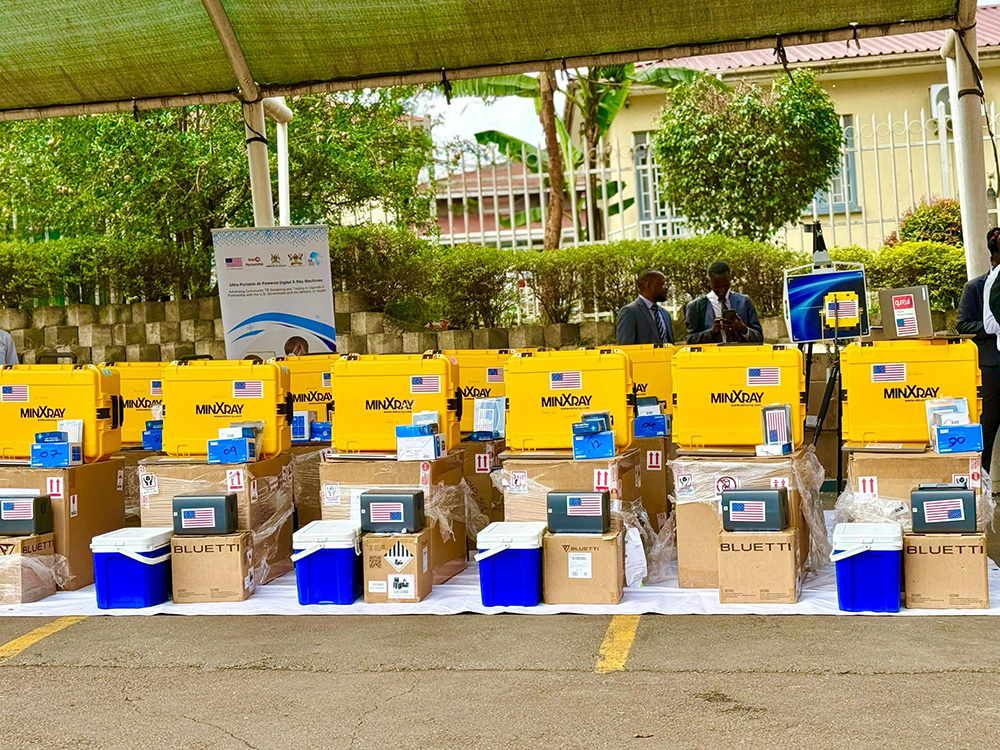
The ultra-portable, AI-powered digital X-ray machines delivered at the Health Minnistry headquarters to support TB diagnosis. (Courtesy photo)
The report revealed that in 2023, approximately 86,000 TB patients were diagnosed, leaving about 10,000 cases undetected and untreated, allowing continued transmission within communities.
Tuberculosis, which thrives where there is poverty, is not only a health crisis but also a significant socio-economic challenge, disproportionately impacting the most vulnerable populations.
In her latest message distributed in March this year, Dr Kasonde Mwinga, WHO Country Representative, Uganda, reported that, "driven by factors such as: overcrowded conditions, undernutrition, diabetes, HIV, alcohol use, and smoking, along with insufficient social protection, the TB epidemic remains severe, and the costs of TB treatment further deepen cycles of poverty and economic vulnerability."