
Glaucoma surgeries offers hope to Ugandan patients facing blindness
According to specialists, glaucoma is currently the second leading cause of blindness in Uganda and remains the leading cause of irreversible blindness globally, affecting thousands of patients who often seek treatment late after vision loss has already started progressing beyond recovery.
The procedure involves implanting a tiny tube-like device in the eye to drain excess fluid and reduce pressure that damages the optic nerve. Specialists said the surgery can stabilise vision and, in some cases, eliminate the need for patients to continue daily glaucoma medication.
Three Ugandan patients suffering from advanced glaucoma have undergone the country’s first minimally invasive PreserFlo Microshunt eye surgery, in a breakthrough for patients at risk of losing their sight after failing to respond to medication.
The surgery was conducted on May 15, 2026, by Ugandan ophthalmologist Dr Erima Denis, together with Canadian eye specialist Dr Ellen Zhou at Eye Sante Super Specialist Clinic, where three patients with moderate to advanced glaucoma became the first beneficiaries of the sophisticated eye procedure.
Glaucoma is a group of eye diseases that damage the optic nerve, which carries visual information from the eye to the brain, and is often linked to increased pressure inside the eye.
Eye specialists describe it as the “silent thief of sight” because it progresses gradually without early warning signs until significant vision loss has already occurred.
Doctors said the surgery represents a major advancement in glaucoma treatment in Uganda, especially for patients whose eye pressure remains dangerously high despite years of medication and conventional treatment aimed at slowing progression of the disease and preventing irreversible blindness.
According to specialists, glaucoma is currently the second leading cause of blindness in Uganda and remains the leading cause of irreversible blindness globally, affecting thousands of patients who often seek treatment late after vision loss has already started progressing beyond recovery.
Unlike conventional glaucoma surgeries, the PreserFlo Microshunt procedure is minimally invasive and safer, allowing doctors to lower eye pressure more predictably while reducing complications associated with older surgical methods that many glaucoma patients have depended on after failing to improve on medication.
The procedure involves implanting a tiny tube-like device in the eye to drain excess fluid and reduce pressure that damages the optic nerve. Specialists said the surgery can stabilise vision and, in some cases, eliminate the need for patients to continue daily glaucoma medication.
Erima, a glaucoma specialist working at Lubaga Hospital, said many glaucoma patients in Uganda eventually fail to respond to medication despite years of treatment, leaving surgery as the only remaining option to prevent total blindness among patients with advanced disease progression.
“Whereas glaucoma medical treatment and surgery have been available in Uganda, many of our patients fail on medication and therefore need surgery,” Dr. Erima said while explaining the importance of introducing minimally invasive glaucoma surgery techniques within the country’s growing specialised eye care sector.
“But the techniques available for surgery so far have generally been unpredictable and with a relatively high risk. Most of the western world has moved towards minimally invasive surgeries, which are much safer. We are now catching up with the modern trend,” he added.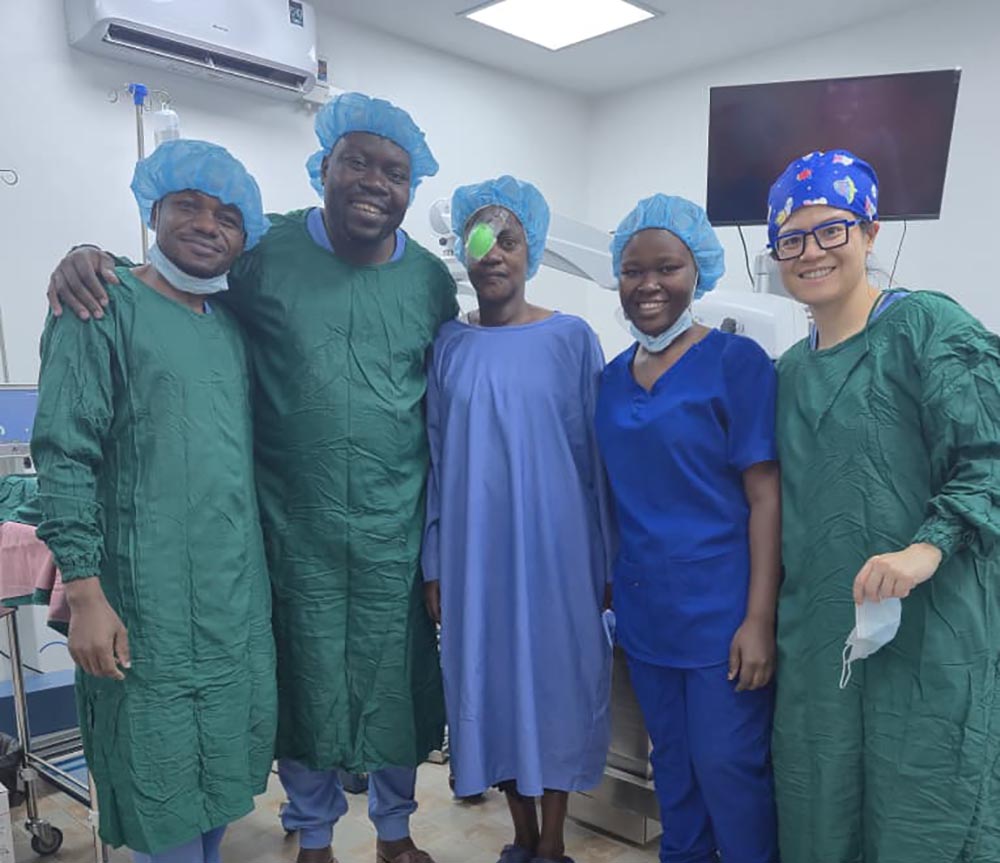
The three patients who underwent the operation had reportedly lived with glaucoma for more than five years and were battling moderate to advanced disease after medication failed to control their eye pressure, placing them at risk of eventually losing their remaining eyesight completely.
One of the beneficiaries, Sara, not her real name, from Bukedea District, had already lost sight in her left eye after years of living with glaucoma and feared she would eventually go completely blind as vision in her remaining eye gradually deteriorated this year.
For years, Sara moved from one health facility to another searching for treatment, first attending care at Jinja Hospital before later being referred to Nsambya Hospital, where she was placed on all available glaucoma medication in an attempt to control elevated eye pressure levels.
Despite being placed on treatment, her eye pressure reportedly remained above 30mmHg, far beyond the normal range of 10 to 21mmHg, increasing fears among doctors that she could permanently lose vision in her only remaining functional eye if pressure was not urgently controlled.
“I was scared, but I had no choice,” Sara said after undergoing the surgery, explaining that she had already witnessed glaucoma destroy vision in one eye and feared suffering complete blindness if the disease continued progressing despite years of medical treatment and monitoring.
“I had already seen what glaucoma had done to my left eye and I could not risk that happening to my right eye. I could not imagine going blind to this disease. I had to take the chance because it was my only hope,” she said.
Doctors involved in the surgery said the procedure has likely stabilized Sara’s condition and could help preserve her remaining sight for several more years, offering hope to other glaucoma patients whose conditions have failed to improve despite prolonged use of eye pressure medication.
Dr Faith Nakubulwa, the President of the Ophthalmology Society of Uganda, described the surgery as a major milestone in specialised eye care and emphasised the importance of collaborations between Ugandan and international specialists in advancing medical skills and improving treatment options for patients.
She said partnerships that support skills exchange and introduction of advanced technologies are necessary in strengthening Uganda’s eye care system, especially in treating complicated conditions such as glaucoma that continue to contribute significantly to blindness and permanent visual disability across the country.
The skills exchange programme that facilitated the surgery was supported by Tiny Eyes.org, an organisation that has been supporting eye screening and treatment programmes in Uganda since 2022, particularly initiatives aimed at strengthening specialised ophthalmology services and improving access to advanced eye care interventions.
Doctors said the next challenge will involve training more Ugandan ophthalmologists to perform the minimally invasive surgery and ensuring regular supply of the PreserFlo Microshunt implants so that more patients across the country can access the sight-saving procedure before losing their vision permanently.
They believe wider access to modern glaucoma treatment could significantly reduce preventable blindness among Ugandans living with the disease, particularly patients who are diagnosed late or fail to respond to medication, which remains the first line of treatment in many health facilities nationwide.
Globally, an estimated 70 to 80 million people are living with glaucoma, making it the second leading cause of blindness worldwide, and health experts warn that the burden is expected to increase significantly, with projections suggesting that more than 111 million people could be affected by 2040.