
Child deaths expected to rise for first time this century
According to the 2025 Goalkeepers Report released by the Bill & Melinda Gates Foundation, the number of children dying before their fifth birthday will increase from 4.6 million in 2024 to 4.8 million in 2025. If global health funding cuts persist, up to 16 million more children could die by 2045.
Child deaths expected to rise for first time this century
________________
For the first time this century, global child deaths are projected to rise, a reversal that global experts describe as both alarming and preventable.
According to the 2025 Goalkeepers Report released by the Bill & Melinda Gates Foundation, the number of children dying before their fifth birthday will increase from 4.6 million in 2024 to 4.8 million in 2025. If global health funding cuts persist, up to 16 million more children could die by 2045.
For Uganda, where malaria remains a leading cause of illness and death, the warning comes as efforts are to fight malaria are being strengthened.
Among the African voices calling attention to the crisis is Ugandan entomologist and malaria advocate, Krystal Mwesiga Birungi, a Research & Outreach Associate at Target Malaria Uganda under the Uganda Virus Research Institute (UVRI). Birungi warns that without urgent investment in prevention and innovation, “millions of lives on the line” could be lost.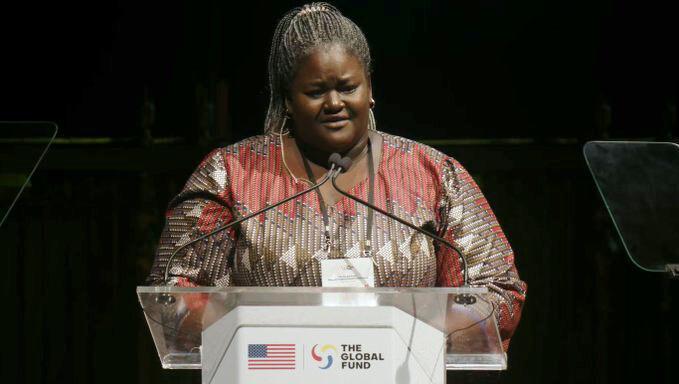
Ugandan entomologist and malaria advocate, Krystal Mwesiga Birungi, a Research & Outreach Associate at Target Malaria Uganda under the Uganda Virus Research Institute (UVRI). (Courtesy)
The malaria advocate features prominently in the Goalkeepers Report. She says the global rise in child deaths should push nations - especially African governments - to intensify, not retreat from, malaria control.
“Ending malaria is not only possible, it is urgent,” Birungi says. “We African researchers know this, and we are leading the way. But without sustained investment, the progress we fought for could crumble.”
A crisis we thought was over
The Goalkeepers Report attributes the rise in child deaths to cuts in global health financing (down 26.9% from 2024), strained health systems, and increasing pressure on countries battling preventable diseases like malaria, pneumonia, HIV, and polio.
Bill Gates warns that although scientific tools are improving, the funding is not.
“Millions of lives are on the line,” he writes, adding that even in tight budgets, investments in vaccines, primary health care, and malaria innovations deliver the highest returns.
For malaria alone, the models are clear: next-generation tools could save 5.7 million children by 2045.
Uganda: where time matters
The urgency described in the report mirrors the reality in districts like Iganga, one of Uganda’s high malaria-burden areas. Here, the Ministry of Health’s 24.2 Hours Initiative works to ensure that every suspected malaria case is tested and treated within 24 hours, and within two hours of reaching a health facility.
The policy is saving lives, but the challenges facing families reveal why global financing still matters.
One mother, Nabirye Florence, walked part of a 30km journey in the rain to reach Namungalwe Health Centre III with her feverish child. Her baby tested positive for malaria, one of more than 3,000 cases reported weekly in Iganga in 2023.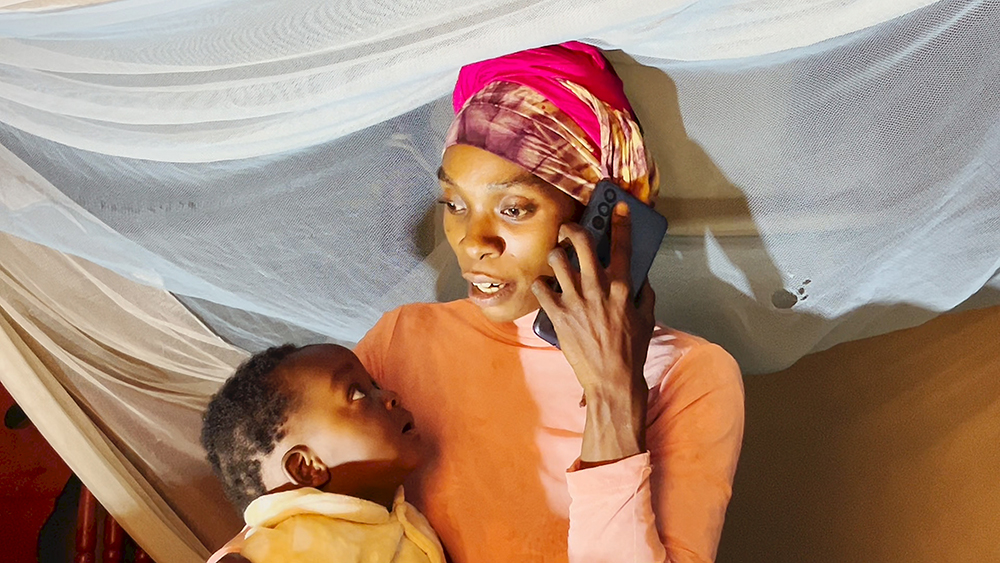
Nankya Prossy prepares to take her feverish baby to the hospital. (Courtesy)
“My child has malaria because of mosquitoes. They bite us a lot. If they can be eliminated, it would help,” she told New Vision.
Health workers say early testing is the difference between life and death.
“We don’t want complications. We have seen many children getting convulsions,” said Dr Karim Mwebaza Muluuya, the Malaria Focal Person for Iganga.
A 2025 study showed that children in Iganga experience 1.5 malaria episodes per year if regularly checked — underscoring how closely malaria risk follows a child throughout early life.
Birungi, herself a childhood survivor of severe malaria, says these stories mirror her own family’s struggles.
“Those early years embedded the conviction in me that malaria is not just a scientific challenge, but a moral and social injustice,” she says. “Every statistic is someone’s child, friend, or family.”
Science is advancing but needs protection
Uganda rolled out the malaria vaccine in 2025 and continues deploying mosquito nets, indoor residual spraying, and community case management. Researchers at UVRI and Target Malaria - where Birungi works - are developing genetic mosquito control tools currently being evaluated by the Ministry of Health.
But Birungi stresses that scientific tools alone cannot overcome collapsing budgets.
She often breaks down the innovations for the public: dual-insecticide nets, spatial repellents, new drug formulations, gene-drive mosquitoes, and malaria vaccines. Each plays a role and none works alone.
“No single tool can end malaria. Communities, governments, and global partners must work together, and they must stay the course,” she says.
Her message aligns with the Goalkeepers Report: high-impact solutions remain effective only if funded.
A global problem but an African burden
No region stands to lose more from the funding crisis than Africa.
“In 2023, 94% of the world’s malaria cases and 95% of malaria deaths happened in Africa,” Birungi says. Most of these deaths are among children under five.
In Uganda, malaria killed about 2,700 people in 2023, with more than 12 million cases recorded. At any given health centre in high-burden districts, dozens of children arrive daily with symptoms.
Clinicians in Iganga say the 24.2 Initiative has sharply improved survival.
“We were losing many children here,” said clinical officer Munyira Micheal Gerald. “Since the initiative started, we have managed to save the lives of these children.”
But with shrinking global health spending — and Uganda facing economic pressure — sustaining these initiatives will be difficult.
“We cannot stop at almost”
The Goalkeepers Report emphasises that global health progress is fragile and at a critical turning point.
Gates warns, “We could be the generation with the most advanced science in history but without funding to ensure it saves lives.”
Birungi echoes this message, but with urgency born from lived experience as a childhood malaria survivor.
“My vision is not just scientific optimism; it is a call to collective responsibility,” she says. “African governments, global donors, researchers, and communities must invest, innovate, and lead together. Millions of children’s lives depend on it.”
Her warning aligns with what frontline health workers already know: in the fight against malaria, the clock is always ticking, and the world cannot afford to turn back.