
TASO Soroti raises concern over ARV adherence among mobile groups
According to TASO Soroti Centre programmes manager Charles Odoi, the biggest challenge is among highly mobile populations, particularly fishing communities along Lake Kyoga in Serere and Kaberamaido districts.
Milton Owor, NSSF Chief People and Culture Officer (left), hands over a dummy cheque to the TASO team led by Charles Odoi (centre), alongside other team members. (Credit: Godfrey Ojore)
___________________
Health officials at The AIDS Support Organisation (TASO) Soroti in Uganda's east have expressed concern over the growing number of people living with HIV&AIDS who are dropping out of treatment, warning that the trend could reverse gains made in the fight against the epidemic in the Teso sub-region.
According to TASO Soroti Centre programmes manager Charles Odoi, the biggest challenge is among highly mobile populations, particularly fishing communities along Lake Kyoga in Serere and Kaberamaido districts.
Odoi revealed that while TASO Soroti currently manages 5,823 active clients on antiretroviral therapy (ART), a worrying number of patients have stopped attending treatment appointments and collecting their medication.
Uganda has made significant progress in the fight against HIV&AIDS over the last two decades through widespread testing, treatment and prevention programmes. However, health workers say retaining patients on treatment remains one of the biggest challenges, especially among vulnerable and mobile populations.
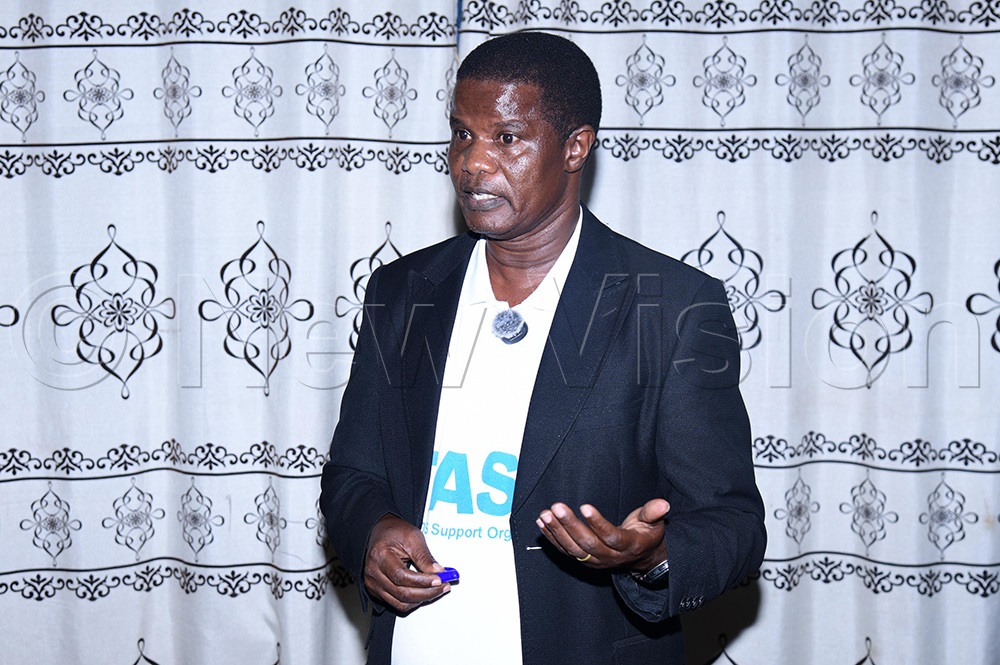
TASO Soroti Centre Programmes Manager Charles Odoi addresses the NSSF team during a meeting at the TASO boardroom in Soroti City. (Credit: Godfrey Ojore)
Medical experts warn that when people living with HIV stop taking antiretroviral drugs consistently, the virus begins multiplying rapidly in the body, weakening the immune system and increasing vulnerability to opportunistic infections such as tuberculosis, pneumonia and severe diarrhoeal diseases.
The challenge is particularly pronounced in fishing communities surrounding Lake Kyoga, where residents frequently move between landing sites in search of fish and economic opportunities.
"Many of the people in these communities are constantly moving. Today, they may be at one landing site; tomorrow, they are elsewhere. This mobility makes it difficult to keep them on treatment," said Odoi.
"The business community is another category because they are always travelling. Commercial sex workers are equally mobile. When business slows down in one area, they relocate to places where they can find better opportunities, making follow-up difficult," he said.
Odoi made the remarks on Wednesday (June 25) while receiving a dummy cheque of sh6.485 million from the National Social Security Fund (NSSF) to support adolescent girls, young women and teenage mothers living with HIV&AIDS.
The funding is expected to strengthen TASO's economic empowerment initiative aimed at helping young people living with HIV acquire practical vocational skills and improve their livelihoods.
At the TASO Soroti vocational centre, dozens of adolescents and young women have been trained in tailoring and garment production. The beneficiaries make school sweaters, T-shirts, handbags and other products which are sold to generate income that support them.
To date, TASO has registered and trained 262 adolescent girls and young women living with HIV in various practical skills.
The organisation also assists the trainees in marketing their products and plans to introduce a stipend system based on sales performance to further motivate participants.
Speaking during the handover ceremony, Milton Owor, the Chief People and Culture Officer at NSSF, said the Fund was impressed by TASO's efforts to equip young people with skills that can help them become self-reliant.
"We chose Soroti because of the nature of this project. It focuses on empowering young people who are the future of this country. When you give them skills, you give them hope and a chance to live productive lives," said Owor.
Soroti City continues to face a significant HIV burden and remains among urban centres with relatively high HIV prevalence rates, according to reports from the Uganda AIDS Commission.
Health officials attribute the high infection rates to several factors, including population mobility, risky sexual behaviour and low uptake of prevention services among some groups.
Odoi said TASO is intensifying community sensitisation campaigns to prevent new infections while encouraging those already living with HIV to enrol and remain on treatment.
"It is difficult to control individual behaviour, but we are doing our best in prevention and care. For those who are HIV-negative, we continue educating them on how to stay safe. For those who are already infected, we encourage them to start treatment early and remain on it."
'People can live long'
One of the beneficiaries of TASO's programmes, Emmanuel Ilaborot, a child and adolescent counsellor who has publicly disclosed his HIV-positive status, praised NSSF for supporting vulnerable young people living with the virus.
Ilaborot said the funding would help purchase additional tailoring materials and expand income-generating opportunities for the beneficiaries.
"I do not live in denial. I have gone on several radio stations across Teso, encouraging young people living with HIV to come out of hiding and seek treatment. HIV is no longer a death sentence as it was years ago. With treatment, people can live long, healthy and productive lives," he said.
Health experts continue to emphasise that consistent use of antiretroviral drugs not only improves the quality of life of people living with HIV but also reduces the likelihood of transmitting the virus to others, making treatment adherence one of the most effective tools in ending the HIV epidemic.