
Teso’s education crisis: Dialogue sparks tough questions, fresh hope
The challenges raised were deeply structural. Schools across Teso continue to struggle with inadequate infrastructure, teacher shortages, overcrowded classrooms and persistent absenteeism.
Dr Bernard Eumu addressing the Teso community during the dialogue held at Independence Gardens in Soroti City. (Credit: Godfrey Ojore)
_________________
For more than three decades, eastern Uganda has consistently ranked among the country’s poorest-performing regions in education, according to annual results from the Ministry of Education.
Nowhere is this more evident than in the Teso sub-region, where learning outcomes in both primary and secondary schools, particularly government-aided institutions, have remained troubling.
The numbers are stark. According to the 2024 national census, the Iteso population stands at about 2.4 million people, accounting for 7 percent of Uganda’s population. Of these, more than 500,000 are school-going children. Yet, the Ministry of Education & Sports data shows that nearly 42 percent of pupils drop out before completing primary school, a statistic that continues to alarm educators and policymakers alike.
It is this crisis that prompted Etop Radio, one of Vision Group’s seven stations in the Teso sub-region, to convene a high-level education dialogue aimed at shifting the conversation from blame to solutions.
On April 22, 2026, a cross-section of district leaders, politicians, civil society actors, educators and community members gathered at Independence Gardens in Soroti city. The goal was simple but urgent: to confront the systemic challenges undermining education and chart a path forward through accountability and collective action.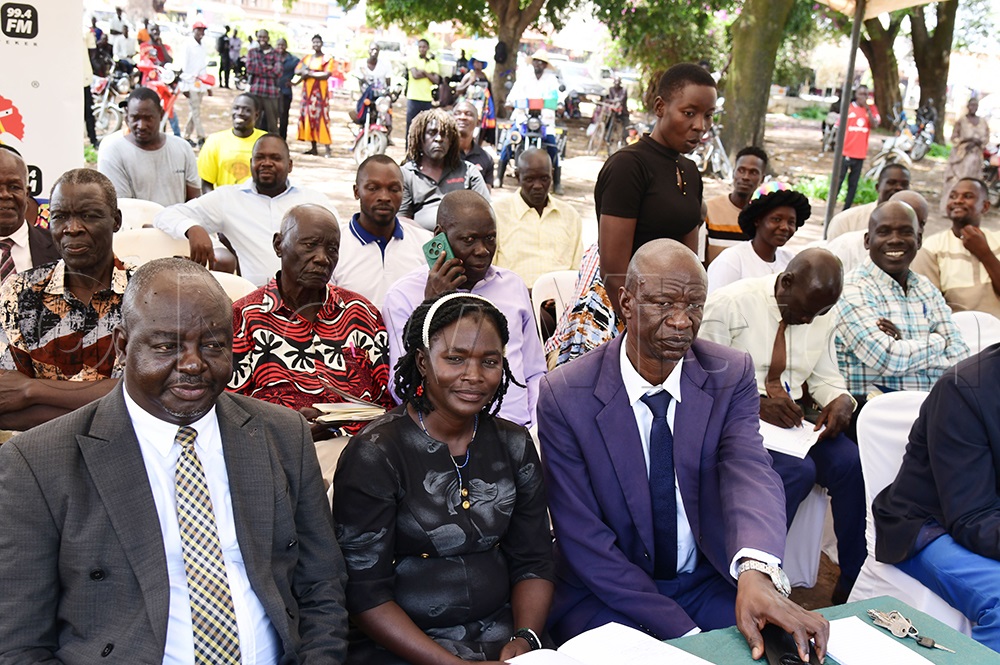
RCC Soroti City, Michael Okurut, with Eveline Ejalu from civil society and Soroti district inspector John Okiror. (Credit: Godfrey Ojore)
“As a community radio station, we felt the timing was right,” said Joseph Akiiso, the station manager. “The country is preparing to usher in new leaders next month. We intend to document these concerns and present them to those taking office so that action can be taken.”
Akiiso emphasised that education remains the backbone of national development. “A country dominated by illiteracy cannot compete globally. Our role as media goes beyond informing and entertaining; we must also empower communities with knowledge,” he said.
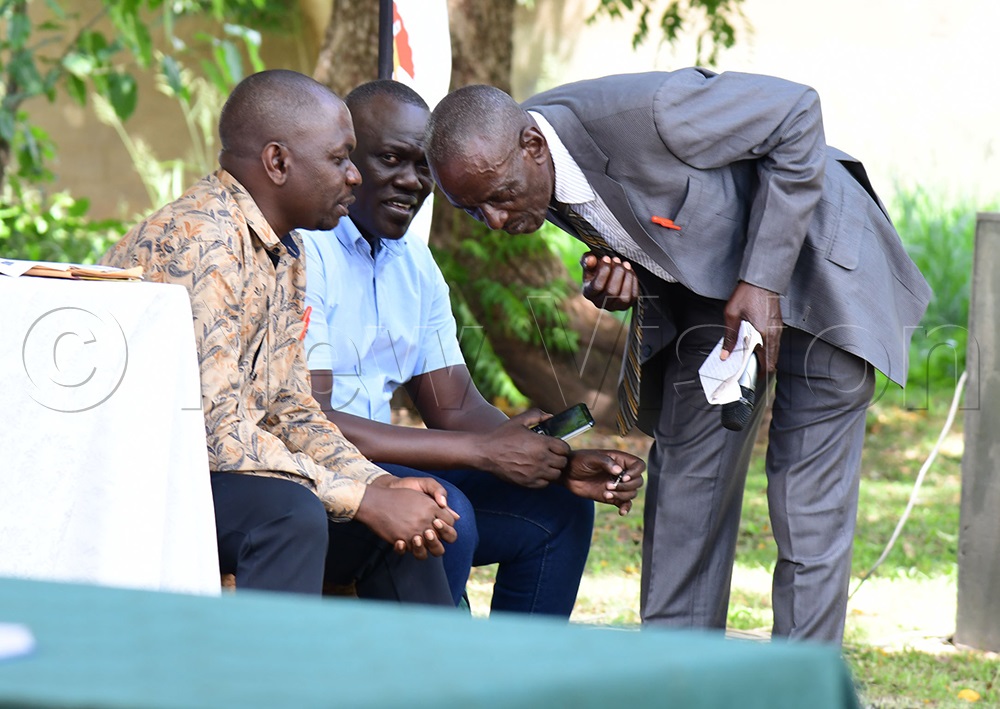
Etop radio station manager Joseph Akiiso (middle) sharing with Tolbert Ediat (necktie) and Patrick Oluk during the dialogue. (Credit: Godfrey Ojore)
The dialogue, however, quickly turned candid and, at times, confrontational.
Dr Bernard Eumu, an educationist from Teso and a lecturer at Kyambogo University, did not mince his words. He painted a grim picture of the region’s academic performance, noting that the number of ungraded students in both primary and secondary schools now exceeds those achieving top divisions.
“We have leaders from the village to the parish level. But who among them is actively monitoring what is happening in our schools?” he asked.
Turning his attention to elected leaders, Dr Eumu criticised what he described as misplaced priorities.
“Stop crowding in burials, go and do the work,” he said, drawing applause from the audience. “Politicians don’t attend funerals because they love you; they come because it’s the cheapest platform to reach voters. The day death stops, politicians will be the most affected.”
He urged communities to demand more accountability, suggesting that leaders should instead organise public forums or barazas to engage citizens on pressing issues like education.
“I want to empower you today,” he said. “Do not give politicians a platform to speak at burials. Let them call for structured engagements like this one,” Eumu said.
System under strain
Beyond the rhetoric, the challenges raised were deeply structural. Schools across Teso continue to struggle with inadequate infrastructure, teacher shortages, overcrowded classrooms and persistent absenteeism.
An assessment by Uwezo Uganda in August 2024 across 15 government-aided schools in Kumi district revealed declining literacy and numeracy levels. The study found that most Primary Three pupils could not complete tasks designed for Primary Two learners.
Additionally, 14 percent of learners fail to progress to the next grade, highlighting a worrying trend of early dropouts despite Uganda’s automatic promotion policy.
At Adukut Primary School in Serere district, headteacher Joseph Aboku shared a reality that many schools face: over 1,000 pupils, only 12 teachers and just 85 desks.
“This is the situation we are dealing with daily,” Aboku said. “It is difficult to deliver quality education under such conditions.”
Calls for accountability
District officials acknowledged some of these challenges. John Michael Okiror, the inspector of schools in Soroti district, noted that limited funding constrains infrastructure development.
“We can only budget for about three classrooms per year,” he said, adding that concerns about teacher absenteeism had largely been addressed.
The dialogue also surfaced tensions between educators and administrators. Some community members accused resident district commissioners of overstepping their authority by intimidating teachers, particularly those who send pupils home over unpaid Parent-Teacher Association fees.
However, Soroti city resident city commissioner John Michael Okurut dismissed these claims.
“I do not arrest teachers. I invite them for discussions when issues arise,” Okurut said. “We must work together for the good of our children; they are the future leaders.”
He also called on communities to prioritise education, especially for girls. “Let us stop marrying off young girls before they complete their education,” he urged.
As the dialogue drew to a close, one message stood out: the crisis in Teso’s education sector is deep-rooted, but not insurmountable. With stronger leadership, community engagement and sustained investment, stakeholders believe the region can begin to rewrite its story.
For now, the conversation has started, and many are watching to see whether it will translate into meaningful change.