
Govt commits sh4b to Kyambogo University to boost local research
Speaking at the event on April 21, 2026, at Kyambogo University, vice chancellor Eli Katunguka described the funding as a milestone in the university’s journey to build a vibrant research ecosystem.
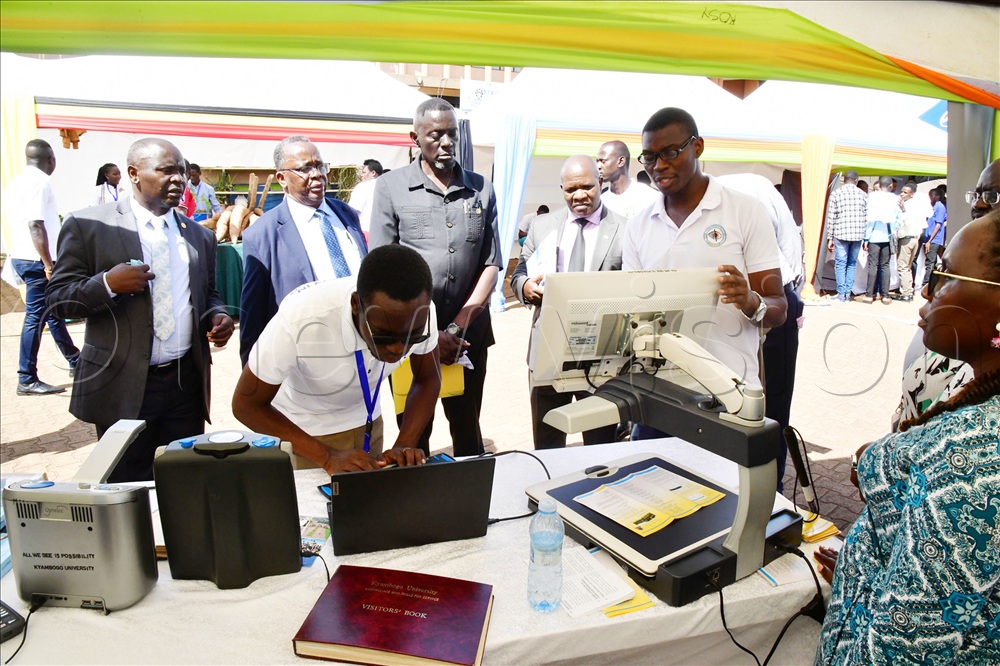
L-R: Professor Eli Katunguka, Vice Chancellor, Kyambogo University, Prof. Fred Wabwire-Mangen, Chairperson of the University Council and Timothy Musoke Ssejjoba, the Acting Commissioner for University Education & Training Ministry of Education and Sports (representing the Minister for Higher Education JC Muyingo) paying attention to Bwire Derick Maliba from the Department of Geography (right) as he explained about the geography information system & remote sensing tools. (Photos by Mpalanyi Ssentongo)
________________
The government has committed sh4b to Kyambogo University in a major boost aimed at strengthening research, innovation and community impact.
The announcement was made during the opening of the 5th Science, Technology, Engineering, Arts and Mathematics (STEAM) Festival and Competitive Research Conference, where leaders emphasised the critical role of research in national development.
Speaking at the event on April 21, 2026, at Kyambogo University, vice chancellor Eli Katunguka described the funding as a milestone in the university’s journey to build a vibrant research ecosystem.
He noted that since 2014, the institution has deliberately invested in research capacity, beginning with the establishment of a Competitive Research Scheme in 2018.
Initially supported with sh1b, the scheme provided small grants to staff, sh30m for humanities and sh40m for sciences, to stimulate research interest and build capacity.
Over time, the initiative has trained more than 400 staff members in grant writing, data analysis and research management, while benefiting at least 175 researchers across 10 funding cycles.
Katunguka said the goal was to equip scholars with the skills and confidence to attract larger funding and produce impactful research.
“With this additional sh3 billion from government, bringing the total to sh4 billion, we expect our researchers to rise to the occasion and deliver innovations that directly benefit society,” he said.
He added that funding must translate into tangible products and solutions rather than routine academic activity.
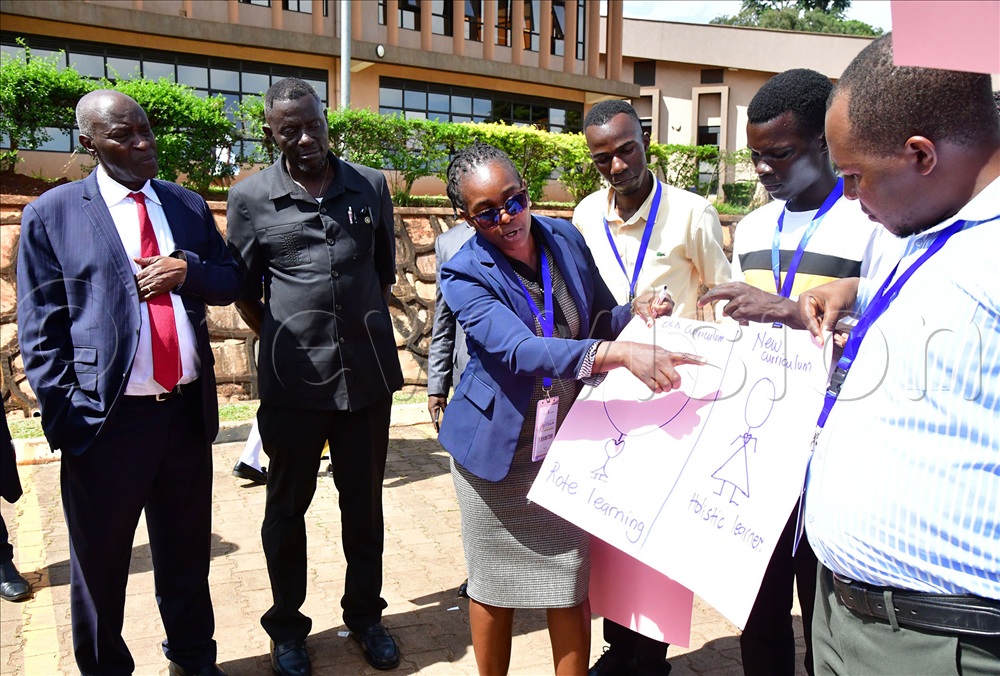
The vice chancellor also spoke about reforms aimed at improving graduate training, noting that delayed completion of master’s and PhD programmes remains a major challenge. Through targeted training in supervision and the introduction of a Graduate Fellows Scheme, the university is nurturing a new generation of researchers.
Many of these young scholars have already progressed into academic positions, strengthening the institution’s long-term research capacity.
Representing the Ministry of Education and Sports, Timothy Ssejjoba, the commissioner of university education and training, affirmed the government’s commitment to supporting innovation-driven education.
He said universities must align research with real-world challenges such as unemployment, climate change and public health, ensuring that academic work translates into practical solutions for communities.
The funding comes at a time when Uganda is also grappling with emerging challenges such as artificial intelligence and the transition to competence-based education. Leaders at the conference called for strategic investment, policy development and stronger partnerships between universities, industry and international collaborators.