
Ugandan traders accuse the tax regime of stifling business growth
During the dialogue at Protea Skyz Hotel on December 4, 2025, traders questioned the logic behind what they termed as heavy levies imposed on their merchandise.
Business leaders and government officials in a group photo during the event. (Photos by Joseline Karungi)
________________
Ugandan traders have accused the current tax regime of stifling business growth, sparking heated debates at the recent business dialogue summit in Kampala.
The GKMA (Greater Kampala Metropolitan Area) Business Dialogue Summit, organised by the Center for Budget and Tax Policy (CBTP), which was convened to address fiscal challenges in Uganda’s economic hub, saw clashes emerge between business leaders and government officials over taxation, infrastructure, and accountability.
Held under the theme: Collaborating for a Transparent and Equitable Revenue System in GKMA, the summit brought together over 100 business leaders from the districts of Kampala, Wakiso, Mukono and Mpigi to confront issues like delayed infrastructure projects, opaque public financial management, and a tax system traders say is suffocating their operations.
During the dialogue at Protea Skyz Hotel on December 4, 2025, traders questioned the logic behind what they termed as heavy levies imposed on their merchandise.
“Our expectations from the taxes collected have not been met. Many traders face eviction due to high levies, while critical infrastructure projects remain unfinished,” Kampala City Traders Association (KACITA-Uganda) chairperson Hajji Issa Ssekitto.
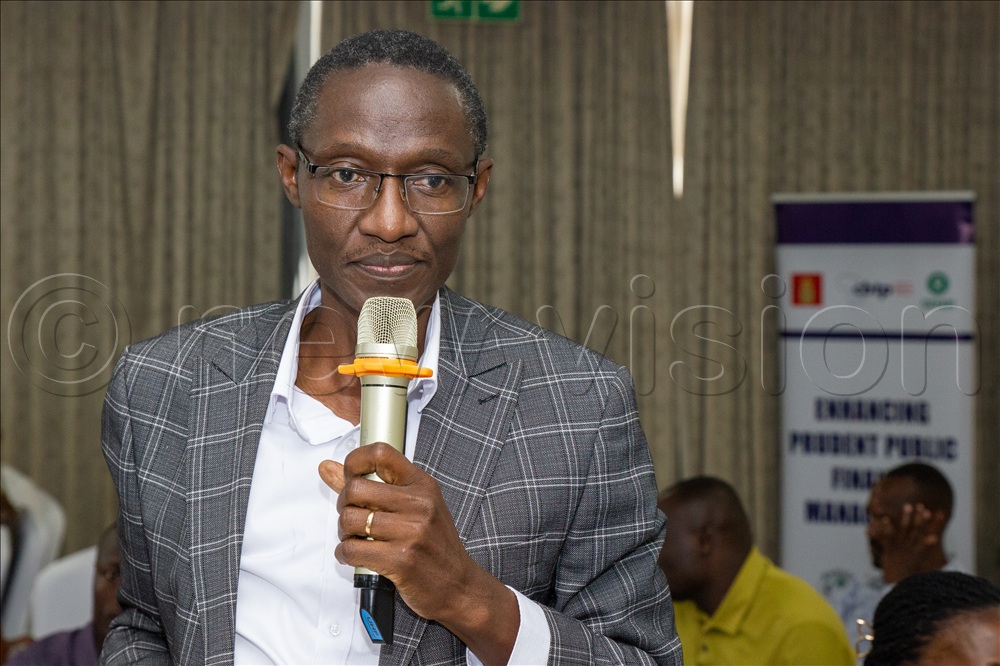
The tax burdens are crippling, with importers grappling with several charges: 6% import duty, 18% VAT, 15% withholding tax, and 1.5% Railway Development Levy. For second-hand clothes imports, effective taxation reaches 45–55% of value.
“We pay all required taxes, yet our goods are pulled aside and labelled substandard,” Isma Bwanika, an Mpigi-based import-export businessman, said, citing inconsistent inspections by the Uganda National Bureau of Standards (UNBS) that force fines or confiscations.
The traders also said the mobile money levies, 0.5% excise on withdrawals and 15% on transfers, are driving up costs and discouraging digital transactions. They criticised repeated supplementary budgets, which Ssekitto called “a destabilising force” that disrupts planning and penalises small businesses disproportionately.
URA defends stand
However, Uganda Revenue Authority (URA)’s Ronald Nyenje Makumbi emphasised exemptions for small businesses earning under shillings 10 million and stated that supplementary budgets address “emerging national priorities,” not punish traders.
He urged collaboration to reduce misunderstandings and smuggling.
Makerere University Business School (MUBS) Business Forum director Dr Fred Muhumuza said there is a need for a fair, sustainable revenue system. According to him, Uganda’s high taxes on second-hand clothes, compared to Kenya's fuel smuggling, hurt local traders.
Trader Josephine Nakawooya called for clearer tax processes and pre-implementation sensitisation, while breakout sessions highlighted accountability gaps in revenue utilisation.
The summit saw the launch of the GKMA Business Accountability Forum to sustain dialogue between traders and the Government.
Participants endorsed recommendations including raising the tax threshold to shillings 500 million, reducing administrative layers like Resident District Commissioners, and revising tax structures to avoid stifling growth.
With 60% of Uganda’s GDP generated in GKMA, but infrastructure projects like the Bamunanika-Luwero–Zirobwe road stalled for years, traders urged reforms balancing revenue needs with business survival.