
First oil within reach as Uganda’s energy sector enters high-stakes phase
“The government has maintained a clear and consistent position that we will achieve first oil in the second half of 2026,” said Humphrey Asiimwe, chief executive officer of the Uganda Chamber of Energy and Minerals (UCEM).
The Kingfisher Central Processing Facility that is in advanced stages construction in Kikuube district. Courtesy photo
________________
Uganda is entering a defining phase in its oil and gas journey, with the country counting down to its largest industry gathering as momentum builds towards first oil expected in the second half of 2026.
“The government has maintained a clear and consistent position that we will achieve first oil in the second half of 2026,” said Humphrey Asiimwe, chief executive officer of the Uganda Chamber of Energy and Minerals (UCEM).
Asiimwe spoke ahead of the 11th Annual Oil and Gas Convention (OGC 2026), scheduled for April 28–29 at Speke Resort Munyonyo. The event is organised by UCEM in partnership with the Ministry of Energy and Mineral Development, the Uganda National Oil Company (UNOC) and the Petroleum Authority of Uganda (PAU).
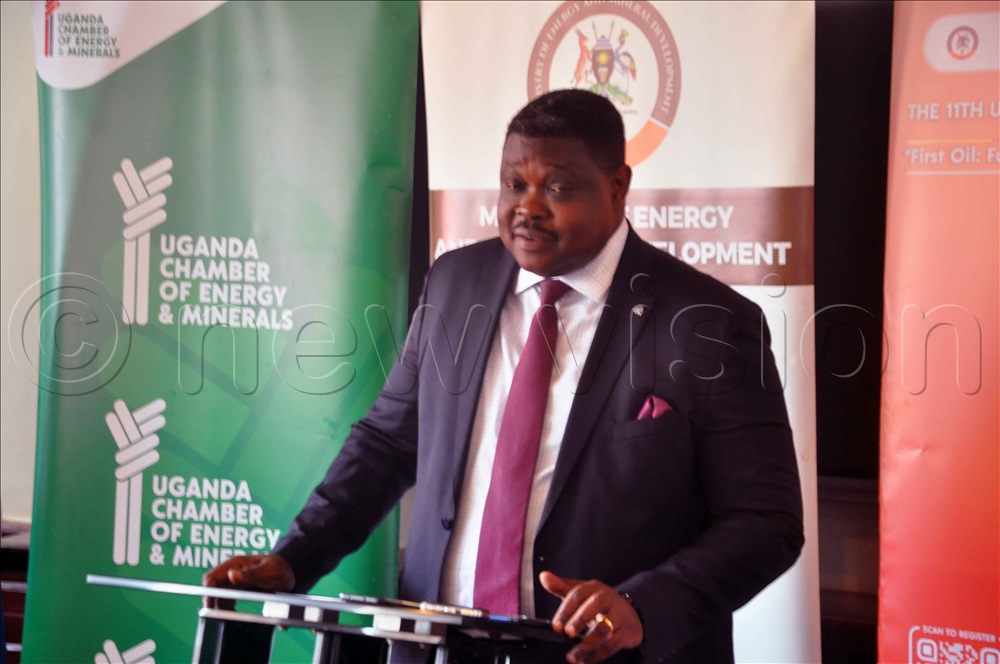
Nicholas Ecimu, a Uganda Chamber of Energy and Minerals board member and partner at S&L Advocates addressing the media at Amber House. (Photo by John Odyek)
Held under the theme “First Oil: Fulfilling the Promise, Forging the Future,” the convention comes at a time when flagship oil projects are nearing completion. A joint press briefing at Amber House in Kampala outlined the latest progress across the sector on April 21, 2026.
The convention will cap the 30 Days of Oil and Gas Media Campaign, a nationwide initiative aimed at raising awareness and tracking developments across the petroleum value chain. According to Asiimwe, Uganda’s readiness for production is now firmly established, with key projects surpassing their minimum development thresholds.
The Tilenga project has drilled 198 wells against a requirement of 170, while the Kingfisher development has completed 21 wells against a target of 19 and reached 77 percent overall progress. The East African Crude Oil Pipeline (EACOP) is more than 83 percent complete, with compensation for project-affected persons nearing completion.
Gloria Sebikari, manager of corporate affairs and public relations at PAU, said the sector has moved past uncertainty about production timelines.
“We are beyond the question of whether Uganda can produce oil. The wells are drilled, the targets are met, and contractors are working around the clock,” she said. “This convention marks Uganda’s transition from infrastructure development to operating a world-class petroleum sector.”
Economic impact grows
The economic footprint of the sector is taking shape. About $2b (sh7.4 trillion) has been committed to local firms across Tilenga and EACOP, supporting an estimated 80,000 direct and indirect jobs.
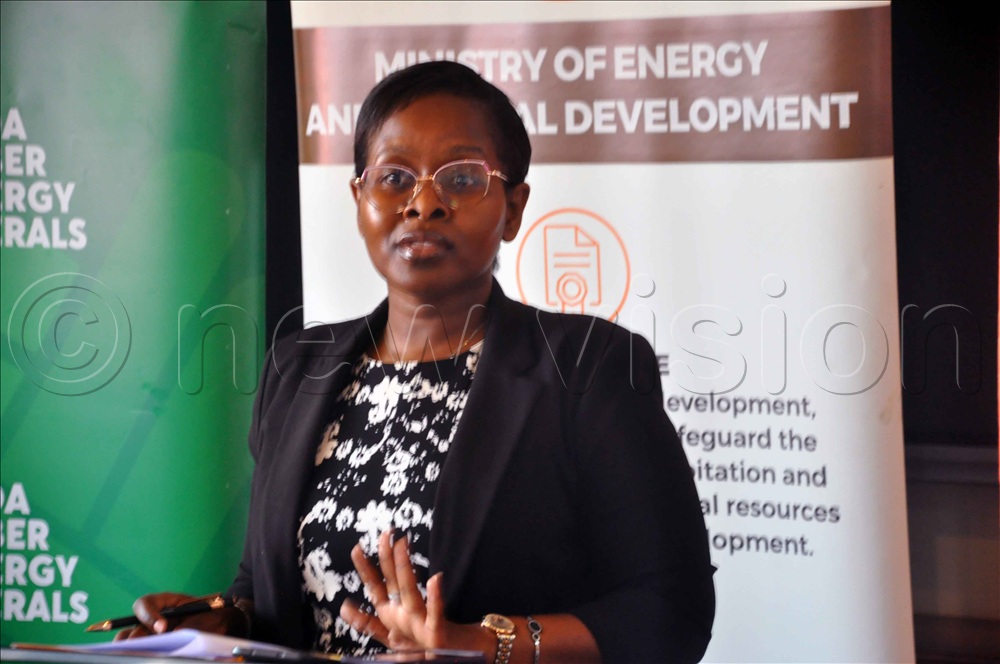
Gloria Sebikari, manager of corporate affairs and public relations at Petroleum Authority of Uganda addressing the media at Amber House. (Photo by John Odyek)
More than $2.1b (sh7.7 trillion) in contracts have gone to Ugandan companies, while over 7,000 citizens have undergone training to prepare for roles in the sector.
As the country prepares for production, attention is turning to a long-term operational phase expected to span two to three decades. This stage will open opportunities in maintenance, engineering, asset management, digital systems and supply chains.
The upcoming convention is expected to provide a platform for aligning priorities for this phase. Discussions will cover the planned $4b (sh14.8 trillion) refinery project, which is moving towards a Final Investment Decision in 2026, as well as investment prospects in the Kabalega Industrial Park and new exploration blocks in the Albertine Graben and northern basins.
Angela Kaliisa, senior public relations officer at the Uganda National Oil Company, said the sector has progressed from the investment stage, which unlocked about $15b (sh55.5 trillion), to production readiness.
“Now the question is first oil, and that phase is underway,” she said. Kaliisa said petroleum resources will play a key role in Uganda’s economic transformation under the National Development Plan IV.
Nicholas Ecimu, a UCEM board member and partner at S&L Advocates, said the journey to first oil reflects sustained engagement between government and private players.
“It is not easy to align public interests with commercial priorities, but dialogue has kept the process moving,” Ecimu said.
He noted that Uganda can learn from other oil-producing countries, avoiding missteps while building on success stories.
Industry eyes expansion
Ecimu urged Ugandans to position themselves for opportunities emerging in the sector, pointing to growing capacity among local firms in engineering, logistics and support services.
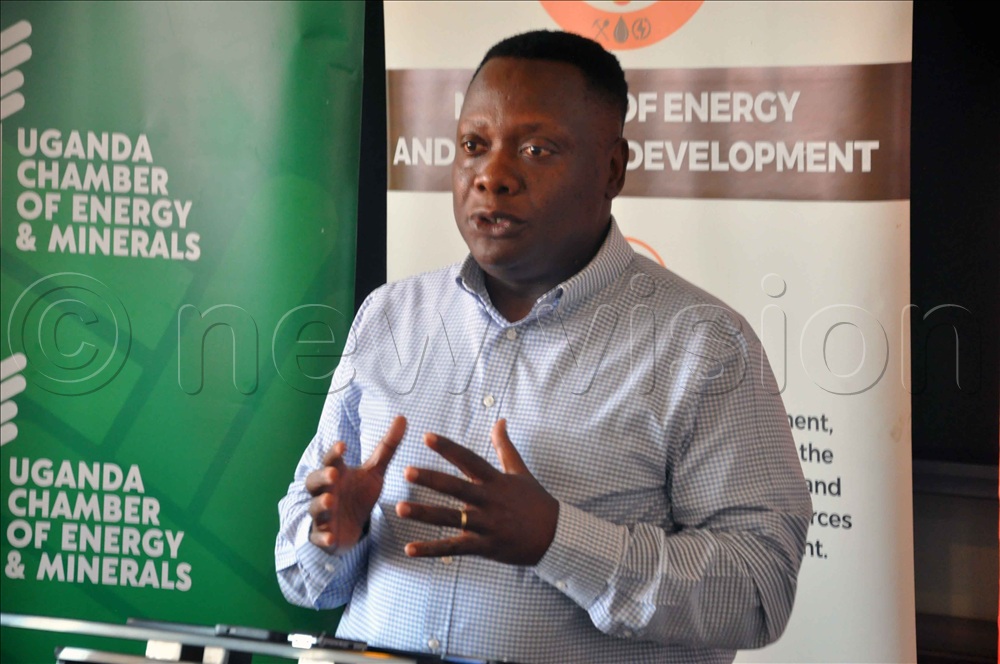
Jeff Baitwa, director of Threeways Shipping Services and a Uganda Chamber of Energy and Minerals board member addressing the media at Amber House, Kampala. (Photo by John Odyek)
Jeff Baitwa, director of Threeways Shipping Services and a UCEM board member, said participation in oil and gas projects has strengthened the capabilities of Ugandan companies.
“Firms have built competencies in logistics, engineering and service delivery and are now looking at opportunities across the region,” he said.
He cited markets such as Tanzania, Mozambique, Angola and Namibia as areas where Ugandan firms can expand and earn foreign exchange.
Baitwa said the sector has reached a stage where risks are better understood, supported by infrastructure such as pipelines and processing facilities.
“This could be the beginning of even greater growth,” he said. He added that companies that missed earlier opportunities can still prepare for the operational phase.
He pointed to challenges, including supply disruptions and rising costs that continue to affect logistics and procurement.
“This industry comes with continuous challenges, and players must be ready to adapt,” he said.
He noted that the transformation is visible in Uganda’s logistics capacity, with heavy equipment such as high-tonnage cranes and modular trailers now in operation, reflecting growth in industrial capability.
James Maguru, general manager at Old Mutual and a member of the Uganda Insurers Association, said insurers formed a consortium to support large-scale investments. The consortium, made up of 20 companies, has mobilised underwriting capacity exceeding $15b and supported major projects including Tilenga, Kingfisher and EACOP.
“Insurance enables financing by giving confidence to lenders and developers,” Maguru said. He said the industry has generated more than $20m (sh74b) in premiums while building expertise in managing complex risks linked to energy investments.
Fred Soul Hirya, manager for trade finance at KCB Bank Uganda, said solutions have been designed to address high capital requirements and complex cash flow cycles. These include collateral-backed financing, tax bridging facilities and digital systems that improve efficiency in transactions across project sites.
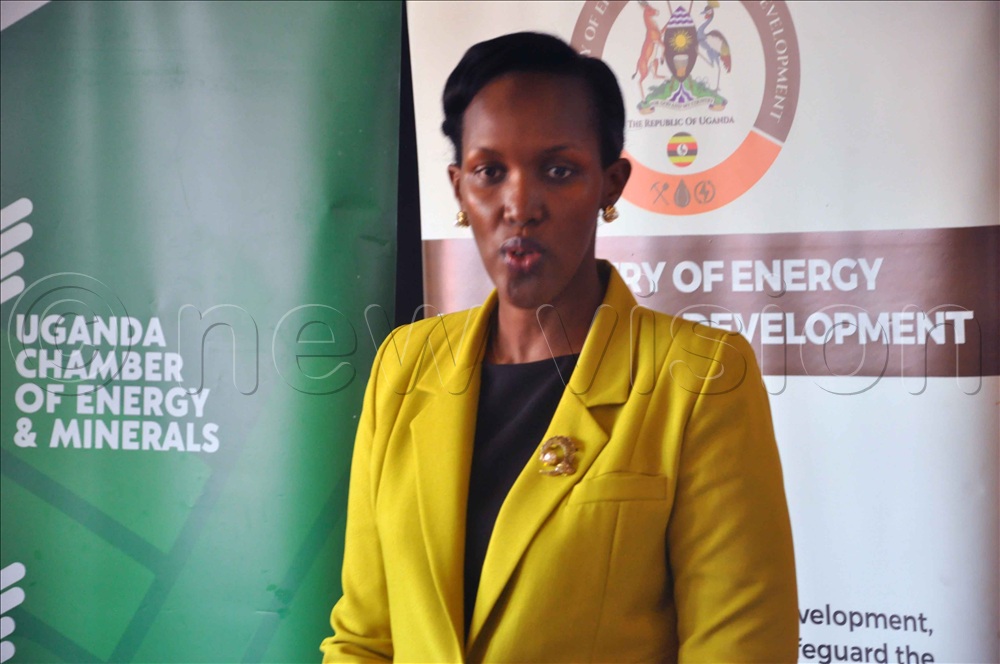
Angela Kaliisa senior public relations of the Uganda National Oil Company addressing the media at Amber House. (Photo by John Odyek)
Oscar Kamukama, marketing manager at Steel and Tube Industries, said the sector is shaping a long-term industrial base that will influence local production and competitiveness. “The shift from construction to operations will require steady supply chains for equipment and industrial inputs,” he said.
Stuart Mwesigwa, corporate affairs manager at Roofings Group, said companies have expanded production capacity to meet demand while improving product quality to meet industry standards.
He said training programmes are equipping Ugandans with practical skills within the country, strengthening the workforce needed to support the sector as it moves into production.