
Bodaboda leaders, KCCA partner to push shift to e-motorcycles
“With over 200,000 petrolpowered bodabodas on our streets, each emitting approximately 5.7kg of carbon dioxide daily, we are choking our own city,” the minister said.
The campaign, dubbed ‘Zuukuka Make the Smart Move’, was officially launched at the UMA Multipurpose Hall in Lugogo, Kampala, yesterday by the state minister for Kampala metropolitan affairs, Kabuye Kyofatogabye.
KAMPALA - Bodaboda leaders have partnered with the Kampala Capital City Authority (KCCA) to fast-track the phasing out of petrol-powered motorcycles in favour of electric bikes as part of a broader government push toward clean urban transport.
The campaign, dubbed ‘Zuukuka Make the Smart Move’, was officially launched at the UMA Multipurpose Hall in Lugogo, Kampala, yesterday by the state minister for Kampala metropolitan affairs, Kabuye Kyofatogabye.
The launch comes ahead of the Government’s 2030 deadline to transition to electric mobility and phase out petrol-powered engines in public transport.
Addressing stakeholders, Kyofatogabye described emissions from motorcycles as a mounting public health emergency requiring urgent intervention.
“With over 200,000 petrolpowered bodabodas on our streets, each emitting approximately 5.7kg of carbon dioxide daily, we are choking our own city,” the minister said.
“We all breathe the same air, and too often Kampala falls short of the air quality standards set by the World Health Organisation.”
The campaign is spearheaded by the Uganda Boda-Boda Riders Co-operative Union in partnership with Spiro.
Organisers say it is designed as both a public health intervention and an economic empowerment strategy, aligned with the Government’s 2030 e-mobility vision under the ruling National Resistance Movement administration.
Kampala’s rapid urbanisation and heavy reliance on motorcycle taxis have significantly contributed to declining air quality. Union leaders note that emissions from internal combustion engine bodabodas frequently exceed recommended safety thresholds, heightening the risk of respiratory illnesses among riders, passengers and city residents.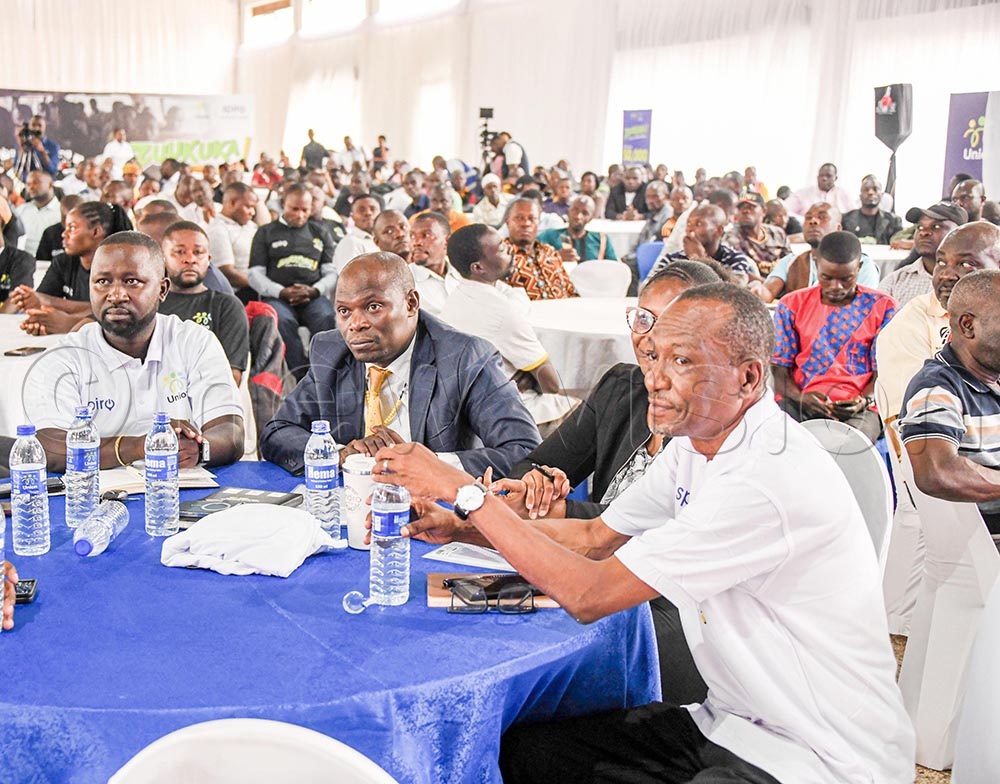
Addressing stakeholders, Kyofatogabye (C) described emissions from motorcycles as a mounting public health emergency requiring urgent intervention.
What union leaders say
Fred Ssennoga, the business adviser to the union, said the initiative is structured to make electric motorcycles financially accessible to riders.
He said a prospective rider requires sh120,000 as an initial commitment, along with recommendations from three union members, to access an electric motorcycle under the programme.
Ssennoga said within one year of operation, the union has facilitated benchmarking visits for riders to Dubai, is planning a housing scheme for membersand has already distributed 12,000 electric motorcycles under a pilot phase.
“We want to use our numbers to develop ourselves. If it means establishing a union bank, we have the capacity and membership to support such an initiative,” he said.
Ssennoga also revealed that the union has launched a mobile application to connect passengers with verified riders and plans an aggressive nationwide sensitisation campaign to promote electric mobility.
Under the partnership, Spiro has committed to deploy 50,000 electric motorcycles across Greater Kampala by June 2026, supported by more than 500 battery swap stations and a comprehensive spare parts and service network.
If fully implemented, officials project the transition could reduce Kampala’s pollutionlevels by up to 15%, cut respiratory-related deaths by nearly 20%, and eliminate up to 200,000 metric tonnes of carbon dioxide emissions annually.
“This is not just a business deal,” Kyofatogabye said. “It is an economic empowerment strategy and a symbol of systemic progress.”
Government officials argue that electric motorcycles will significantly lower riders’ daily operating costs, particularly fuel expenses, while battery swapping systems will provide predictable pricing, reduce noise pollution and eliminate tailpipe emissions.
Baker Kasawuli, the general manager of the Uganda Bodaboda Riders Co-operative Union, described the campaign as a co-ordinated movement to transform Kampala into a cleaner and more sustainable city.
“The launch of this campaign marks the beginning of a collective effort to confront the dangers of poor air quality that threaten our health and livelihoods,” he said.
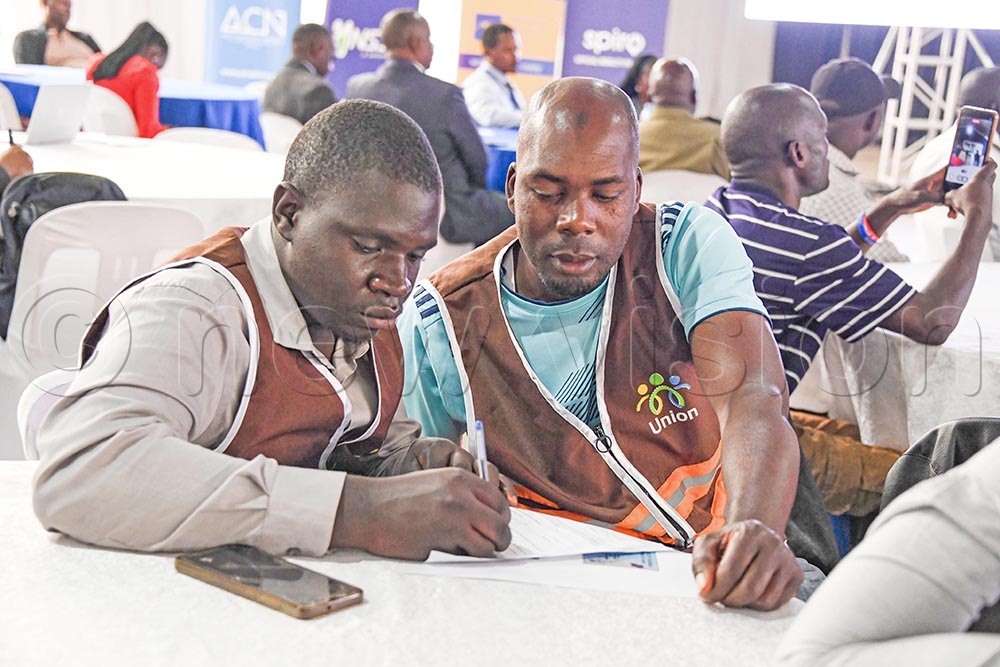
Union chairperson Frank Mawejje said petrol-powered motorcycles emit harmful fumes that endanger both riders and the wider public.
“We want to have a clean environment that can help us live better lives,” he said, adding that he has personally experienced the health impact of prolonged exposure to emissions.
With the 2030 phaseout target now in focus, the success of Kampala’s clean transport transition will hinge on infrastructure readiness, rider uptake, regulatory enforcement and sustained private sector investment.
Too often Kampala falls short of the air quality standards set by the World Health Organisation.
50,000 e-bikes to be given out
The union has identified 150 ambassadors to promote electric motorcycles nationwide and is targeting the distribution of 100,000 electric bikes by the end of the year, with 50,000 expected to be rolled out by June.
Authorities are urging riders to embrace training programmes and position themselves as early adopters of electric motorcycles, while encouraging passengers to prioritise electric rides as they become available.