
Farmers urged to form cooperatives to unlock gov’t support, boost incomes
“If any innovation is to be brought to farmers, it can easily trickle down through cooperatives rather than working with individuals,” Dr Elyeza Bakaze explained.
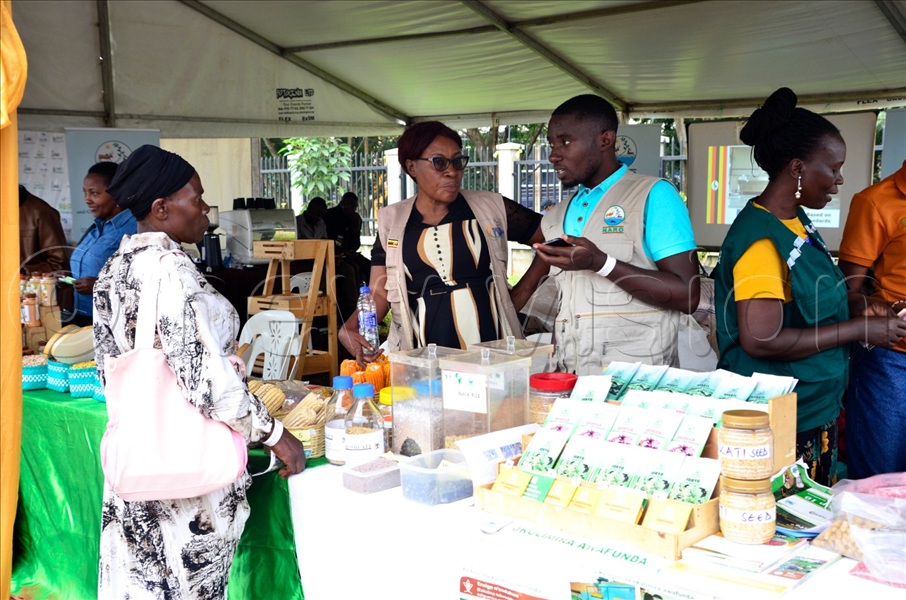
Seed production officers from National crop Resources Institute (NaCRRI) displaying some of the crop varieties. (Credit: Juliet Kasirye)
KAMPALA - Farmers across Uganda have been urged to organise into cooperatives at village level to unlock government support, access affordable financing and strengthen their bargaining power in the market.
Speaking at the 10th edition of the Harvest Money Expo at Kololo Ceremonial Grounds, Dr Elyeza Bakaze, a senior research officer from the National Agricultural Research Organisation (NARO) – National Crops Resources Research Institute (NACRRI), said cooperatives remain the most effective pathway for farmers to access innovation, training, and government programmes.
“If any innovation is to be brought to farmers, it can easily trickle down through cooperatives rather than working with individuals,” he explained.
“When they sell collectively, they avoid exploitation by middlemen and gain stronger bargaining power.”
The three-day expo that was sponsored by Tunga Nutrition, Engineering Solutions, Uganda Development Corporation, aBi Development, Pearl Bank, Heifer International, Roke Telkom, the Ministry of Agriculture, Animal Industry and Fisheries (MAAIF), the Kingdom of the Netherlands, and the Uganda Revenue Authority, has drawn hundreds of farmers seeking practical solutions to boost productivity.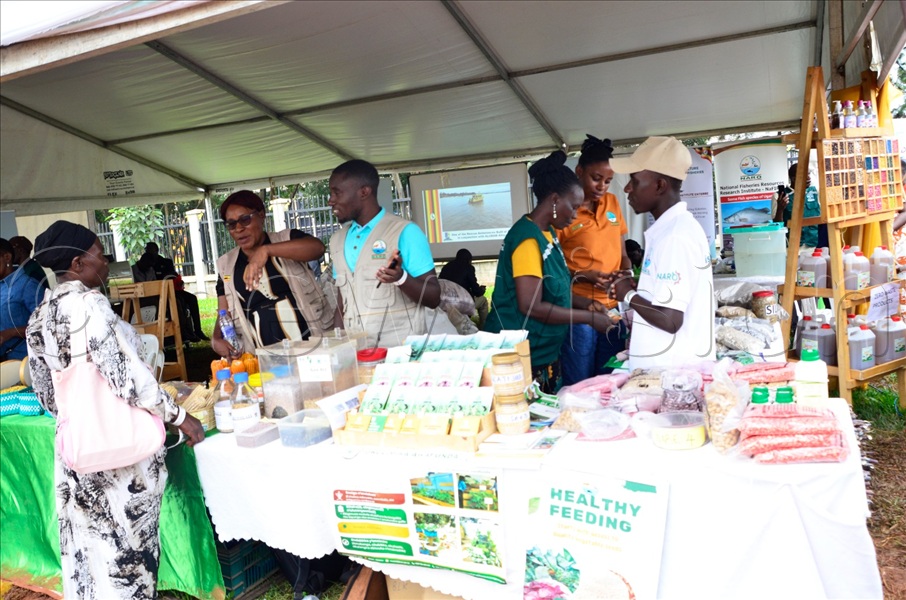
While opportunities abound, challenges remain, particularly banana bacterial wilt, which continues to affect yields across the country. (Credit: Juliet Kasirye)
Cooperatives as gateways to opportunity
Dr Bakaze emphasised that beyond marketing advantages, cooperatives make it easier for farmers to demand government services such as training, machinery and agricultural inputs.
“When it comes to inputs and trainings, cooperatives can easily demand services from government. An individual farmer cannot do that effectively,” he noted.
He cited a recent example in Luwero district, where a registered cooperative received a government tractor, an opportunity unlikely to reach scattered individual farmers. Within cooperatives, members can also mobilise savings and access soft loans.
“Because they are selling together and saving some of the money, they can facilitate themselves with loans through their cooperatives,” he added.
To start, farmers need a minimum of 40 members at village level before registering at the district. District commercial officers guide them through the formalisation process.
Tackling banana bacterial wilt
While opportunities abound, challenges remain, particularly banana bacterial wilt, which continues to affect yields across the country.
The expert reassured farmers that although there is no vaccine yet, the disease can be controlled through disciplined farm management.
Key prevention measures include disinfecting farm tools before moving from one plantation to another to prevent cross-contamination and minimising any entry points for infection in the plantation.
He added that removing the male bud using a forked stick to block disease transmission by insects such as bees attracted to nectar can also help.
“You don’t cross-contaminate tools. Treat them before moving to another field. And by removing the male bud, you cut off the pathway for insects that transmit the disease,” he advised.
Restoring soil fertility
Soil fertility management was another key focus area, and he explained that fertility is not only about nutrients, but also water management.
Farmers were advised to mulch to conserve soil moisture, create trenches to trap excess runoff and prevent nutrient loss and apply organic fertilizers such as cattle manure, poultry manure and compost from kitchen waste.
He further emphasised that matooke requires high potassium levels, ideally at a ratio of three parts potassium to one part nitrogen, to ensure optimal growth and yield.
Farmers seek practical knowledge
For many attendees, the expo offered a lifeline.
Karen Kiiza from Kyaliwajala, who recently took over her late husband’s farm, said she came seeking comprehensive knowledge.
“This is my first time to come here. My late husband never missed, and now I must take responsibility for his farms,” she said. “I am growing passion fruits, cocoa and matooke. I need to sustain that farm and knowledge is what will help me do it.”
Margaret Nakisozi from Buikwe district shared her struggle with banana bacterial wilt, which has forced her to cut down entire plantations.
“There is still no vaccine, but I have learned proper prevention methods here. At least now I know what to do,” she said. As farmers continue to grapple with disease outbreaks, soil degradation and market exploitation, experts at the expo delivered solutions.