
Climate change, fluctuating prices threatening cotton profitability—Kasese farmers
Cotton has historically been one of Kasese’s flagship agricultural exports, contributing significantly to the local economy. However, erratic rains, extended dry spells, and rising production costs are now threatening its viability.
Kasese cotton farmers have attributed the disappointing cotton season to climate change challenges and fluctuating market prices. (Photo by Samuel Amanyire)
_________________
Kasese cotton farmers have attributed the disappointing cotton season to climate change challenges and fluctuating market prices. They say the above challenges are jeopardising the profitability of what was once a thriving cash crop.
Prolonged dry spells, unpredictable weather patterns and low returns have left many questioning whether they can continue farming cotton at all.
Cotton has historically been one of Kasese’s flagship agricultural exports, contributing significantly to the local economy. However, erratic rains, extended dry spells, and rising production costs are now threatening its viability. Even when crops survive the harsh conditions, farmers say the prices they receive barely cover their expenses.
Speaking to New Vision Online late February 2026, at the Nyakatonzi Growers Co-operative Union office in Kasese municipality, union manager Adam Bwambale said there is an urgent need for climate-resilient cotton seedlings. He warned that without such innovations, productivity will continue to decline.
“The current rains are unpredictable, and we need seeds that can withstand all conditions,” Bwambale said.
Despite Kasese being among Uganda’s top cotton-producing regions, Bwambale said the financial burden on farmers is becoming unsustainable. The high costs of inputs, such as seedlings, labour, pesticides and land preparation, are not matched by favourable market prices.
“One requires about shillings 300,000 to hire land, 250,000 for digging and planting, and additional funds for weeding and harvesting, but cotton prices remain low,” he said.
Kasese district principal agricultural officer Julius Rukara acknowledged the immense pressure faced by cotton growers under current conditions.
International prices affecting local ones
At the national level, ICT and national guidance state minister Godfrey Kabbyanga highlighted the complexities of the global cotton market, saying prices are largely determined internationally, leaving little room for local authorities to intervene effectively.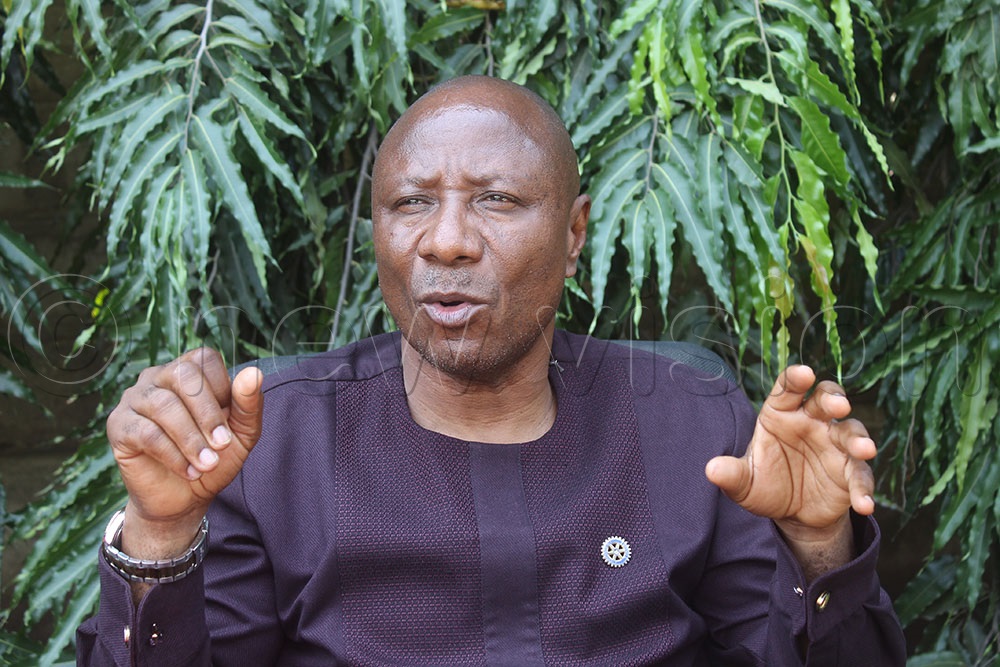
ICT and national guidance state minister Godfrey Kabbyanga highlighted the complexities of the global cotton market, saying prices are largely determined internationally. (Photo by Samuel Amanyire)
“You cannot control the price of cotton locally because it is dictated by the world market,” Kabbyanga said.
He suggested that small-scale farmers consider diversifying into other crops, arguing that cotton is only profitable when grown on a large scale.
“Like most cash crops, you can only benefit from cotton if you grow it on a large scale,” he added.
However, many cotton farmers disagreed with the minister’s advice, saying the Government and agricultural agencies should step in to support the sector through giving access to climate-resilient seed varieties, subsidising farming inputs and putting in place mechanisms to ensure better and more stable pricing.